



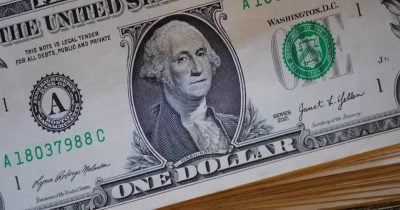
The US dollar index held steady on June 1 after a string of weekly losses, with traders stuck in a holding pattern between two massive unknowns: whether US-Iran peace talks will actually produce results, and whether major central banks are about to pivot toward tightening.
Bitcoin has been trading in a range between $70,000 and $73,000 through late May and into early June, a window that reflects the broader market’s indecision.
The Iran factor and the Fed’s inflation problem
The Iran conflict, which escalated in late February 2026, has driven oil prices higher and injected a fresh dose of inflation anxiety into an economy that was supposed to be cooling down.
Fed funds futures are now hinting at a potential rate hike from the current 3.50-3.75% range by year-end. Markets that were previously betting on rate cuts have completely reversed course, now pricing in the possibility that borrowing costs go up, not down.
Meanwhile, negotiations between the US and Iran have produced a mix of temporary pauses in hostilities, discussions around uranium exports, and ongoing talks about navigation through the Strait of Hormuz, which remains one of the world’s most critical oil transit chokepoints.
Europe joins the hawkish chorus
ECB board member Isabel Schnabel has advocated for potential rate increases in June, regardless of how US-Iran negotiations play out.
For the dollar specifically, the prospect of Fed rate hikes provides near-term support. The dollar’s steadiness on June 1 reflects this tug-of-war: geopolitical uncertainty pulling it down, rate hike expectations propping it up.
The upcoming US employment figures and central bank policy meetings will be the next major catalysts.
What this means for crypto investors
Bitcoin and Ethereum have demonstrated heightened volatility in direct response to fluctuating oil prices and broader dollar movements during these recent geopolitical escalations.
Bitcoin’s $70,000 to $73,000 range reflects cautious positioning. When yields on US Treasuries and dollar-denominated instruments rise, the opportunity cost of holding non-yielding assets like Bitcoin increases, diverting capital to safer, income-generating alternatives.
Investors should watch three things closely: the next round of US-Iran negotiation outcomes, upcoming US employment data, and any concrete forward guidance from the Fed or ECB.
Disclosure: This article was edited by Editorial Team. For more information on how we create and review content, see our Editorial Policy.