






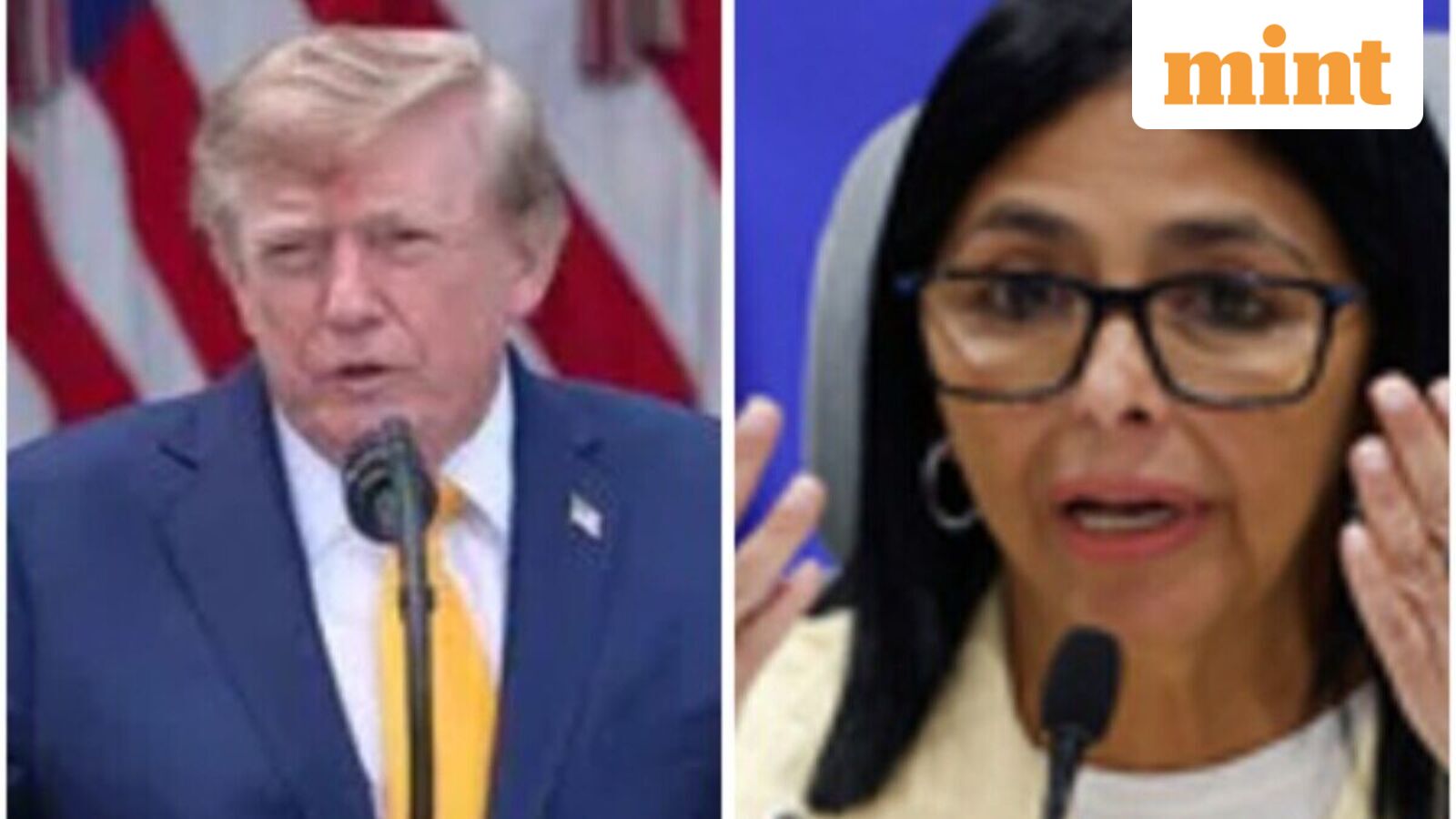
US President Donald Trump has said oil from Venezuela will be used to replenish the country’s Strategic Petroleum Reserve (SPR), which he claimed was “virtually emptied” under former President Joe Biden.
In a post on Truth Social, Trump said: “The ‘topping out’ process will begin very shortly, and is a Gift from Venezuela to the People of the United States.”
However, it remains unclear how quickly Venezuelan crude could reach the US strategic reserve or provide any immediate benefit to American motorists.
The reserve held about 290 million barrels as of August 21, close to a 44-year low. The US has drawn down the stockpile under both Biden and Trump administrations in response to global supply disruptions, including Russia’s invasion of Ukraine and the conflict with Iran.
Trump calls Venezuela deal ‘biggest oil deal’
Trump has described the agreement announced on Friday as “THE BIGGEST OIL DEAL IN WORLD HISTORY”, but the White House has released few details about the arrangement.
Trump said the deal would give the US a stake in Venezuela’s vast oil reserves and help revive the country’s battered energy industry.
The agreement follows the US capture of former Venezuelan President Nicolás Maduro in January. Maduro was taken to New York to face federal drug-trafficking charges.
Venezuela’s acting President Delcy Rodríguez has described the agreement as a step toward rebuilding the country’s oil industry and boosting economic recovery.
“Venezuela retains ownership and sovereignty over its resources,” Rodríguez said in a televised address.
She said her government wants Venezuela to become a major oil producer, gas exporter and petrochemical developer.
What is known about the oil deal?
According to Rodríguez’s government, the agreement covers the development of 17 oil fields with a proven potential of around 65 billion barrels.
The Venezuelan government said the deal could attract about $100 billion in investment into the country’s oil industry and generate more than $209 billion in taxes for Caracas.
A US official said a new company formed by the US government and an unnamed private operator has been granted rights to untapped oil fields for 100 years.
The company would reportedly give the US 55% of its effective output, through a combination of an ownership stake and rights to purchase oil at cost.
Some of the oil bought by the US would be directed toward the Strategic Petroleum Reserve and the military, according to the official.
However, the exact ownership structure, the identity of the private operator and the precise terms of the agreement remain unknown. No full text of the agreement has been released.
Will the deal lower US gas prices?
Probably not in the immediate future.
Trump has argued that the agreement will help bring down gasoline prices in the US. But energy experts say Venezuela’s ageing and damaged oil infrastructure would require years of investment before production could rise substantially.
The average US gasoline price was around $4.08 per gallon on Saturday, according to AAA, compared with about $3.20 a year earlier.
Venezuela previously produced more than 2.5 million barrels per day above its current production level, he said.
Venezuela’s oil industry faces major hurdles
Venezuela has some of the world’s largest proven oil reserves, but years of underinvestment, sanctions, deteriorating infrastructure and political instability have weakened its energy industry.
The new agreement is intended to attract large-scale investment, but it remains unclear who will finance the infrastructure upgrades needed to increase production.
Chevron, the only major US oil company currently producing in Venezuela, declined to comment on Trump’s announcement. Exxon Mobil also declined to comment.
Opposition grows in Venezuela
The deal has already faced criticism inside Venezuela.
Some Venezuelans view the agreement as a departure from decades of government policy that emphasised national control over the country’s oil resources.
Harvard University professor and former Venezuelan planning minister Ricardo Hausmann called the deal a “shameful deal”, arguing that Rodríguez does not have the constitutional authority to commit Venezuela to such an agreement.
Rodríguez rejected such criticism, insisting that Venezuela would retain ownership and sovereignty over its natural resources.
She said the government intends to pursue additional agreements with international energy companies, including Chevron, Repsol and Shell.
US lawmakers divided over deal
The agreement has also divided lawmakers in Washington.
Republican Senator Bernie Moreno praised the deal, calling it historic and arguing that it would benefit both the US and Venezuela.
Democrats, however, accused Trump of pursuing Venezuela’s oil interests through the military operation that resulted in Maduro’s capture.
Senator Tim Kaine called the arrangement “corruption at epic scale”, while Senator Chris Van Hollen accused Trump of putting US service members at risk to secure Venezuelan oil.
It remains unclear whether Congress will have a formal role in approving the agreement.
Major questions remain
Several key details of the Venezuela oil deal have yet to be made public.
These include:
Who will finance the estimated investment needed to rebuild Venezuela’s oil infrastructure?
Who is the unnamed private operator involved in the new company?
How exactly will the US 55% effective output share be calculated?
How quickly can Venezuela increase oil production?
How much Venezuelan crude could eventually enter the US Strategic Petroleum Reserve?
Will major US oil companies be willing to invest amid Venezuela’s political uncertainty?


