







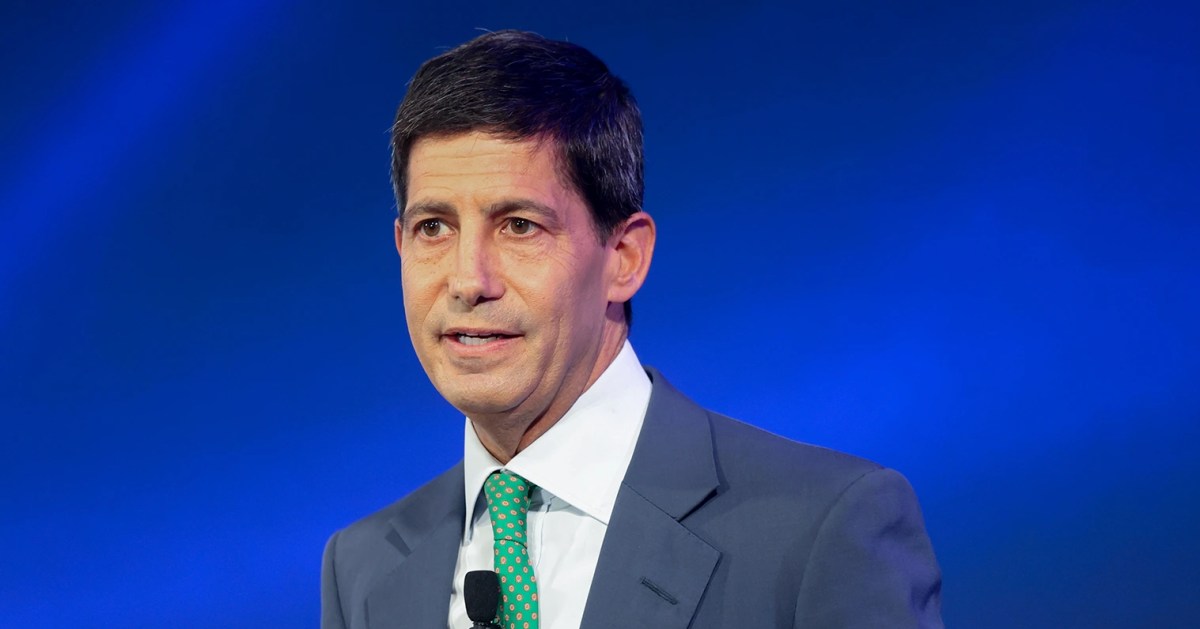
Kevin Warsh, President Donald Trump’s pick to chair the Federal Reserve, faced scathing questions from Senate Democrats over perceived gaps in his financial disclosures and his ability to keep the central bank independent from political pressure as his confirmation hearing kicked off Tuesday.
Warsh used his opening remarks to convey a simple but significant argument to the senators who will decide whether he is fit to steward America’s monetary policy: Political pressure is not a threat to the central bank.
The insulation of the Fed from politics was immediately the defining issue of Warsh’s confirmation hearing before the Senate Banking Committee.
Sen. Elizabeth Warren of Massachusetts, the committee’s highest-ranking Democrat, pressed Warsh on what she said were “secrets” in the financial disclosures he provided to the Office of Government Ethics ahead of the hearing. Warsh disclosed assets worth more than $100 million — including stakes in the prediction market platform Polymarket and Elon Musk’s SpaceX — but did not name the underlying holdings of his largest investments.
“If you can’t answer these questions, you don’t have the courage and you don’t have the independence,” Warren said after Warsh refused to say whether his undisclosed individual investments are tied to the Trump family, declined to answer a question about whether Trump lost the 2020 election and repeatedly demurred when she challenged him to name a policy point on which he disagreed with Trump.
Warsh said he would divest his undisclosed assets if confirmed, but his failure to rebuke the president means he could face an uphill battle. He has to convince the panel of lawmakers that he will not yield to the president’s repeated calls for lower interest rates, as Trump has been known to do.
Trump has made no secret of his belief that the White House should have greater control over the nation’s monetary policies. The president has mounted a pressure campaign against current Federal Reserve Chair Jerome Powell over his refusal to slash interest rates. His attacks include multiple threats to fire Powell and a now-dismissed Justice Department subpoena that was part of the administration’s effort to pursue a criminal case against him.
Warsh, a favorite among Republican circles and the son-in-law of billionaire Trump donor Ronald Lauder, is trying to persuade lawmakers that he is not a reflection of the president who appointed him.
“I do not believe that independence of monetary policy is threatened when elected officials state their views on rates,” the former Morgan Stanley investment banker said in his opening remarks. “Fed independence is up to the Fed.”
Asked by Republican Sen. John Kennedy of Louisiana if he had “agreed with the president” to lower interest rates, Warsh said Trump never asked him to “predetermine, commit, fix or decide on any interest rate decision in any of our discussions.”
“Nor would I ever agree to do so if he had,” Warsh added.
After the Justice Department subpoenaed Powell and accused him of knowingly misleading Congress about the ongoing $2.5 billion building renovation project at the Fed’s Washington headquarters, retiring Republican Sen. Thom Tillis of North Carolina vowed to block the confirmation of any Fed chair nominee until the DOJ dropped its investigation.
Tillis decried the Justice Department’s Powell probe his line of questioning. The Republican focused on the potential the investigation has to delay Powell’s exit from his post as Federal Reserve chairman in May rather than the ethics of the probe itself, which he has publicly questioned in the past.
Powell has said he has no intention of leaving the central bank’s board until the DOJ drops the investigation, even though his term ends May 15. He can stay past May because he also serves as a member of the Fed’s board of governors, his term for which does not end until January 2028.
“The sitting chair, even though he has two years left on his term, would have exited,” Tillis said of Powell. “But instead, we have somebody who thinks a building project that went over by about $700 million with a lot of what seemed to be justifications for it are holding up this whole process.”
Praising Warsh for his background as an economist, Tillis made clear his “no” vote is not personal to Warsh. Tillis told MS NOW ahead of the hearing that he has spoken to the White House about his intention to vote against Warsh.
Asked if there’s a sign that the White House will budge on the Powell investigation, Tillis responded that there is no sign that he will change course on voting down Trump’s nominee.
Sen. Kevin Cramer, R-N.D., previously joined Tillis in expressing concern over the motivations behind the probe. Warren called on her Republican colleagues to block Warsh’s nomination until the investigation comes to an end.
A federal judge quashed the investigation, which had become central to Trump’s public smear campaign against Powell, in March. In April, the same judge denied the Trump administration’s bid to revive the subpoenas he dismissed, writing that “the Government served these subpoenas on the [Federal Reserve] Board to pressure its Chair into voting for lower interest rates or resigning.” Despite the blow, U.S. Attorney Jeanine Pirro is still fighting to keep the investigation alive.
The banking committee, which oversees Fed nominations, has a narrow 13-11 Republican majority.
Warsh stumbled while answering questions from Sen. Raphael Warnock, D-Ga., about how he would grade the economy for working Americans. Rather than offer a serious answer about the Fed’s role in shaping the economic outlook for consumers, Warsh made a joke about grade inflation at elite universities.
Several staffers and some committee members could be seen chuckling behind him.
“Well the Americans that I talk to, particularly in the state of Georgia, who haven’t had the benefit of attending some of these elite institutions, are trying to make their lives work,” Warnock replied. “They’re sitting around their kitchen tables trying to figure out how to put their kids through school, and regardless of how the markets are doing, consumer confidence is at a record low. So that’s their grade on the economy.”
Warsh previously served as a Federal Reserve governor in the early 2000s, after being nominated by then-President George W. Bush. A rate-cut-friendly economist, Warsh in his remarks jabbed at the Fed’s expansion of control over the levers of monetary policy that followed the 2008 financial crisis.
Sydney Carruth is a breaking news reporter covering national politics and policy for MS NOW. You can send her tips from a non-work device on Signal at SydneyCarruth.46 or follow her work on X and Bluesky.


