

This article was created in partnership with Merck.
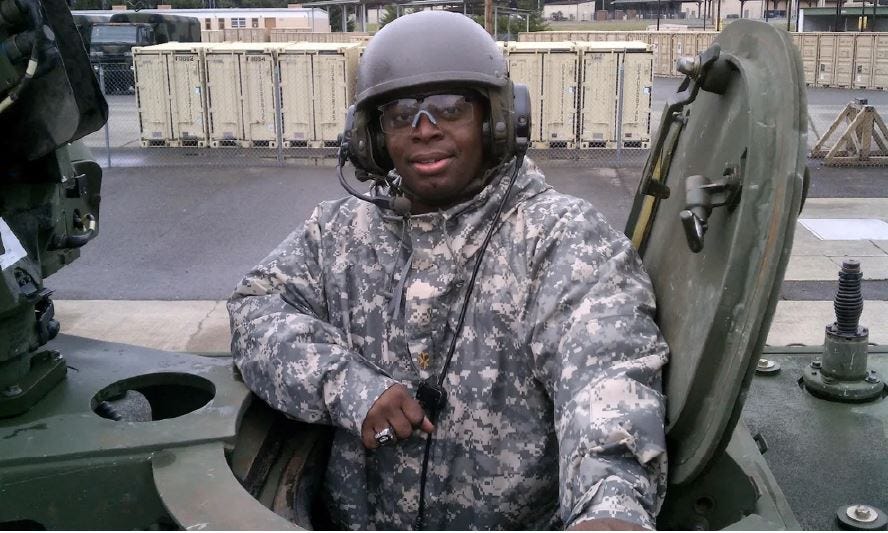
HENRY H. WASHINGTON III, PHD, was in the U.S. Army for 25 years before he retired. But as it turned out, his transition from military service to civilian life came with prostate cancer.
It was during his outgoing physical—routine for anyone leaving the service—that the cancer was spotted. “[The Veterans Administration] called and said, ‘You have prostate cancer,’” Washington recalls. “And even though I had lost both my father and my grandfather to prostate cancer, it was still shocking to hear those words. There were a lot of emotions at first—a lot of anger. But I was also lucky to have people around me who lifted me up and supported me in my fight.”
Understanding the Basics About Prostate Cancer
THE SECOND MOST common cancer among men in the U.S. is prostate cancer. About 1 in 8 men will be diagnosed during their lifetime, and Black men are at increased risk compared to men of other races. While screening can help with early detection before symptoms present, it cannot confirm whether a patient has prostate cancer, but can help determine whether further testing or a prostate biopsy may be recommended.
In its early stages, prostate cancer can be challenging to diagnose. You may be at risk for prostate cancer if you:
- are over the age of 65
- inherited gene mutations, or
- have a family history of certain cancers.
This last risk factor is key. Men are twice as likely to develop prostate cancer if their father or a brother has been diagnosed with the disease. Additionally, men with several affected relatives—particularly if those relatives were young when it was diagnosed—have a much higher risk for prostate cancer.
Washington’s family history of prostate cancer made him especially vigilant about screening. “My father was the one who planted in me the seed to make sure I was getting screened annually,” he recalls. “Even though I thought I was invincible, it was always my father’s voice in my head: ‘Get checked, get checked.’”
Confronting Life’s Changes
DESPITE HIS FAMILY HISTORY, Washington wasn’t prepared for the roller-coaster the treatment journey put him on. The disease and its treatment can disrupt normal urinary, bowel, and sexual function, all of which can impact body image and self-esteem. “You are grieving the parts of your body that don’t work the same way as they did before,” Washington says. “As men, we often feel like we aren’t allowed to have emotions or share our feelings. I had a lot of anger, and the only way I found that I could deal with that was by talking to others who knew what I was going through.”
Finding Support and Paying it Forward
NOW MORE THAN 10 years cancer-free, Washington believes his experience has given him a new purpose: to share his story and offer support to other men.
“As men, we often don’t like to ask for help. And I think that is even more true when we are going through something as intimate as prostate cancer,” he says. “In my experience, if I put myself out there, that creates a space for other men to approach me, share their own stories, and ask for help. I know that is my purpose now.”
And his message to all men? “Be proactive, and understand your risk. And get screened if you are at risk.”
Watch Washington’s prostate-cancer story at ZeroCancer.org/about-prostate-cancer.
