







Quick bites from the week
- The FDA added to the mystery surrounding a deadly Listeria outbreak stretching from April 2024 through June 2025 by releasing a heavily redacted report. One person died from the outbreak and another 25 were hospitalized, but it is impossible to tell from the report exactly where and how the affected patients encountered the contaminated produce item.
- Europe saw a modest increase in the number of food recalls and alerts from 2024 to 2025. A surge of recalls and alerts in the last quarter of 2025 pushed the overall number past 2024 levels. Non-bacterial (aflatoxins, pesticides, ochratoxin A, and chlorpyrifos) and bacterial (Salmonella and Listeria) contamination were the two leading causes of food safety actions across the European area.
- The House Agriculture Committee approved the 2026 Farm Bill on a 34-17 vote on Thursday. Seven Democrats joined all Republican committee members in voting for the bill. Democrats failed to roll back millions of dollars in cuts to the Supplemental Nutrition Assistance Program (SNAP) that were included in the One Big Beautiful Bill Republicans passed last year. The current version of the legislation also includes language that would protect pesticide companies from lawsuits claiming their products are harmful to human health. It is not yet clear when, or even if, the full House will consider the bill.
- A recall of frozen not ready-to-eat (NRTE) chicken products that may be contaminated with glass expanded again this week. Ajinomoto Foods North America Inc. is now recalling nearly 37 million pounds of various ready-to-eat (RTE) and NRTE chicken and pork fried rice, ramen, and shu mai dumpling products. Recalled products (listed here) have been sold under brand names Ajinomoto, Kroger, Ling Ling, Tai Pei and Trader Joe’s.
Today’s Topic: New World Screwworm
Starting in June 2023, the New World screwworm (NWS) reappeared in Panama, and is spreading across Central America. It’s now been reported in Belize, Costa Rica, El Salvador, Guatemala, Honduras, Nicaragua and Mexico
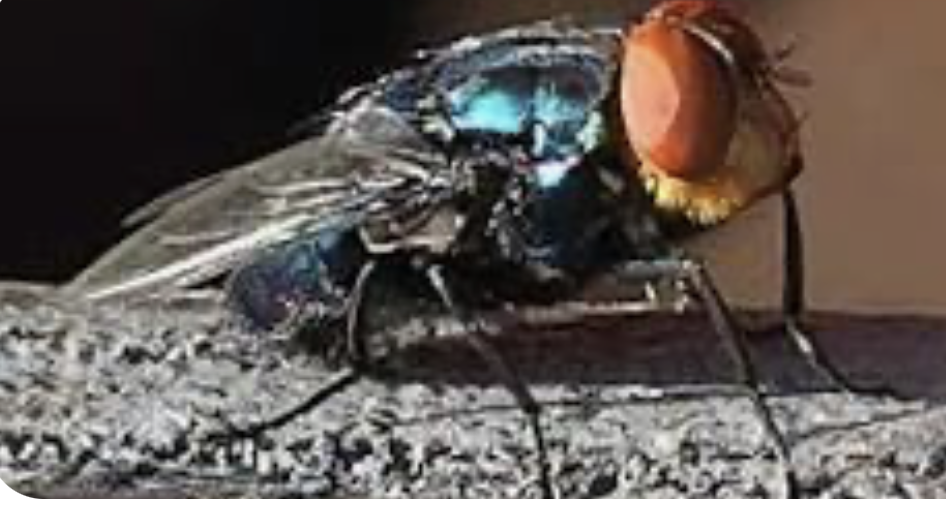
NWS is a parasite that infests warm-blooded animals, causing severe damage to the flesh. The larvae or maggots burrow deep into the tissue, causing extensive damage and leaving infections and wounds that don’t heal. The larvae can grow to 17 mm with spines that wrap around in a spiral, thus the “screwworm” name.
More than 20,000 new outbreaks are reported in the World Animal Health Information System (WAHIS) maintained by the World Organisation for Animal Health (WOAH, formerly known as OIE).
The spread of NWS (Cochliomyia hominivorax) and its serious threat to both domestic and wild animals, humans, and the environment requires strengthening surveillance and diagnostic capacities, ensuring transparent and timely disease reporting via WAHIS, and promoting cross-sectoral and cross-border collaboration.
No vaccines or biological products are currently available for NWS control although eradication programs based on the sterile insect technique (SIT) using sterilized male flies have been successful in the past.
The New World screwworm fly (NWS), Cochliomyia hominivorax (Coquerel), and the Old World screwworm (OWS), Chrysomya bezziana (Villeneuve), are both obligate parasites of mammals during their larval stages.
Both insects are in the subfamily Chrysomyinae of the family Calliphoridae (blow flies) of the order Diptera (true flies). OWS and NWS are designated “the primary screwworm.” Infestation of tissue by fly larvae is known as myiasis.
All living warm-blooded animals can be infested by screwworm, but it is most common in mammals, while rare in birds. Many cases of screwworm myiasis have been documented in humans.
The New World screwworm is not currently present in the United States, but it is knocking on the door of Texas. It was eradicated from the United States decades ago, but its northern trek from Central America has brought it back to Mexico. The U.S. Department of Agriculture (USDA) is now leading an all-government campaign to keep NWS from returning to the states.
“Our unified government approach spans multiple federal agencies, in partnership with state, tribal, local, and territorial governments and industry,” the USDA said in January. “Together, we are taking bold action to stop the screwworm’s northward spread in Central America and Mexico and protect the U.S. livestock industry, economy, food supply, and public health.”
Secretary of Agriculture Brooke L. Rollins calls the campaign to keep NWS out of the United States the “Grand Challenge.”
“This is a strategic investment in America’s farmers and ranchers and is an important action to ensure the safety and future success of our food supply, which is essential to our national security,” Rollins said.
“These are the kinds of innovations that will help us stay ahead of this pest and protect our food supply and our economy, protecting the way of life of our ranchers and going towards rebuilding our cattle herd to lower consumer prices on grocery store shelves,” Rollins added. “We know we have tried-and-true tools and methods to defeat this pest, but we must continually seek new and better methods and innovate our way to success. Together, through science, innovation, and collaboration, we can ensure we’re utilizing the latest tools and technology to combat NWS in Mexico and Central America and keep it out of the United States.”
USDA’s Animal and Plant Health Inspection Service (APHIS) is making up to $100 million available to support innovative projects that enhance sterile NWS fly production, strengthen preparedness and response strategies, and safeguard U.S. agriculture, animal health, and trade. APHIS may fund proposals that support one or more of the following objectives:
- Enhance sterile NWS fly production
- Develop novel NWS traps and lures
- Develop and increase understanding of NWS therapeutics/treatments (i.e., products that could treat, prevent, or control NWS) for animals
- Develop other tools to bolster preparedness or response to NWS
One of the 65 World War Two-era Army Air Bases in Texas is being used by the USDA to combat NWS. Moore Air Base near Edinburg, Texas, and the Mexican border is the newest U.S.-based sterile fly dispersal facility, expanding the USDA’s ability to disperse sterile flies along the border and into the United States, if necessary.
Fly dispersal is all about the sterile insect technique (SIT), in which large numbers of sterile insects are released into the wild. American entomologists Edward Fred Knipling and Raymond C. Bushland were awarded the 1992 World Food Prize for developing the sterile insect technique to eliminate screwworms that prey on warm-blooded animals, especially cattle. This was effective because female screwworms mate only once.
When the larvae of these flies invade open wounds and eat into animal flesh, infected cattle can die within 10 days. In the 1950s, screwworms caused annual losses to American meat and dairy supplies projected at over $200 million. Screwworms can also target human flesh.
The Moore facility expands the USDA’s ability to detect, control, and eliminate the NWS by adding to the network of dispersal facilities across Central America and Mexico.
USDA currently produces sterile flies for dispersal at the COPEG facility in Panama. USDA is also investing $21 million to support Mexico’s renovation of an existing fruit fly facility in Metapa, which will double NWS production capacity once complete. With ongoing support from APHIS technical experts, Mexico anticipates beginning sterile fly production at the Metapa facility as soon as this summer.
When complete, the international network of facilities will produce 100 million sterile flies per week at COPEG in Panama, 100 million at Metapa in Mexico, and 300 million at Moore Air Base.
Agriculture Secretary Rollins said the Moore sterile fly dispersal facility “was a high-priority project, and our team delivered it in record time. This new facility is a monumental achievement for our domestic preparedness efforts, but we are also diligently working to stop the spread of screwworm in Mexico, conduct extensive trapping and surveillance along the border, increase U.S. response capacity, and encourage innovative solutions.”
Texas Governor Greg Abbott said, “America is going to take care of ourselves, including dealing with the approach of screwworm as it gets closer to our border.” The parasite is now thought to be within 200 miles of the Texas border.
Some of the arguments about the pros and cons of strategies to prevent the spread of NWS track with Trump administration rhetoric on immigration and other policies involving Latin American countries. Actions up for debate are the emergency authorizations, sterile fly releases, and a coordinated USDA plan. At the same time, some critics raise concerns about gaps in long term prevention and climate related policy.
Here’s what USDA supporters are saying
As far as the pros (actions and strengths) of current NWS prevention efforts go, supporters point to the following:
1. Multipronged federal response
- The administration initiated an “aggressive, multipronged strategy” involving USDA, Health and Human Services (HHS), and other agencies to combat the potential spread of NWS.
- This included emergency authorization for animal drugs and coordinated federal state efforts.
2. Expansion of the USDA’s containment and eradication plan
- USDA announced a large initiative building on a five pronged plan to stop NWS from entering the U.S. from Mexico.
- The plan emphasized surveillance, border protection, and rapid response.
3. Sterilefly release program
- The administration supported dispersing 100 million sterile flies per week in Mexico to suppress wild screwworm populations, a long established and effective eradication method.
- USDA described the effort as a national security level priority.
4. Regular public updates and coordination
- USDA leadership provided ongoing updates, including detection reports and operational guidance through the NWS Response Playbook
Here’s what critics of USDA efforts are saying
Although no one wants to see NWS spreading, there are some criticisms of the current approach:
1. Climate policy criticism affecting long term risk
- Some reporting argued that the administration’s stance on climate change could indirectly worsen NWS risk by not addressing warming driven habitat expansion.
- Critics suggested that climate denial could undermine long term prevention, even if short term response actions were strong
2. Concerns about insufficient proactive measures
- Articles noted that while the sterile fly program is effective, critics felt USDA was “not doing anything” about climate linked resurgence risks beyond traditional methods.
- This criticism focused on strategic planning rather than operational response.
3. Historical context raised questions about preparedness
- Reporting highlighted that screwworm eradication in the mid20th century relied heavily on sterile fly releases, and some analysts questioned whether modern surveillance and prevention had kept pace with changing environmental conditions.
Our take
In June 2023, Panama became the first country to notify the World Organization for Animal Health of NWS resurgence—marking the formal start of the current outbreak wave.
In late 2023, Costa Rica and other Central American countries began reporting cases; the outbreak was then recognized as a regional issue, not a single country event.
Through 2024, NWS spread north and west, with detections across all Central American countries and Mexico, where it had previously been controlled. The screwworm attacked livestock, wildlife, and some humans in those countries, according to WOAH outbreak summaries.
In August 2025, WOAH reported more than 20,000 new outbreaks, and U.S. state health departments began issuing health advisories warning travelers and clinicians about NWS south of the border.
The U.S. remains free from screwworm so far in 2026, according to the Centers for Disease Control and Prevention (CDC), as USDA ups its readiness with border measures, trade restrictions, and surveillance.
After winning at the naval battle at Midway, Chester W. Nimitz, the great World War II Pacific Fleet admiral from Fredericksburg, Texas, was asked: “Were we better than the Japanese or just luckier?” In an echo of that moment, Agriculture Secretary Rollins should be asking right now: “Are our screwworm defenses working or have we just been lucky?”
By the numbers
16,725 – The number of screwworm outbreaks reported in 2024 and early 2025, as documented in OIE’s international report on prevalent animal health issues. Nineteen countries reported outbreaks, including 15 exceptional epidemiological events. Nicaragua accounted for over 60 percent of the reported outbreaks. Other affected countries included Belize, Costa Rica, El Salvador, Guatemala and Honduras.
1966 – The year screwworm was eradicated from the U.S., according to USDA’s Animal and Plant Health Inspection Service. A small outbreak in the Florida Keys was eliminated in 2017.
830 – The number of human cases of NWS infection reported as of the fall of 2025. According to Science News, a Maryland resident became the first recorded infection in the current outbreak after encountering NWS while traveling in El Salvador in 2024.
200-300 – The number of eggs one NWS female fly can lay at one time. Each female fly may lay up to 3,000 eggs in its lifetime. However, the release of sterile male flies can drastically reduce that number until the flies begin dying without being able to reproduce.
110 – The number of kilometers from the U.S. border to the closest reported case of screwworm in Mexico, as of September 2025. That’s about 68 miles. After being eradicated in Mexico in the 1970’s, NWS was detected there again in December 2024.
What it means
USDA has plenty of resources to keep the icky screwworm at bay. This means it will either keep the screwworm away from U.S. borders or fight until the pest is eradicated again.
Topping the USDA’s list are the Laboratories of the National Veterinary Services Laboratories (NVSL), which have laboratories in two locations: Ames, Iowa, and the Foreign Animal Disease Diagnostic Laboratory (FADDL) at Plum Island, NY. Diagnostic test services available at those facilities range from a single laboratory test to comprehensive laboratory services covering many pathogens for a suspected disease outbreak.
The USDA is replacing the FADDL with the National Bio and Agro-Defense Facility (NBAF) to support its animal disease work, including the screwworm fight. After some extended handholding by Homeland Security, USDA now oversees that bio-level 4 research laboratory in Manhattan, Kansas.
The Kansas facility replaced the previous Plum Island Animal Disease Center (PIADC), which the USDA operated from 1954 to 2023. The mysterious Plum Island first housed the military’s Fort Terry, first established in 1897. Fort Terry became a biological warfare research facility in the 1950’s but is now being considered for sale or for use as a wildlife refuge.
In its day, the Plum Island Animal Disease Center was credited with keeping diseases such as “foot and mouth” disease from spreading in the United States.
The new NBAF took over Plum Island’s operations in 2023 and is part of the Biosafety Level 4 Zoonotic Laboratory Network. The primary research tenants of the facility are the USDA’s Agriculture Research Service and the USDA’s Animal and Plant Health Inspection Service veterinary unit. Continued funding for that kind of research effort will be essential to controlling the spread of infestations of NWS and other pests moving forward. Vigilance alone cannot prevent an outbreak. Government agencies, scientists and livestock owners must continue to cooperate to prevent and eradicate such outbreaks.


