

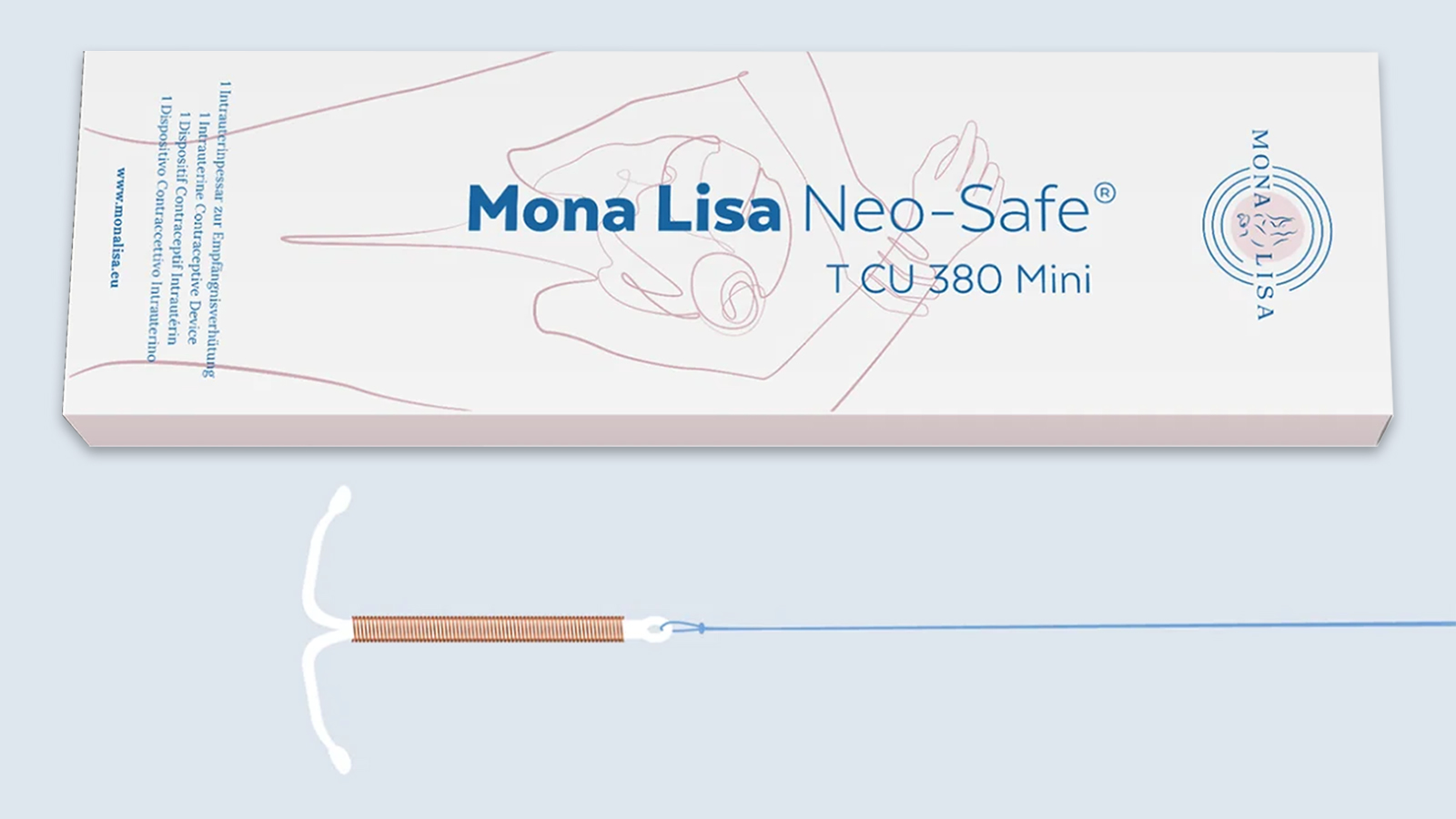
- Nonhormonal copper IUDs of different sizes can benefit different body types.
- About one in five women may discontinue IUD use within a year, often due to increased bleeding and cramping.
- A smaller IUD led to fewer adverse events resulting in discontinuation versus a larger IUD available in the U.S. in a randomized trial.
A smaller nonhormonal copper intrauterine device (IUD) resulted in a low pregnancy rate and fewer side effects leading to discontinuation compared with a larger copper IUD among a mostly nulliparous population, a phase III randomized trial showed.
The 3-year cumulative Pearl Index was 1.86 pregnancies per 100 women-years with the Nova T (NT)Cu380 Mini IUD, and the cumulative rate of pregnancy through year 3 was 4.8%, reported Courtney A. Schreiber, MD, MPH, of the University of Pennsylvania in Philadelphia, and colleagues.
Adverse events leading to discontinuation occurred less frequently among NTCu380 Mini users versus users of the larger TCu380A (20.8% vs 33.2%; P=0.001), most notably bleeding or pelvic pain (14.5% vs 27.3%, respectively; P<0.001), they wrote in NEJM Evidence.
The NTCu380 Mini, which is available in Canada and parts of Europe, measures 24 mm across and 30 mm vertically while the TCu380A, which is available in the U.S., measures 32 mm across and 36 mm vertically. In February, the hormone-free, low-dose copper Miudella IUD — measuring 32 mm by 30 mm — was the first of its type to win FDA approval in nearly 40 years.
“People seeking long-acting, reversible contraception may choose a copper IUD because it is hormone-free, allows for cyclic menstrual bleeding, and is long-acting with a quick return to fertility on removal,” Schreiber and team wrote.
However, about one in five women may discontinue use within a year, often due to increased bleeding and cramping. This is particularly true for nulliparous women, who tend to have smaller uterine cavities.
Thus, the authors theorized, “a smaller copper IUD may be better tolerated by nulliparous individuals and improve available contraceptive options.”
“The overall safety of the NTCu380 Mini IUD and TCu380A was similar in our trial,” they concluded.
In an accompanying editorial, Nancy Fang, MD, MS, and Jeanelle Sheeder, MSPH, PhD, both of the University of Colorado in Aurora, noted that “there is no one-size-fits-all solution when it comes to contraception.”
Considering that uterine cavities vary in size and shape, it’s no wonder that different IUDs work better and are more tolerable in different people. One group in particular that could benefit from smaller IUDs are adolescents, Fang and Sheeder said.
“In clinical practice, we think that providers should also consider shifting from focusing on nulliparity as a possible indication for use of the NTCu380 Mini and consider choosing the frame size based on uterine cavity size,” they wrote.
Ultimately, “opportunities to introduce a variety of sizes may help decrease risk of early discontinuation and increase satisfaction among IUD users,” they added.
This multicenter, participant-masked trial was conducted at 16 U.S. sites among participants ages 16 to 40. Patients were randomly assigned in a 4:1 ratio to either the NTCu380 Mini (n=744; 98.6% had successful placement) or the TCu380A (n=183; 97.7% had successful placement) and assessed for 37 weeks. After IUD placement, participants went to the clinic at 6 weeks, then 3, 6, 12, 24, and 37 months, where they completed pregnancy tests. At 37 months, those with the NTCu380 Mini underwent removal; those with the other IUD could opt to keep it, if they wanted.
About 84% of patients in both groups were nulliparous, and the median age at enrollment was 26. Eligible participants had regular menstrual cycles, had heterosexual vaginal intercourse at least once a month, and didn’t use other contraceptives during the trial. Those with abnormal cervical cytology, HIV, known infertility, recent injectable contraceptive use, or an intention to become pregnant during the study were excluded.
The primary outcome was the efficacy of the NTCu380 Mini, which was measured for women ages 35 and younger on the Pearl Index, defined as the number of pregnancies per 100 woman-years. Time to pregnancy by survival analysis for the NTCu380 Mini, and comparative adverse events and continuation rates between the two IUDs, were additional outcomes.
Although not powered for this comparison, two pregnancies occurred among TCu380A users ages 35 and younger over the 3-year trial duration, with a cumulative rate of pregnancy through year 3 of 2.52%.
Serious adverse events occurred in 3.5% of NTCu380 Mini IUD users versus 1.9% of TCu380A IUD users (P=0.28), and discontinuation occurred in 51.3% versus 57.3%, respectively (P=0.07).
As for limitations, Schreiber and team noted that the 4:1 sample size ratio necessitated by budgetary constraints may have prevented optimal comparisons for some outcomes.
Disclosures
This research was supported by grants from the Bill & Melinda Gates Foundation, the Eunice Kennedy Shriver National Institute of Child Health and Human Development (NICHD), and Mona Lisa NV.
The editorialists reported receiving grants from NICHD and being on the board of the American Civil Liberties Union Colorado Chapter and on the medical advisory committee for the Cobalt Abortion Fund.
Primary Source
NEJM Evidence
Source Reference: Schreiber CA, et al “Contraceptive efficacy and comparative side effects of a mini copper intrauterine device” NEJM Evid 2025; DOI: 10.1056/EVIDoa2400480.
Secondary Source
NEJM Evidence
Source Reference: Fang NZ, Sheeder J “Copper IUDs — one size does not fit all” NEJM Evid 2025; DOI: 10.1056/EVIDe2500114.
