



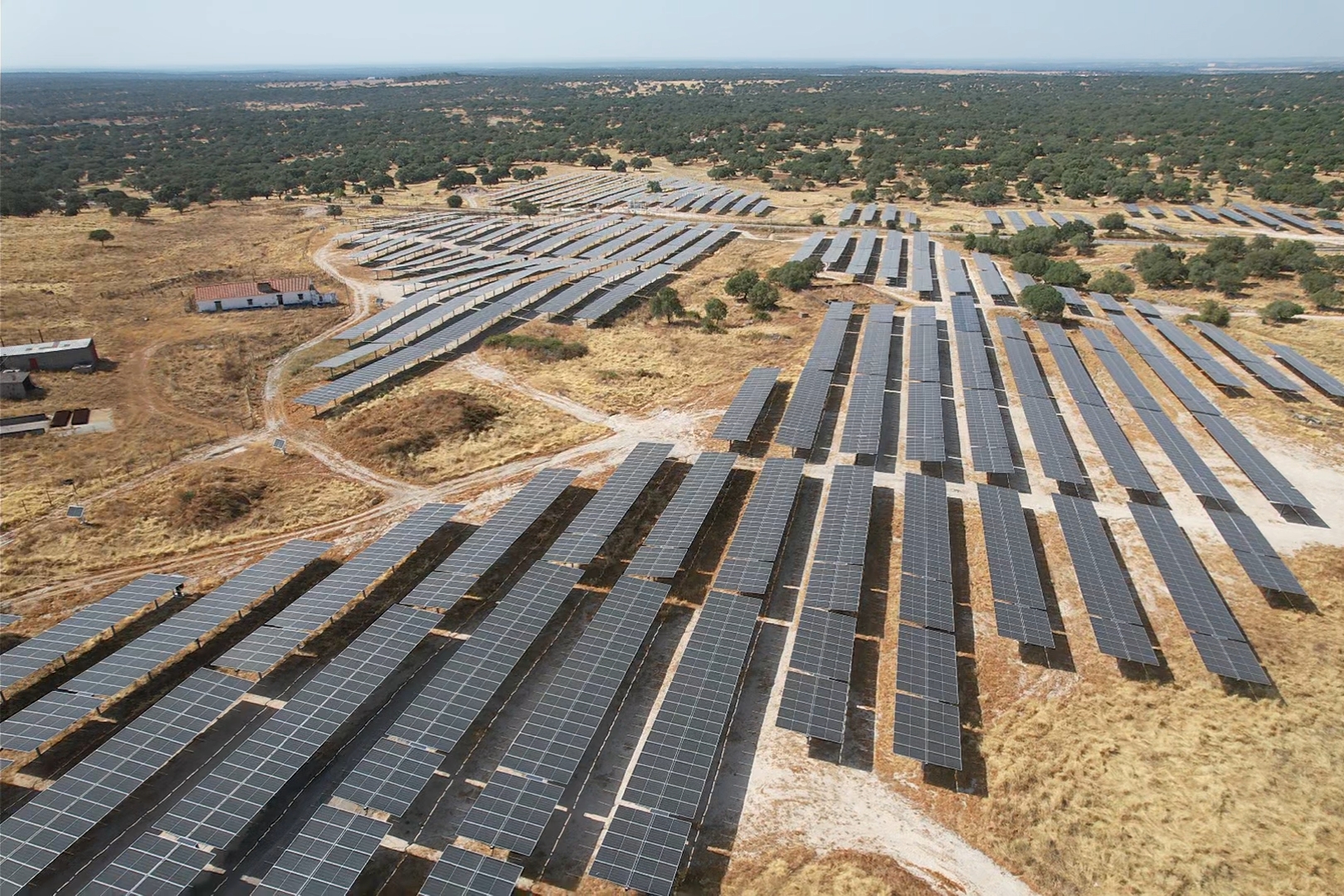
Solar power generation in Portugal reached a record 3.85 GW in August, supported by continued growth in installed PV capacity. Renewables supplied 52% of electricity consumption during the month, while net imports accounted for 36%.
Solar power generation in Portugal reached a new peak of approximately 3.85 GW in August, supported by continued growth in installed PV capacity. The country added 372 MW of solar between December 2025 and May 2026, bringing cumulative capacity to around 7.3 GW.
According to Portuguese grid operator Redes Energéticas Nacionais (REN), electricity demand continued to rise in August, increasing 1.2% year on year. Adjusted for temperature and the number of working days, demand rose 2.2%.
From January through August, electricity demand increased 3.1% year on year, or 3% after adjustments for temperature and working days.
Renewables meet 52% of consumption
Solar PV became Portugal’s largest source of electricity generation for the first time in July, according to REN. The technology covered 19% of national electricity consumption, ahead of hydropower at 16%, wind at 13%, and biomass at 5%.
In August, renewable energy sources supplied 52% of electricity consumption. Non-renewable generation accounted for 12%, while net imports covered the remaining 36%.
Electricity imports also reached a new peak, exceeding 5.2 GW, following the recent reinforcement of interconnection capacity between Portugal and Spain.
The increased exchange capacity with the Spanish grid has strengthened Portugal’s ability to rely on imports. Meanwhile, expanding PV capacity enabled solar generation to reach a new peak despite less favorable irradiation conditions.
Renewables cover two-thirds of consumption year to date
During the first eight months of the year, renewable energy sources covered 66% of Portuguese electricity consumption. Hydropower accounted for 25%, followed by wind at 23%, solar PV at 13%, and biomass at 5%.
Natural gas-fired generation supplied 14% of consumption during the period, while net imports accounted for 20%.
From January through August, hydropower conditions were particularly favorable, with a productivity index of 1.20. The wind productivity index stood at 0.98, while the solar index was 0.82.
Overall, Portugal’s electricity system in August reflected two key developments: continued PV capacity growth, which helped solar reach a new generation peak, and strong use of interconnections with Spain amid relatively weak wind and solar resources.
This content is protected by copyright and may not be reused. If you want to cooperate with us and would like to reuse some of our content, please contact: [email protected].


