




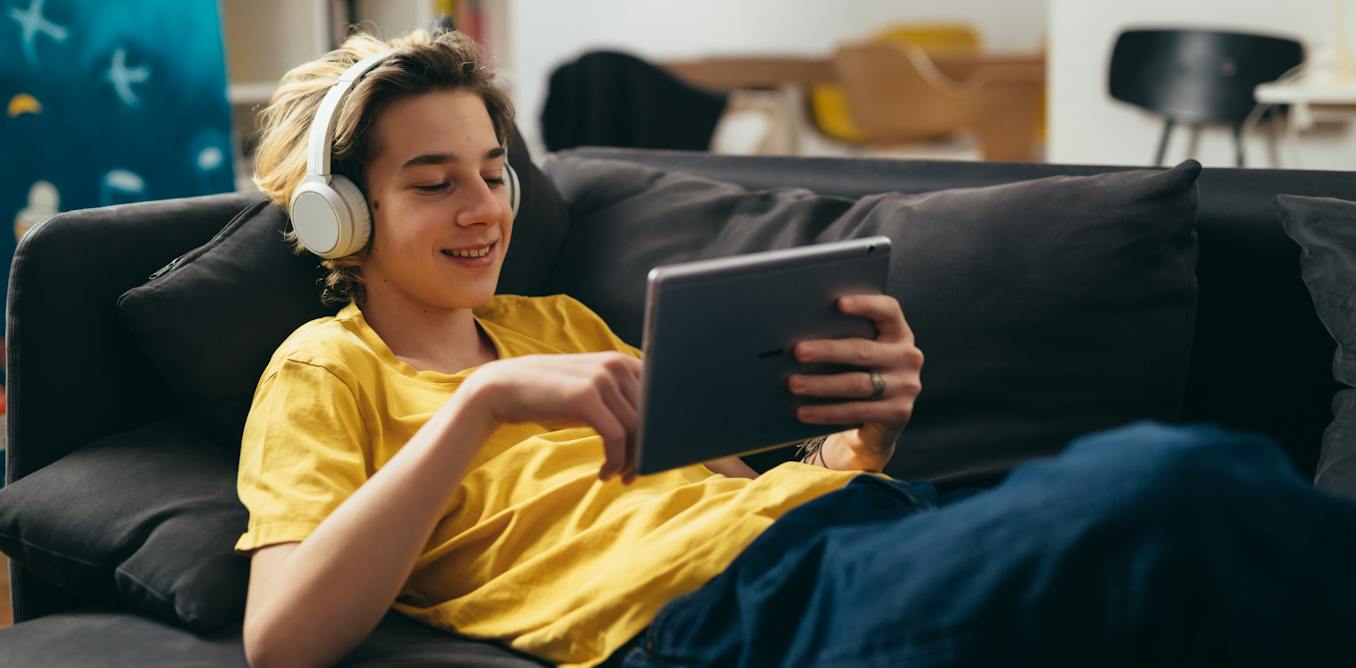
Autism is a neurodevelopmental condition which influences how people communicate and process information. A significant proportion of autistic children do not speak, or only speak a few words. Many find it difficult to communicate face to face, especially when interaction is fast moving or dependent on interpreting bodily cues.
Social media offers what can be an easier way for autistic people to socially interact. When communication takes place over text, there is no need to make eye contact or interpret facial expressions. There is also more time to read a message, consider a reply and participate without the sensory demands of a busy room. Although online interactions are not free of misunderstanding, for some autistic young people they provide a form of social contact that is more manageable than many physical settings.
Many autistic people have at least one area of highly intense interest. These interests can often be quite niche and so there may not be any local clubs or groups.
As part of the Autism in Affinity Spaces project, based at Queen Mary University of London, we are investigating how and why young autistic people in the UK use social media to engage with their focused interests during the transition to adulthood. We have conducted a survey with 144 young people aged between 16 and 26 to find out more about their experiences.
The benefits of social media
Since social media offers connections across the globe, our participants told us that they used spaces such as Facebook groups and Discord servers to connect with people who shared their interests and understood why they mattered. One participant explained:
It’s really all about that sense of community that I didn’t have before. It’s just been so, so nice to find people that who can like an artist as much as you and understand it on the same wavelength. That’s something I haven’t had for so long.
This was also true for non-speaking participants. One Reddit user described the value of being able to choose smaller groups and write in detail:
Since I’ve used it for years it’s easy to use. I also enjoy the anonymity. I often need long posts to explain things, and it’s quite easy to find posts about specific topics.
Social media also provides opportunities for learning. All our participants said they used digital platforms to learn more about their interests – for example, by watching informative YouTube videos or following experts on Instagram. Many had also become experts themselves as a result and used social media to share their knowledge with others.
Importantly, social media did not displace offline activities but enhanced our participants’ ability to participate in them. Predictability and structure are often important for autistic people, so some participants used social media to research unfamiliar places or upcoming events before they went in.
What are the downsides?
Our participants also described some of the problems associated with social media, including misinformation and exposure to harmful content, such as videos promoting disordered eating after viewing content about veganism. These concerns closely reflect those raised in the government’s proposals.
However, participants on the upper age range of our sample (24-26) reported the same issues with those on the lower age range, suggesting that these harms are linked less to young people’s use of platforms than to how they are designed.
The transition to adulthood is difficult for all young people, but autistic people face unique challenges and often experience mental health difficulties as a result. As part of the updated national strategy for autistic people in England, the government has committed to supporting positive transitions and improving mental health outcomes.

Lee Charlie/Shutterstock
While our research focused on young people aged 16 and over, a ban on social media could make these issues worse in practice for younger children, while proposed measures for the UK such as a social media curfew for under-18s could affect older teens negatively. Removing access to social media would mean the loss of those online communities which provide an important source of learning and social interaction, potentially making autistic adolescents feel even more socially isolated.
Although many of our participants wanted to attend more in-person activities, they were’t always able to do so. Restricting social media will not make public transport easier to use, youth clubs more welcoming or local venues less overwhelming. It will remove a route through which young people currently gather the information and contacts needed to navigate those settings.
Changing the online environment
If social media platforms create risks for young people, the first responsibility should lie with the companies that design them. Platforms should be expected to respond effectively to harassment and discrimination. Small design changes could also make platforms easier to manage. Young people in our current project, for example, wanted to be able to turn off scrolling or hide video recommendations – simple features that would give users more control over their own experience.
Young people also need support to navigate digital spaces, including understanding how algorithms shape what they see, how to recognise misinformation and what to do when content or interaction becomes overwhelming.
But safer online spaces cannot be considered separately from the offline world. Many autistic young people use online communities because local groups do not always accommodate different communication and sensory needs. If policy aims to encourage more in-person activity, those environments must also be designed so neurodivergent people can participate.