







By Irina Slav – Feb 25, 2026, 3:00 PM CST
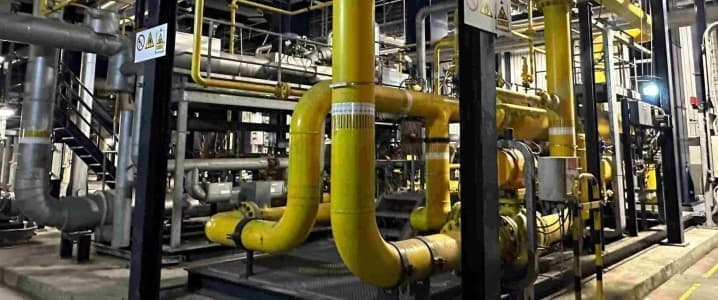
- AI-driven power demand is surging far faster than expected, but a shortage of heavy-duty gas turbines is creating a bottleneck.
- Turbine makers like Siemens, GE Vernova, and Mitsubishi are ramping up production, but expansion projects could take up to 5 years.
- Without enough gas capacity, AI growth could slow or grids may turn back to coal, potentially delaying coal plant retirements.

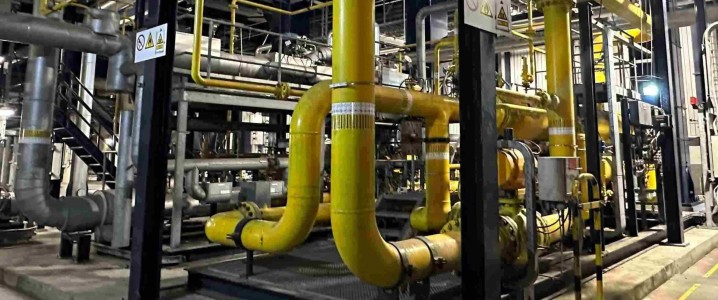
The surge in electricity demand in the world’s AI hotspots has prompted a comparable surge in the demand for reliable supply. That surge was not expected. There are not enough gas turbines to secure that supply. This means the AI revolution would either have to slow down, or the grid would have to increase its reliance on coal.
Natural gas has in recent years been marketed as a so-called bridge fuel between coal and oil, on the one hand, and wind and solar, on the other. When it became clear that “bridge” is in fact its own country of low-emission baseload generation, natural gas became the object of vilification from activists, to the point that some claimed it was even more harmful for the atmosphere than coal. Then came the AI race.
As Big Tech majors rush to expand their artificial intelligence capabilities and applications, demand for electricity is going through the roof. That jump, however, comes after decades of modest to no growth, reflected in gas turbine makers’ flat production. Now, they are having to boost this really fast, really high. In the meantime, those with the insatiable electricity demand are having to make do with alternatives—including repurposed jet fuel engines.
Siemens Energy, one of the world’s top three gas turbine makers, earlier this month reported that its gas services business had seen a record quarter in orders, with a total of 102 new turbines in the backlog. As much as 40% of these new orders came from the United States, and another 35% came from Europe. The report came after Siemens announced plans to invest $1 billion in grid equipment production.
GE Vernova, another turbine major, will be spending $600 million on turbine manufacturing capacity expansion, with an annual target of up to 80 heavy-duty turbines, equal to some 20 GW in generation capacity. The company announced those plans a year ago, saying, “These strategic investments and the jobs they create aim to both help our customers meet the doubling of demand and accelerate American innovation and technology development to boost the country’s energy security and global competitiveness.”
Mitsubishi, the third Big Turbine manufacturer, said last year it would double its turbine production capacity in response to soaring demand. The company’s chief executive noted that “We were working towards boosting production capacity by 30%, but that’s not enough to meet growing demand. Fulfilling those orders is our top priority.”
Yet all these plans take time to materialize, and industrial electricity consumers need it now, so they are converting jet engines to gas turbines. The Wall Street Journal reported earlier this month that the conversion of jet engine turbines to power generation turbines was a growing business enjoying a lot of investor interest. One such converting company, FTAI Aviation, had seen its shares gain 42% since it announced this new business, which takes just 30-45 days to convert a Boeing 737 jet engine into a power generation gas turbine.
Time is of the essence for the AI racers. The waiting lists for the big turbine makers are years long. But they need the electricity now because if momentum lets up, investors will flock out, or such appears to be the general perception in the AI space. Still, the turbine supply constraints may affect that momentum, according to some analysts.
“In the five-year period to 2030 that will supposedly be critical for the development of advanced AI, gas-fired plants will make a significant contribution to meeting increased US power demand,” Wood Mackenzie’s Vice Chair for the Americas, Ed Crooks, wrote in a recent opinion piece. “But the availability of equipment, particularly heavy-duty gas turbines, is likely to remain a constraint on electricity supply growth, despite the new capacity being added by manufacturers,” Crooks also said.
He noted that the current wait time for new gas turbines was five years. This is definitely not fast enough for AI data center operators. Aircraft jet engines converted into gas turbines cannot be a complete substitute due to their much smaller capacity. And this means that either Big Tech loses momentum in AI, or it gets electricity right now, from somewhere else.
That ‘somewhere else” could be solar, for instance, at least according to pro-transition analysts. Yet even those analysts admit that this choice would also involve major investment in batteries—and backup generation capacity. To cut out the middle man, so to speak, tech companies may simply opt for the most readily available baseload capacity besides natural gas: coal. And this means that plans for the retirement of coal power plants are likely to be revised, according to Wood Mac.
Even with all that baseload generation, the AI racers may have to revise their own growth plans because there will not be enough electricity to go around, simply because of the physical laws of the world we all inhabit. And this, in turn, means that the race’s momentum will inevitably slow at some point.
By Irina Slav for Oilprice.com
More Top Reads From Oilprice.com
- Woodside Warns LNG Glut Fears May Be Overstated
- Eni Set to Approve Two Gas Projects Offshore Indonesia
- Oil Prices Hit 7-Month High on U.S.-Iran Standoff
Download The Free Oilprice App Today





Irina Slav
Irina is a writer for Oilprice.com with over a decade of experience writing on the oil and gas industry.


