







Public Health & Policy
>
Health Policy
— “We have 12 days” until open enrollment closes, one Democratic senator noted
by Joyce Frieden, Washington Editor, MedPage Today
December 3, 2025 • 5 min read
Bipartisanship was the word of the day at Wednesday’s Senate hearing on lowering healthcare costs, with several Republicans saying they might be willing to fund the Affordable Care Act’s (ACA) extended premium tax credits for a limited period of time.
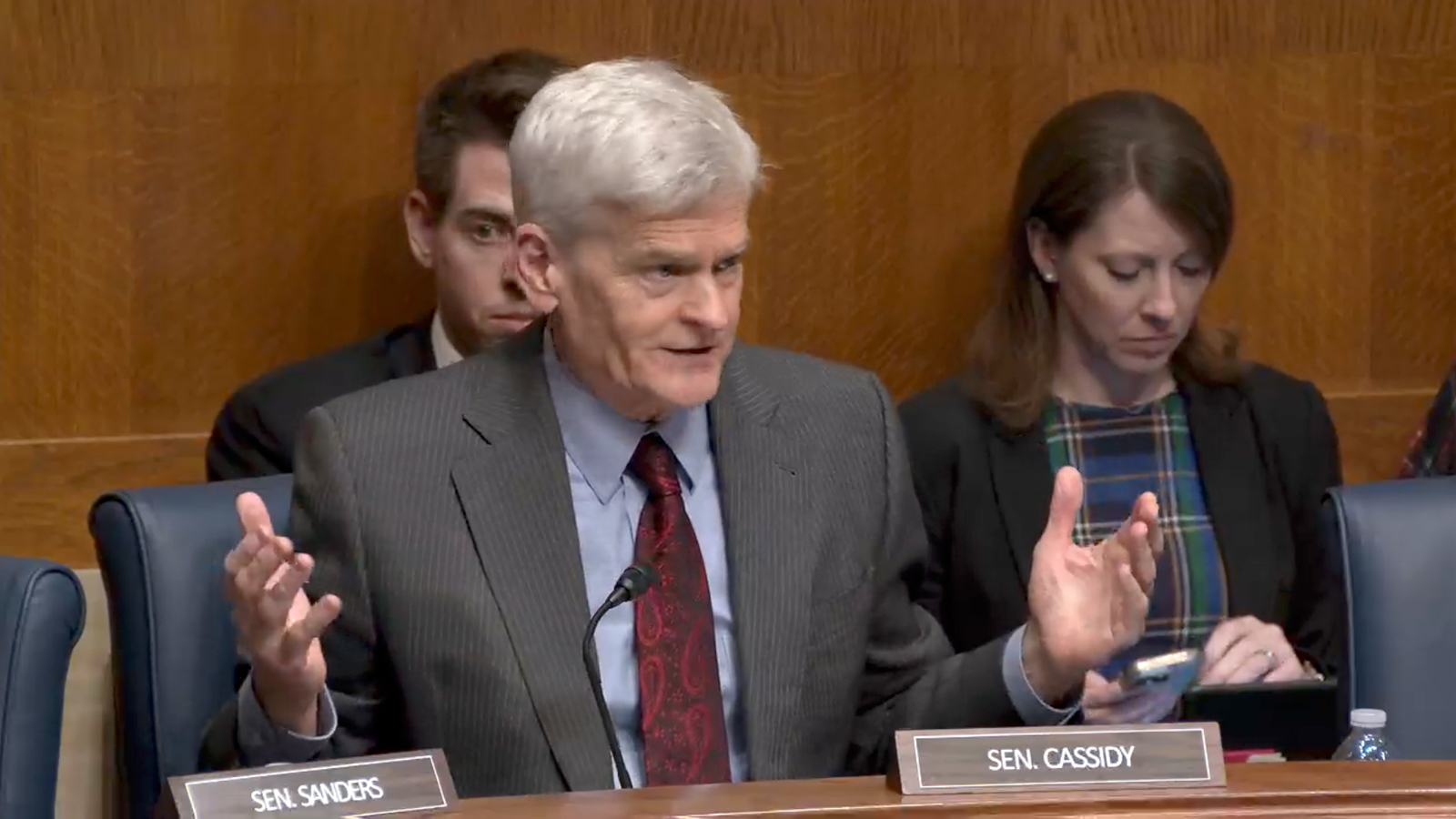
“I’m hoping that we can find a bill that can get 60 votes that can fix the problem of the exchanges for January 1, 2026,” said Sen. Bill Cassidy, MD (R-La.), chairman of the Senate Health, Education, Labor & Pensions (HELP) Committee, in his opening remarks. “It shouldn’t be a Republican solution. It shouldn’t be a Democratic solution. It should be an American solution.”
End-of-Year Expiration
Cassidy was referring to the impending expiration of the tax credits, which help lower premiums for enrollees on the ACA’s health insurance exchanges. The credits are due to expire on Dec. 31, leaving many families facing doubling or tripling of their health insurance premiums for 2026. Enrollees have until Dec. 15 to sign up for a plan on the exchange, a point that was not lost on committee members.
“We have 12 days,” noted Sen. Tammy Baldwin (D-Wisc.). “That’s how long we have until open enrollment closes … The solution is not to let these enhanced tax credits expire. We’ve got to buy ourselves time to do these larger reforms.”
Sen. Patty Murray (D-Wash.) agreed. “Even if we passed a bill today, there is not time to implement anything more complicated than a clean extension” of the credits, she said. “So if Republicans are serious about preventing the mega healthcare hike, they should work with us right now to pass a clean 1-year extension as fast as possible … And if their call for reforming tax credits is serious, we should look at that” for 2027.
Although most Senate Republicans appear to be dead set on not extending the tax credits, a few Republicans on the committee sounded open to doing so. “We can freeze the subsidies where they’re at right now for a temporary period of time — I don’t know if that’s 1 year, 2 years — to help give some relief,” said Sen. Jon Husted (R-Ohio). “It’s a little help right now that we both can agree on, and then we’ve got to fix [the system].”
“I want to be able to say we have helped address this,” said Sen. Lisa Murkowski (R-Alaska). “I think we’re going to need to have a short-term extension, but I think we can put reasonable caps on” while we look for a longer-term solution.
Murkowski was referring to the idea of putting an upper income limit on the extended tax credits, which isn’t there right now — a fact that Sen. Susan Collins (R-Maine) picked up on. “There is no income cap on the enhanced premium tax credits,” she said. “That means, according to our calculations, that a family of four living in Augusta, Maine, making $325,000 a year … qualify for a taxpayer-funded subsidy.” She asked Joel White, president of the Council for Affordable Health Coverage and a witness at the hearing, whether he thought the subsidies needed an income cap.
“Absolutely yes,” said White, whose organization supports a free-market healthcare system. “We need to understand that those subsidies above 400% of poverty are financed in part by taxes on working Americans … So there needs to be some kind of recognition that we can’t tax low-income people to pay for high-income people’s subsidies.”
Health Savings Account Solution Suggested
Cassidy had a different proposal which involved funneling the money previously used for tax credits to health savings accounts (HSAs) for exchange enrollees, who could then use the money to pay for their deductibles and other healthcare expenses. Several Democrats pointed out that this idea would not solve the current problem because HSA participants are not allowed to use HSA money to pay premiums.
Marcie Strouse, owner of a benefits consulting firm in Des Moines, Iowa, and a witness at the hearing, said that rule needed to be changed. “HSAs should be modernized so families can save more, use funds to pay for small-group premiums, and treat HSAs as true long-term health investment tools,” she said.
Sen. Bernie Sanders (I-Vt.), the committee’s ranking member, had a different solution altogether. “Let us extend the current ACA tax credits for at least another year, 2 years, 3 years, while in this committee, we tackle the real issues,” he said.
“The first thing I think that we should do is have a panel with people from different countries around the world who are providing healthcare to all of their people as a human right. We are the only major country on Earth that does not do that,” he noted. “In my view, the answer is going to be to emulate what many other countries do, guarantee healthcare to all people [by implementing] Medicare for all.”
Apart from the subsidy issue, several senators mentioned bipartisan bills they were sponsoring to improve the healthcare payment system. Sen. Tim Kaine (D-Va.) noted that the committee had passed pharmacy benefit manager (PBM) reform a year ago along bipartisan lines. “I don’t like pharmacy benefit managers who don’t do any medical research, who don’t produce any products,” he said. “I don’t like them charging based on a percentage of the drugs that they’re sending out, which gives them an incentive to … skew the market toward higher-cost drugs, so they’ll make more money for basically doing nothing.”
Instead of trying for a home run on health reform right away, “we should hit singles or doubles on things we agree on,” he added.
Role of Price Transparency
Sen. Roger Marshall, MD (R-Kansas), touted his Patients Deserve Price Tags Act, which would increase healthcare price transparency.
“Americans are great shoppers if you give them the opportunity to look at price tags,” he said, adding that his bill would save Americans $1 trillion per year. Marshall then said to Cassidy, “I think that this is a home run bill, and I would just like to ask your feelings on giving us some type of a markup on it, hopefully sometime this year.”
“Absolutely,” Cassidy replied.
Sen. Lisa Blunt Rochester (D-Del.) said she had actually just signed on to Marshall’s legislation during the hearing. “I signed on to Senator Marshall’s bill right while we were here, the transparency, because that’s something I’ve worked on in the House, along with telehealth and PBM reform,” she said.
Sen. John Hickenlooper (D-Colo.) said he also had signed onto the bill. “Especially with the large employers that are managing the healthcare for thousands of people, when they can see what one hospital is charging versus another for the same thing, they begin to use pressure to make those data available and use it in making decisions on which insurer they’re going to use,” he said. “I think that’s essential to drive prices down.”


