







commentary
The Supreme Court justice has made millions from companies that profit from our planet’s destruction
Published
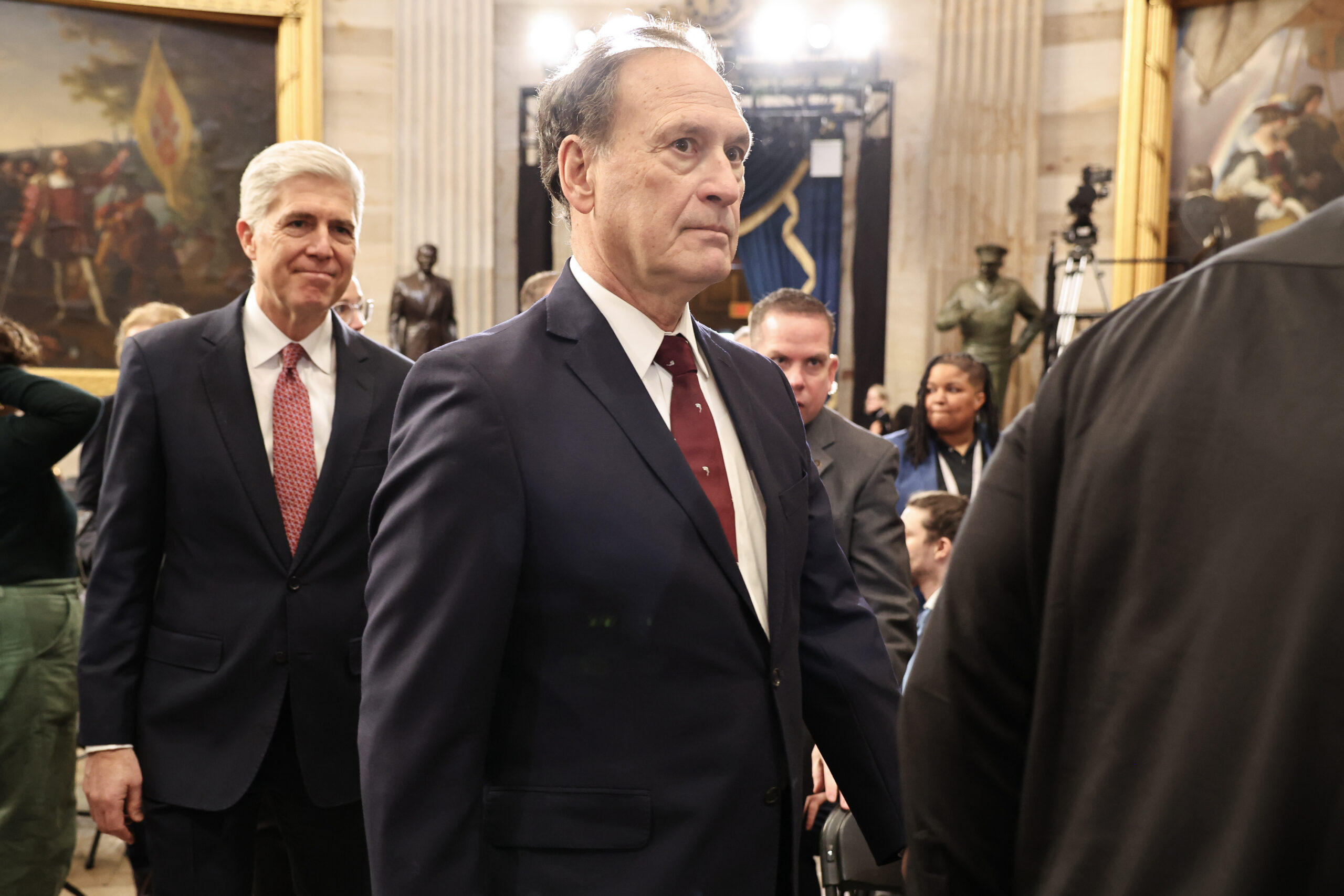

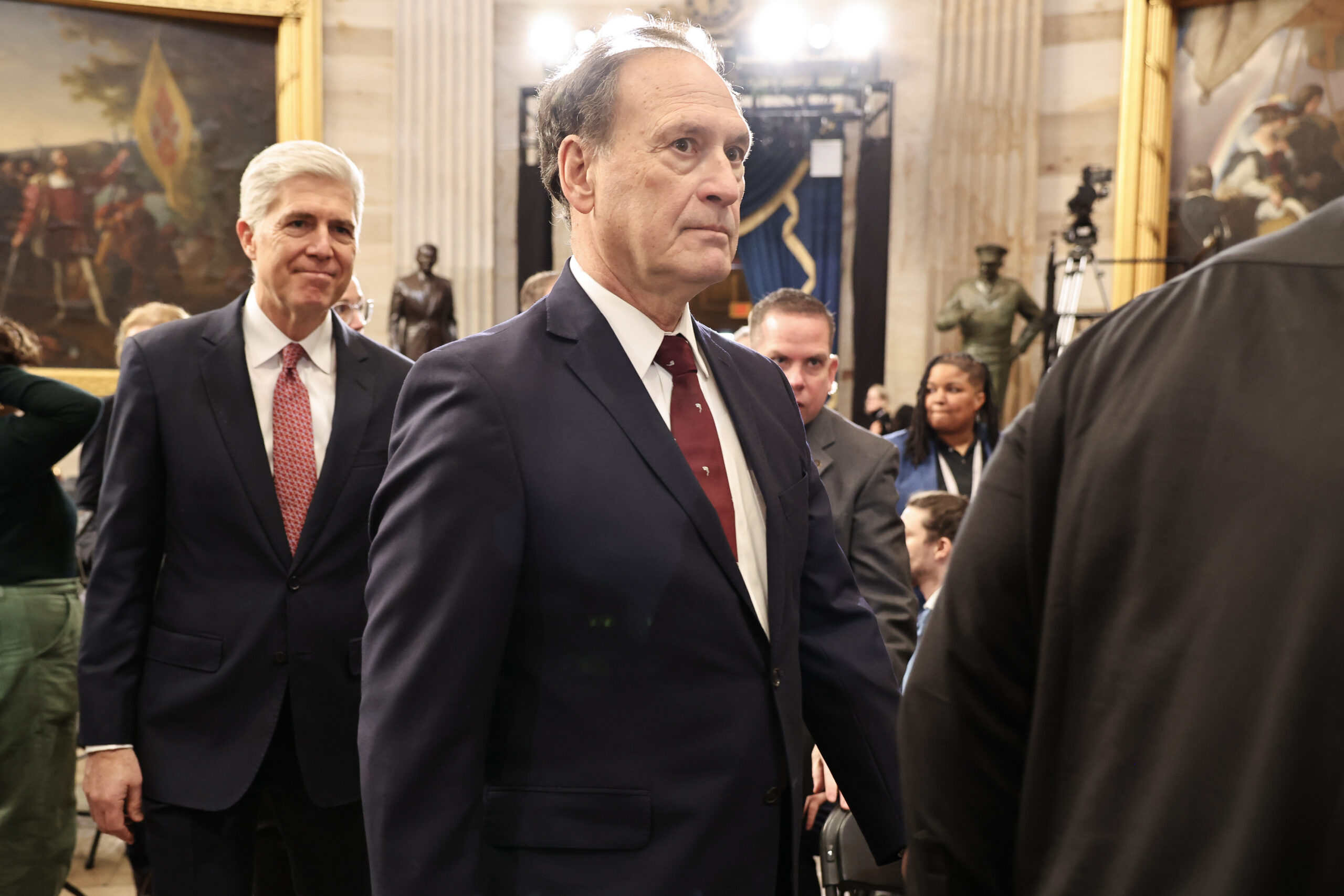
Associate Supreme Court Justice Samuel Alito Jr. attends inauguration ceremonies in the Rotunda of the U.S. Capitol on January 20, 2025 in Washington, DC. (Photo by Chip Somodevilla/Getty Images)
A version of this essay first appeared in Crash Course, Salon’s free morning newsletter. Sign up for early access to articles like this, plus more of Salon’s bold journalism on how policies, movements and culture wars affect real people.
Thanks to his majority opinion on Dobbs v. Jackson Women’s Health Organization, which destroyed the constitutional right to abortion in the U.S., or his weird flag-waving during the “Stop the Steal” movement, Samuel Alito is notorious. But the Supreme Court justice’s entanglements with the fossil fuel industry are also worth scrutinizing, especially as the Court prepares to hear a case on whether fossil fuel companies can be held responsible for the damages of climate change.
In 2018, the city and county of Boulder, Colorado, sued oil and gas giants Suncor and ExxonMobil, alleging they were responsible for the greenhouse gas emissions that are heating the planet and making Colorado less livable. The extreme heat is causing dwindling snowpack in the state, with far-reaching impacts on agriculture and water supply, not to mention the multi-billion dollar ski industry. The Supreme Court will hear arguments Oct. 5 on whether these corporations can be held responsible for this ongoing crisis.
Despite what appear to be numerous conflicts of interest, Alito has refused to recuse himself from the case. On Monday, a Forbes report analyzed the justice’s newly released 2025 financial disclosures, which reveal a stock portfolio chock-full of investments in the oil, gas and energy sectors. The publication estimated Alito’s net worth at approximately $10 million, of which up to $2.9 million comes from his fossil fuel industry investments between 2005 and 2024, citing a recent analysis from the judicial watchdog group Court Accountability. Alito is still only the second-richest justice on the court, coming in behind Chief Justice John Roberts, but the pair are the only two justices who hold stocks in individual companies.
Some of the companies that Alito has invested in include ConocoPhillips, Woodside Energy Group, OGE Energy Corp. and Black Hills Corp. Notably, none of these are Suncor or ExxonMobil. Alito apparently sold his Exxon shares years ago! So what’s the big deal?
Reading between the lines, it seems obvious that Alito would have some degree of complicity if Suncor and ExxonMobil were found liable in the Colorado case. Of course, knowing which way this court leans, that seems extremely unlikely, despite the solid scientific evidence (Consensus! Rarest of things!) that fossil fuel companies are overwhelmingly driving our climate crisis. Even people who work at these companies, or who run them, seem to understand this, but that hasn’t stopped them from employing every tactic possible to avoid responsibility. It’s our climate change-denying president and his “hoax”-echoing acolytes that are the real anomaly here, and they just don’t have the evidence to back up their claims that it’s just a little warming.
Start your day with essential news from Salon.
Sign up for our free morning newsletter, Crash Course.
A melting glacier in Nepal just killed more than 1,200 people, with thousands reported still missing. Flash flooding in Arizona recently swept through the Grand Canyon, killing at least two people, a weather event that was exacerbated by wildfire scarring, drought and warming temperatures in the Pacific Ocean. At least 35,000 excess deaths have been linked to the scorching heat waves in Europe over the summer, though that is likely an undercount. All of these disasters have been intensified by how we are heating the planet by burning fossil fuels. Climate change is not some abstract problem. It has a real human cost.
The good news is that it may be getting easier to sue the companies responsible, especially as evidence against them becomes more undeniable. Mother Jones recently reported that “oil and gas groups are facing a wave of lawsuits. Over 40 cases in the United States filed by states, municipalities, and tribal governments have been brought against Big Oil since 2017.” While we’ll have to see how these suits pan out, in the meantime, raising a stink about this toxic corruption, subsidized by our government, is the best we can do, aside from voting for candidates who vow to pursue liability.
So if Suncor, ExxonMobil and other corporations are guilty of damaging our planet — and we know they are — it’s very arguable that so are individual investors like Alito, who profit handsomely from the extractive industries that are contributing climate change. Whether that’s a criminal act may be difficult to prove in court, but why would the justice want to risk implicating himself in the future? It would surprising if he didn’t rule in favor of Big Oil on any such case.
The Supreme Court can align itself with the fossil fuel agenda and deny reality if it so chooses; that is nothing new. But someday there will be real accountability for these crimes against the environment, whether that means punishment for climate criminals or the natural consequences of unnatural warming, i.e., erasing humanity’s presence on this planet. I know which one I’d prefer.


