







Simon Watkins
Simon Watkins is a former senior FX trader and salesman, financial journalist, and best-selling author. He was Head of Forex Institutional Sales and Trading for…
Set us as your preferred Google source
Premium Content
By Simon Watkins – Jun 02, 2026, 4:00 PM CDT
- The Xi-Putin summit produced declarations of cooperation but failed to deliver key outcomes Russia wanted.
- China continues to benefit from heavily discounted Russian oil and gas while supplying much of the technology Russia needs to sustain its war effort, deepening an increasingly unequal relationship.
- China now views Russia less as an equal strategic partner and more as a source of cheap energy, geopolitical leverage, and long-term influence.

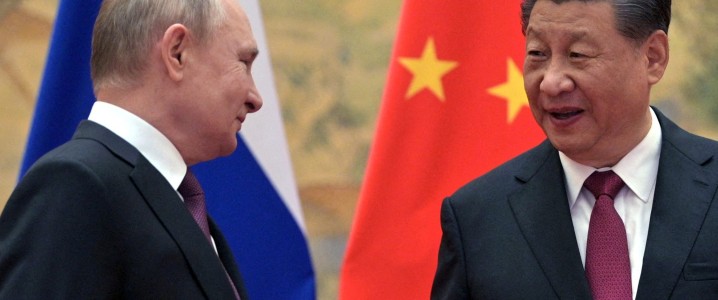
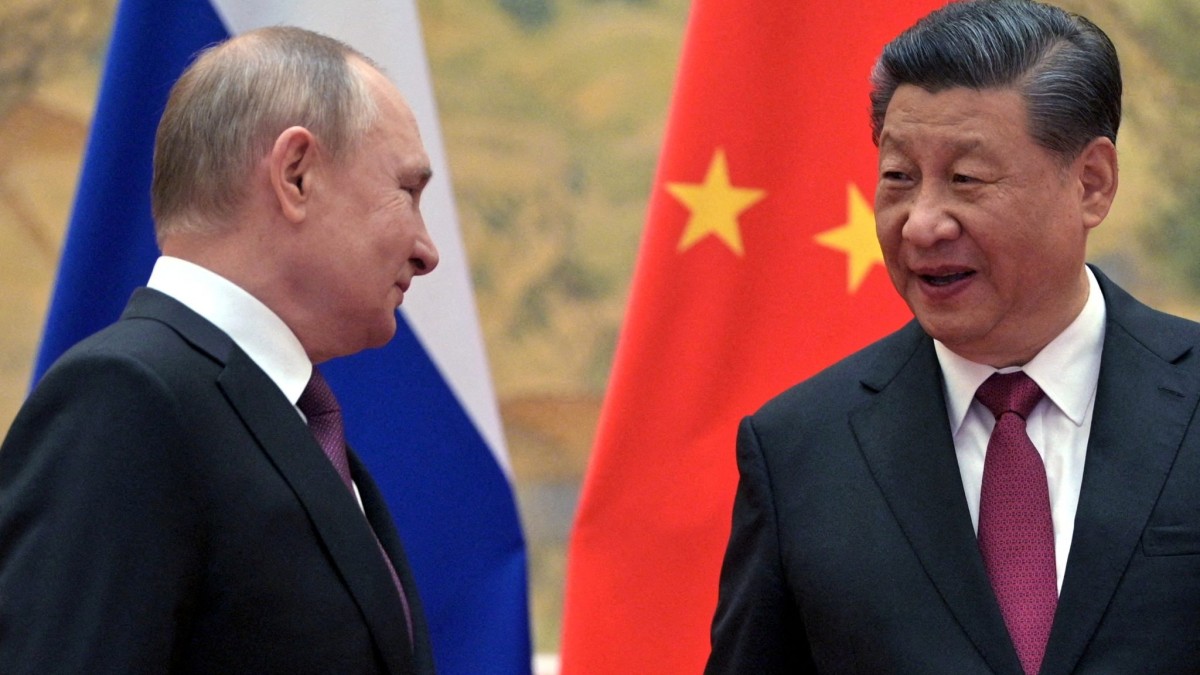
The recent summit meeting between Chinese President Xi Jinping and his Russian counterpart Vladimir Putin ending on 20 May raised more questions than answers for many observers, probably including Putin himself. There was the standard announcement of several deals signed to boost cooperation in matters of the economy, trade, education, science, and technology. And there was the release of the usual document denouncing the current global hegemony associated with the U.S.-led Western alliance (47 pages worth, snappily entitled the Joint Declaration on the Establishment of a Multipolar World and a New Type of International Relations). However, some key announcements that observers may have expected — including Putin — were not made. So where is Russia’s relationship with China right now?
One place it is not, is in the cozy space of all-pervasive cooperation reflected in the two countries’ joint communiqué on 4 February 2022 — 20 days before Russia’s invasion of Ukraine — in which they stated that: “Friendship between the two States [China and Russia] has no limits, there are no forbidden areas of cooperation.” By no coincidence whatsoever, it was made at the opening ceremony of the 2022 Beijing Winter Olympics, which ended on 20 February. Putin’s delaying of the onset of the war against Ukraine was made as a gesture of respect to his ally Xi not to undermine any of the China-hosted global event’s lustre with something altogether less uplifting, as analysed in full in my latest book on the new global oil market order. At around the same time as the two leaders met on the sidelines of the Games, several huge new cooperation deals in the oil and gas sectors and beyond had been announced by state news agencies on both sides. These deals had broadly built on the two countries’ increasingly coordinated global activities in the previous few years geared towards weakening the dominant global power position of the U.S. and then supplanting it in this role.
However, within a week of the Russia-Ukraine war having spread to Ukraine’s major cities — and Putin had assured Xi that the entire invasion would be over within seven days, probably three — the Chinese leader held talks with his Russian opposite number and advocated peaceful negotiations between Russia and Ukraine. China’s then-Foreign Minister Wang Yi also told senior European officials that China respects countries’ sovereignty, including Ukraine’s. Such a swift public intervention by China to clearly state its view on respecting other countries’ sovereignty — when this was precisely what Russia’s invasion of Ukraine had not done — shocked Putin, according to senior Moscow-based sources close to the Russian president exclusively spoken to at the time by OilPrice.com. He had been certain before the invasion that China would stand by Russia whatever it did, in line with the ‘no limit’ friendship joint communiqué.
It is this more calibrated approach to Russia by China that Putin has been left to work with since then, with the balance of power in the relationship continuing to tilt further in Xi’s favour. Economically, China is nearly eight times larger than Russia on a nominal gross domestic product (GDP) basis, and while Russia makes up just 4% of China’s international trade, China exports more than any other country. This imbalance carries over directly into Russia’s ability to keep fighting the war in Ukraine, with Russia now importing more than 90% of its sanctioned technology from China, a 10% increase on 2025. Some of this includes high-end Chinese components that have since been extracted by Ukraine from the warheads of intercepted Kinzhal hypersonic missiles. Chinese microchips also provide the processing power necessary for the navigation and targeting computers inside Iskander ballistic missiles and ZALA Lancet loitering munitions. And Chinese-made engines are secretly shipped to Russia to power its Garpia long-range suicide drones, with these shipments historically having been falsely labelled as industrial refrigeration units or fridge parts to evade customs — and so the list goes on.
That said, there are still sufficient benefits in this relationship for Xi to keep it going, for the time being at least. One of the biggest remains cheap and bountiful supplies of oil and gas from Russia — increasingly discounted as sanctions on these products around the world continue to be tightened. According to a senior energy security source in the European Union (E.U.) exclusively spoken to by OilPrice.com last week, Russia’s flagship Urals crude sells at a discount of roughly US$12 per barrel below the ICE Brent global benchmark, while its premium ESPO blend trades at around US$9 per barrel below Brent. Official Chinese customs data analysed by the Gaidar Institute highlights that these discounts saved China US$2.2 billion in 2025 alone, bringing Beijing’s cumulative savings to nearly $12 billion over the last four years. The E.U. source confirmed to OilPrice.com that these official customs date figures are underestimated by 30-40%, depending on the grade. As bad as these oil discounts are for Russia, they are even worse when it comes to gas, as the pipelines through which much of it runs go directly to China, leaving Moscow with no alternative buyers. The E.U. source puts the current discount on Russia gas supplied to China through the Power of Siberia line at up to 45% on what it charges to its few remaining customers in Europe. This predatory pricing is precisely what has paralysed the Power of Siberia 2 pipeline’s plans — on which Putin notably failed to secure Xi’s sign off during the most recent summit. Moscow and Beijing signed a memorandum of understanding on the pipeline in September 2025, but discussions over pricing, financing, and contract conditions have stalled the start of construction. China is demanding Russian domestic subsidised prices — rates so low that Russia would lose money on every cubic metre it exports, and Gazprom cannot afford to finance the infrastructure while locked into such a contract.
That Xi is willing to ignore Putin’s calls for the landmark deal to be signed (so that Russia can plan for new gas revenues to offset those lost by Europe’s tightening sanctions on Russian energy) attests to China’s dominance in the relationship. This is even more the case as looming deadlines for the end of Russian oil and gas supplies into Europe bring with them the increasing possibility that Moscow can no longer continue to finance the relatively high compensation given to non-middle class elite conscripts to keep fighting the war in Ukraine. This could well force it into extending the military draft to that previously protected population, bringing with it the heightened potential for widespread civil unrest, as analysed by OilPrice.com recently. Xi’s reluctance also hints at the fact that ultimately he sees China’s road to at least equal superpower status with the U.S. as one that may not include Russia in the same bracket.
It may be that over the long run, Xi’s own personal intense nationalism has eyes on the repatriation of the vast tracts of land in what is now Russia’s Far East north of the Amur River. These were previously an integral part of the Qing Empire’s ancestral homeland of Manchuria before being seized by the Russian Empire in the mid-19th century. Although Beijing publicly maintains that the Sino?Russian border is “fully settled”, Xi’s government is quietly pursuing a far more patient strategy to keep China’s historical claims alive without ever confronting Moscow directly. For example, Chinese state?approved maps now mandate that key locations across Russia’s Far East be labelled with their old Chinese names — Vladivostok as Haishenwai, Sakhalin as Kuedao, the Stanovoy Range as the Outer Xingan Ridge and so on. At the same time, Chinese state firms are securing long?term leases over farmland, timber, and mineral assets north of the Amur, while Chinese companies move into Vladivostok’s port infrastructure to lock in direct access to the Sea of Japan. No borders are being redrawn, but the balance of power on the ground is shifting steadily in China’s favour — a stealth reclamation strategy that fits neatly with Xi’s belief that history can be rewritten without ever firing a shot.
Taken together, these dynamics leave Putin with little more than the illusion of partnership while Xi steadily converts Russia’s wartime isolation into long?term leverage. China gets cheap energy, strategic access, and creeping influence across the Russian Far East; Russia gets a lifeline that grows thinner and more conditional with every passing month. The summit’s silences spoke louder than its declarations: Beijing will keep the relationship alive only on terms that reinforce its own ascent, and Moscow’s decline. For all the talk of multipolarity, the reality is starker — China is already treating Russia less as an equal pole of global power than as a buffer, a supplier, and, increasingly, a sphere of influence. And unless the trajectory of the Ukraine war or Russia’s economic fortunes changes dramatically, that imbalance is only going to deepen.
By Simon Watkins for Oilprice.com
More Top Reads From Oilprice.com
- Pakistan Inflation Accelerates to 11.7% on Oil and Gas Import Shock
- Rystad: U.S.-Iran Re-Escalation Could Drive Oil To $180 By August
- BP Starts Production at Trillion-Cubic-Foot Gas Prize In Azerbaijan
Download The Free Oilprice App Today



Simon Watkins
Simon Watkins is a former senior FX trader and salesman, financial journalist, and best-selling author. He was Head of Forex Institutional Sales and Trading for…


