





By Irina Slav – Sep 07, 2026, 4:00 PM CDT
- Rosneft has shipped the first crude from its massive Vostok Oil project, despite Western sanctions and the departure of foreign partners.
- Vostok holds around 7 billion tons of low-sulfur crude, with production ultimately targeted at up to 2 million bpd.
- The project reinforces Russia’s energy pivot toward Asia and the Arctic, with the Northern Sea Route becoming increasingly important for future exports.

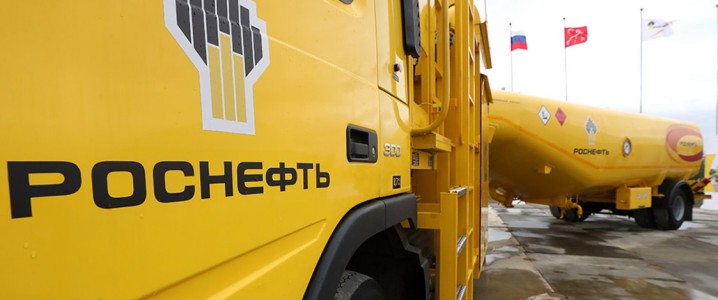
Rosneft has shipped the first crude oil cargo from the Vostok Oil project in Eastern Siberia, despite sanctions targeting Russia’s energy industry and the exit of Western business partners. At peak capacity, the project is expected to produce between 50 and 100 million tons of crude annually.
The Vostok Oil project is Russia’s largest new oil development, comprising a group of fields in Krasnoyarsk Krai, some already producing and the rest new discoveries. A total of 2,000 wells have been drilled at the site, Rosneft’s chief executive Igor Sechin said, adding that the fields have combined reserves of some 7 billion tons of low-sulfur crude.
The Vostok Oil project had an estimated price tag of the ruble equivalent of $157 billion back in 2019. At the time, Rosneft had Western partners in the project, including Trafigura and Vitol, betting on continued strong demand for oil despite the political shift in favor of electrification. The total costs associated with the operation of the fields over their productive lifetime were estimated at $170 billion back in 2021.
“The world consumes oil, but is not ready to invest in it,” Sechin said back then in a keynote speech, warning that Big Oil’s low-carbon plan to reduce oil and gas exploration and production would lead to a deficit of supply. “This trend [of low upstream investment] may become a ‘new norm’ for global majors and result in resource base depletion. The world runs the risk of facing an acute deficit of oil and gas,” Sechin said at the time, echoing a sentiment later often shared by OPEC partners.
Given the substantial price tag of the development it made sense to get some Western oil majors on board to share some of the cost. It worked until 2022. With the war in Ukraine and the Western sanctions against Russia, the commodity trading majors pulled out, as did TotalEnergies from Novatek’s LNG projects, but the projects themselves did not get shelved.
Instead, Rosneft sold some assets to focus on Vostok Oil and used domestically developed drilling tech at the massive project. “The rigs are equipped with a hydraulic substructure that improves drilling accuracy, as well as domestically produced top-drive systems capable of drilling wells up to 6,000 metres in length,” the Rosneft CEO said in the announcement of the first crude shipment.
That should have been sent on its way in 2024, but given the sanction-rich environment in which Rosneft has had to operate, a two-year delay was only to be expected. Original production plans saw a daily rate of 600,000 barrels in 2024, rising to 1 million barrels daily during the second phase of the project and, ultimately, to 2 million barrels daily at peak rates.
As for destinations, Asia is the obvious one, and Sechin has said as much. However, the top Rosneft executive also said oil from the group of fields on the Taymyr Peninsula would flow “in the western direction”, according to a Bloomberg report. The first cargo, meanwhile, has been loaded on a Russia-flagged Arc7 ice-class oil tanker at the Arctic port of Sever. The project is connected to Russia’s years-long work on developing its Arctic resources, and establishing the Northern Sea Route as a major trade channel—something in which climate change is apparently helping by making the period during which the route is usable longer. Engineering is also extending this period with new icebreakers already in use.
“The implementation of the Vostok Oil project is part of large?scale efforts to develop Siberia, the Arctic, and the Far East, including the creation of the Trans?Arctic Transport Corridor,” President Vladimir Putin said at the inauguration of the Vostok Oil project. “It will create a single route by linking the Baltic region, the Arctic and the Far East, opening a short, profitable, and – this is crucially important in the current challenging international situation – a reliable and safe path to the world’s largest markets.”
These comments suggest Russia is firmly looking to the East and not the West in light of future trade relations, especially in energy. The pivot would have made sense even without the Western sanctions, with China and India being the two top drivers of future oil and gas demand while the European Union and the UK pushing for demand destruction in hydrocarbons. The geopolitical situation is only making these alignments stronger.
Interestingly, the West is also looking to the Arctic for natural resources—except when this is natural gas, and it is in Norwegian waters. Talk has emerged about developing the European and U.S. Arctic to catch up with Russia, but little in terms of action has resulted from that talk. Meanwhile, the EU has insisted it is against Arctic gas drilling, while Putin said that “It [Trans?Arctic Transport Corridor] will enable us to launch new major energy and other projects in the Arctic, build up the region’s industrial, raw material, and production base, and not only to extract but also to process natural resources here.”
By Irina Slav for Oilprice.com
More Top Reads From Oilprice.com
- Iran Says It Will Control New Hormuz Shipping Corridor
- Saudi Aramco’s Jizan Refinery Hit Again as Houthi Attacks Escalate
- High Crude and LNG Prices Weigh on India’s Oil and Gas Sector
Download The Free Oilprice App Today





Irina Slav
What I Cover
Irina Slav has been writing about global energy markets since 2007, covering the oil and gas industry, energy security, commodities, and the…


