

Welcome to Bon Appétit Bake Club, a community of curious bakers. Each month senior Test Kitchen editors Jesse Szewczyk and Shilpa Uskokovic share a must-make recipe and dive deep on why it works. Come bake and learn with us—and don’t forget to join the Bake Club Group chat over on Substack.
Anyone who has whipped up a cake before is familiar with the basic steps of mixing the batter: Cream sugar and butter, add eggs, and finish off with the dry ingredients. It works. But there’s a better way—an alternative method that produces a far more tender crumb without any additional work. It’s a magical, miraculous technique called reverse-creaming.
Reverse-creaming is the secret to tender cakes
Reverse creaming is a technique in which dry ingredients are mixed with butter prior to adding any wet ingredients. So instead of first beating together butter and sugar, you blend butter into the flour mixture until it resembles a wet sand. This approach, popularized by Rose Levy Beranbaum (a Bake Club podcast guest!), coats the flour molecules in a layer of fat that limits gluten formation, resulting in an ultra plush texture. Most recipes online call for a stand mixer, relying on the paddle attachment to fully break down the butter.
I love reverse creaming, and have used it before (many times!) in my recipes. I think of it as an insider technique that produces cakes that are bakery-level in quality. It might seem weird the first time you do it, but once you taste the results, it’s hard to go back.
A new way to reverse-creaming (no mixer required)
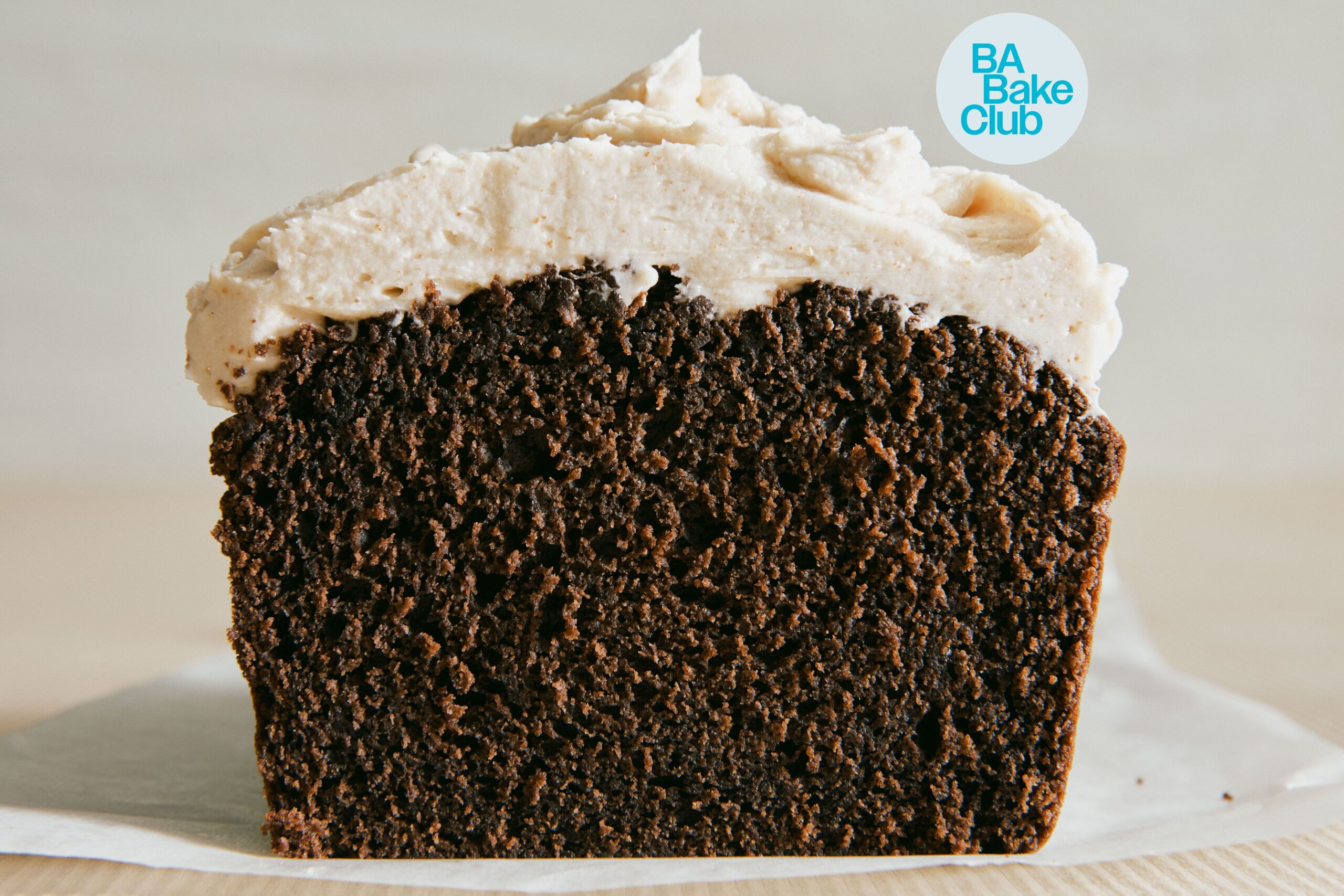
Our latest Bake Club recipe, our Chocolate Guinness Cake, uses reverse creaming to produce an exceptionally tender cake. But it does so without any special equipment. Instead of relying on the mechanical power of a hand mixer or stand mixer, you simply rub cold cubes of butter into dry ingredients with your fingers. Think of making pie dough—except instead of stopping when the butter is in pea-sized pieces, you keep rubbing until it virtually disappears, completely encasing the flour in fat. This method achieves the same delicate crumb as the traditional approach, with one less thing to clean.
This technique also means it’s all but impossible to overmix your batter. While a lot of cake recipes tell you to err on the side of undermixing, here I’m telling you the opposite. Because, at the end of the day, you need some gluten to form a cake. So once you add your wet ingredients, mix with reckless abandon. And of course, tell me how it all goes in the Substack chat.

A generous glug of stout gives this snackable loaf a malty depth.
