




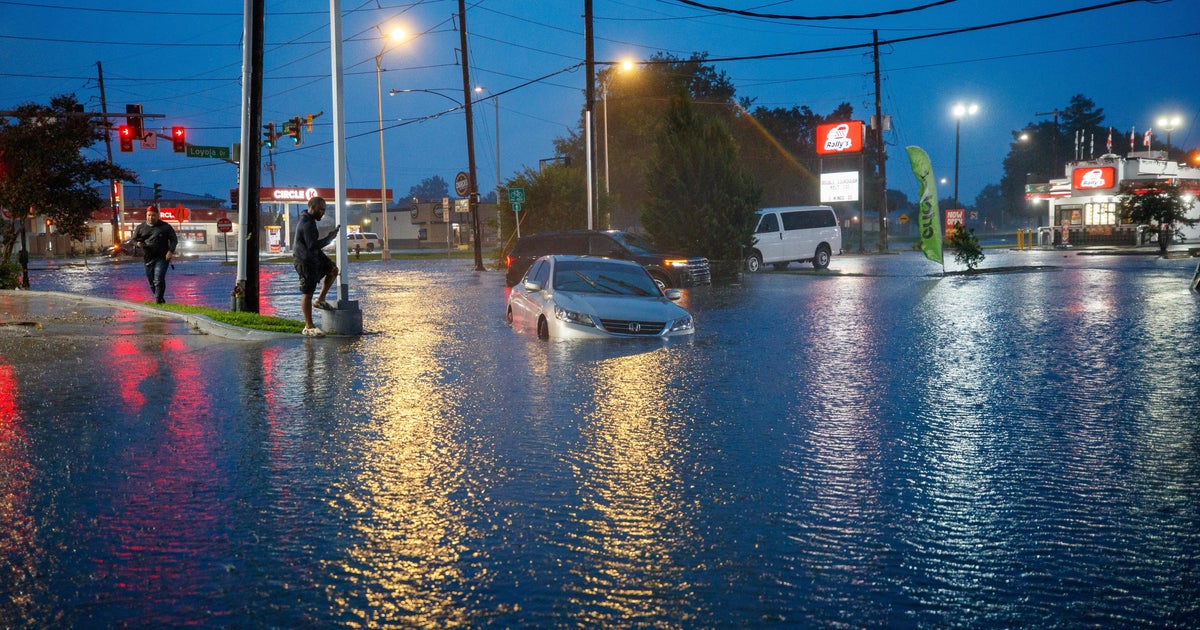
The remnants of Tropical Storm Arthur battered parts of the southeastern United States with drenching rains and strong wind on Thursday, tearing through buildings, flooding homes and launching water rescues along the Gulf Coast.
Arthur was the first tropical storm of the season in the Atlantic basin, and although it was quickly downgraded within a day of forming, the lingering system created dangerous conditions in Louisiana and Mississippi. After slamming those states and others in the region with heavy rain and flooding, the system was finally weakening Friday and on track to move out into the Atlantic this weekend.
But flooding risks still threatened more than 63 million people on Friday, according to CBS News meteorologist Nikki Nolan, who said another 1 to 3 inches of rain could fall in some places, including cities like Atlanta, Birmingham and Jacksonville. In Mississippi, emergency officials have asked residents living near the Jourdan River to consider evacuating, as the river remains under a flood warning and is expected to crest Friday morning. In Louisiana, Gov. Jeff Landry issued a state of emergency after Arthur battered the state.
More than 257 flash flooding incidents have been reported since Sunday across a strip of the Southeast, from Texas to Georgia, said Nolan. At least four tornadoes also broke out along the Gulf Coast as a result of Arthur’s impacts, among a larger group of destructive twisters that damaged communities in the Midwest this week.
In one rural Louisiana parish, more than 2 feet of rain fell in 48 hours, with most of that soaking coming on Thursday, said Donald Jones, a meteorologist with the National Weather Service in Lake Charles.
Two of the week’s highest rainfall reports from the Gulf Coast came out of Cottonport and Plaucheville, in Louisiana’s Avoyelles Parish, which respectively received 29 and 22.5 inches of rain, according to the weather service. Another nearby town, Simmesport, received more than 17 inches of rain.
Williams and 31st Street in Kenner is flooded during Tropical Storm Arthur in New Orleans, Thursday, June 18, 2026. David Grunfeld/The Times-Picayune/The New Orleans Advocate via AP 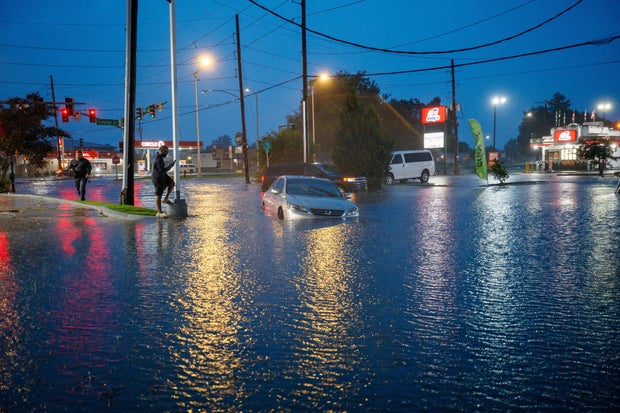

It flooded at least 200 homes in Avoyelles Parish, about 70 miles northwest of the state capital, Louisiana state Rep. Daryl Deshotel said.
“Even by this region’s standards, that’s catastrophic rain,” Jones said.
Life-threatening floods trapped people in a campground in Perkinston, Mississippi, while rescuers used canoe paddles to break through windows of RVs, and cars and mobile homes were washed away. A rain gauge in a town near Perkinston showed upwards of 12 inches of rain fell there on Thursday, and the same amount was recorded by another gauge near Black Creek, about 25 miles north, the weather service said. Some residents in the area told CBS News they barely escaped as the water began to rise.
Nicole Jackson and her fiancé, Hayden, told CBS News that they barely managed to escape before head-high floodwaters swept through their home in Stone County, Mississippi.
“It’s insane how quickly it rose,” Jackson said. “People that lived here a lot longer than us are absolutely shocked.”
A spokesperson for the Harrison County Sheriff’s Office in Mississippi told CBS News “roughly 38 people” had been rescued by the department as of Thursday night, andt no fatalities or serious injuries were reported.
Mississippi Gov. Tate Reeves said in a social media post Thursday night that a worker on a county road crew in the southwestern part of the state had been killed while helping with storm cleanup operations. The cause of the death was not disclosed.
Thirty homes below the Anchor Lake dam in southern Mississippi were being evacuated as a precaution due to concerns that rising waters could overwhelm the spillways and compromise the structure, Reeves said. Residents in the area were being encouraged to seek higher ground.
The West Esplanade Ave. canal in Kenner slowly recedes after overtopping during Tropical Storm Arthur in New Orleans, Thursday, June 18, 2026. David Grunfeld/The Times-Picayune/The New Orleans Advocate via AP 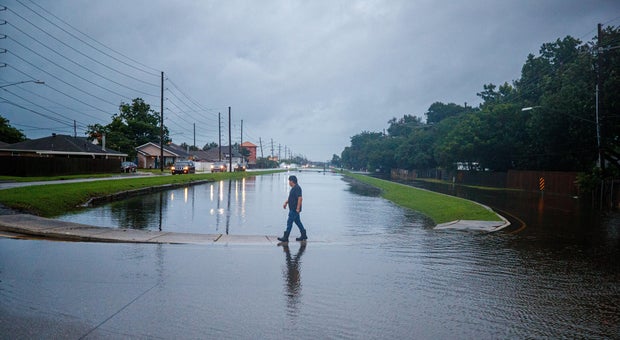

Coni Dubois said several inches of water flooded her home overnight in Houma, southwest of New Orleans, but others in the community had worse damage. She’s lived through many hurricanes and other storms, but never witnessed thunder and lightning like this.
“It was unbelievable, it literally sounded like hell broke open,” Dubois said. “I thought for sure we had a tornado on top of us. The lightning and the thunder was so consistent, the whole house was lit up like daylight for about 20 minutes.”
The National Guard and state wildlife officials were working with rescue crews, officials said.
One tornado had been confirmed in Avoyelles Parish, along with three others near New Orleans, the weather service said.
Amid relentless rainfall in central Louisiana, Cody Coco said he rescued stranded workers — waist deep in water — at a cypress sawmill operation he runs near his home in Avoyelles Parish. He said the water continued to rise all throughout the day.
Coco, 40, said he also used a boat to rescue the four pigs he kept in a pen. Video he shared on his Facebook page shows the hogs swimming out of their enclosure in a torrent of murky water. Coco says they are now safe on higher ground.
A snapped power pole hangs over a car lot at Joseph Cadillac in Florence, Ky, Thursday, June 18, 2026, after severe weather moved through the region. Carolyn Kaster / AP 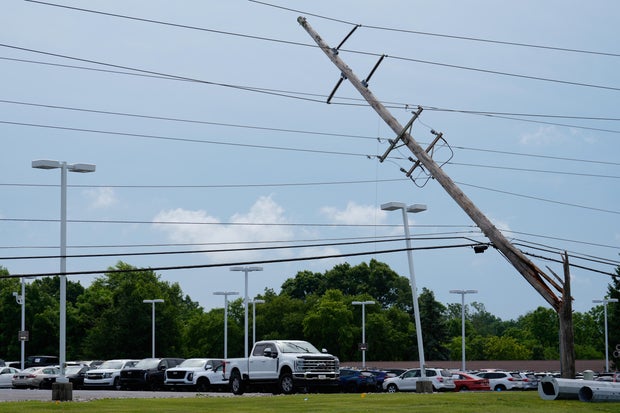
“If I’d left them in the pen, they’d have drowned,” Coco said. “They were happy to see me.”
New Orleans Mayor Helena Moreno posted a video on Facebook describing relatively minor damage and cleanup efforts. Ahead of the storm, police prepared boats and set up barricades in flood-prone areas. They also opened sandbag distribution sites across Louisiana.
Just across the Mississippi River in Avondale, Louisiana, a tornado wrecked four homes, Jefferson Parish spokeswoman Rachel Strassel said. Two people were hospitalized with minor injuries and later released.
In: