







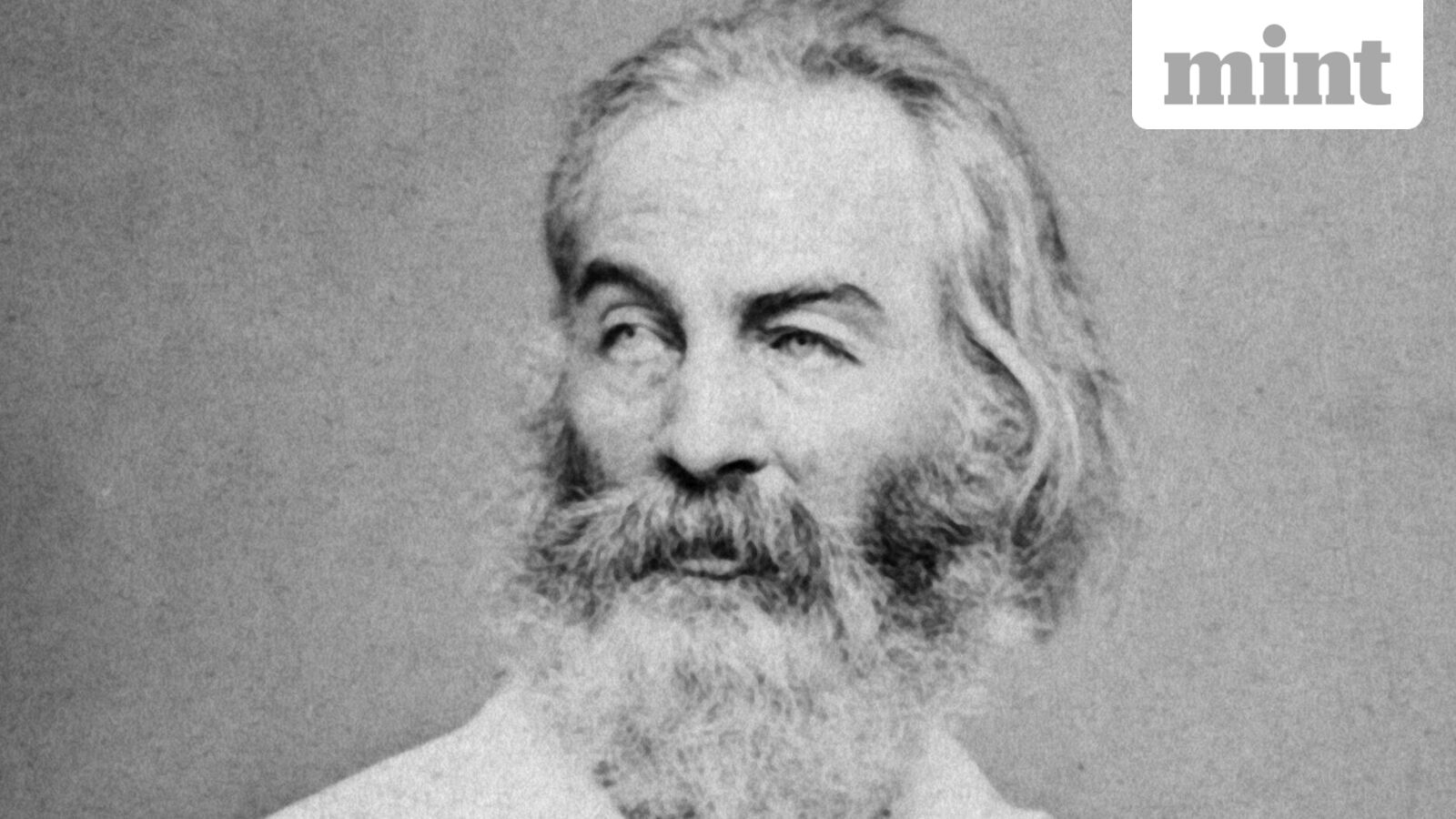
The essence of Whitman’s message is to direct attention toward possibilities rather than problems. Leaders should cultivate optimism through clarity and engagement, especially in challenging times, allowing teams to navigate uncertainty while maintaining a constructive focus on goals.


‘Keep your face always toward the sunshine, and shadows will fall behind you”
Walt Whitman
Meaning of the quote
This quote, widely attributed to Whitman, is not asking people to deny difficulty. It is about orientation. Whitman’s image of turning toward sunshine suggests a deliberate act of attention: choose the direction that enlarges energy, possibility, and purpose, rather than letting fear dictate where you look. In business and leadership, that matters because attention is a strategic resource. Teams often become trapped not by the existence of problems, but by a culture that stares at them so long it forgets movement is still possible.
The deeper principle is disciplined optimism. This is not cheerfulness for its own sake. It is the ability to face uncertainty without surrendering agency. Leaders who embody that mindset do not pretend shadows are unreal; they simply refuse to let shadows become the organizing principle of the work. That is why the quote continues to resonate in professional life: it frames optimism not as personality, but as practice.
Whitman’s own career makes that reading plausible. He built a revolutionary body of work after years in ordinary trades, public criticism, and financial struggle, then kept revising Leaves of Grass across decades. His life was less about effortless radiance than sustained forwardness.
Why this quote resonates
The quote feels especially relevant in today’s work environment because many organizations are operating under a mix of technological acceleration and emotional fatigue. Gallup’s State of the Global Workplace 2025 found that global employee engagement fell to 21% in 2024, manager engagement fell to 27%, and only 33% of employees said they were thriving in life overall. Gallup also estimated that disengagement cost the world economy $438 billion in lost productivity.
That is exactly the kind of climate in which Whitman’s line becomes more than decorative inspiration. When teams are tired, unsettled by AI-driven change, or pulled into constant uncertainty, leaders have to provide realistic hope: not fantasy, but a credible sense of direction. A concrete lesson from the last 12–18 months is that manager breakdown now carries measurable business consequences, because Gallup attributes 70% of team engagement to the manager. In that setting, “turning toward the sunshine” looks like creating clarity, energy, and meaning when people are tempted to default to anxiety.
How can you implement this in your life
Start each workday by writing the one outcome that would make the day feel constructive, so your attention has a forward direction before meetings hijack it.
Reframe setbacks in real time by asking in team reviews, “What still moves us toward the goal?” before discussing what went wrong.
Schedule a 20-minute weekly optimism check with your team to surface one obstacle, one win, and one next step, so morale stays grounded in action.
Protect one block of undistracted work each week for the project that gives you the most energy, instead of letting only urgent tasks shape your calendar.
Redirect negative spirals by setting a rule that every complaint in a meeting must be followed by one proposed action, however small.
Model visible steadiness during uncertainty by communicating what is known, what is unknown, and what the team will do next within 24 hours of major change.
About Walt Whitman
Walt Whitman was born on Long Island in 1819, left formal schooling early, learned the printing trade, and went on to work as a teacher, journalist, and editor in New York. His great turning point came in 1855, when he self-published the first edition of Leaves of Grass, a book that broke sharply with conventional meter and subject matter and later grew across nine editions. During the Civil War he volunteered in Washington hospitals, an experience that deepened the moral and human range of his writing, and in his later years he lived in Camden, New Jersey, as his reputation steadily rose.
About the Author
Livemint
For about a decade, Livemint—News Desk has been a credible source for authentic and timely news, and well-researched analysis on national news, business, personal finance, corporates, politics and geopolitics. We bring the latest updates on all the listed companies on BSE and NSE, startups, mutual funds, Union ministries, geopolitics, and untapped human interest stories from around the world, helping our readers to stay informed on the latest developments around the globe. Our Coverage Areas 1. Companies: Comprehensive news and analysis on listed and unlisted companies, corporate announcements, corporate chatter, C-suite, business trends, hiring alerts, layoffs, work-life balance, world’s top billionaires and richest and more. 2. Personal finance: Insights into mutual funds, small savings schemes like – PPF, SSY, post office savings scheme, stock to watch, personal loans, credit cards, top bank FDs, real estate, income tax and more. 3. Politics: Comprehensive coverage of general elections, state elections and bypolls, Lok Sabha, Vidhan Sabha, Parliament, PMO, PIB, finance ministry, home ministry, among other union ministries and government departments. 4. National News: From metro cities like Delhi, Mumbai, and e to untapped stories from rural India, we cover human interest, health, education, crime and courts, and law and order, among other areas of public interest. 5. Economy: In-depth analysis of India’s macro and micro-economic indicators like- GDP, inflation, forex, fiscal deficit, current account deficit, interest rate cycle, economic recovery, RBI circulars, indirect taxes, GST, Insolvency and Bankruptcy imports, exports and everything that impacts Indian economy. 6. Geopolitics: Well-rounded and deeply researched coverage on US News, Oval Office European Union, Ukraine Russia War, middle-east crisis, royal families and global leaders like – Donald Trump, Vladimir Putin, Kim Jong Un, Xi Jinping and premiers of other leading economies in the world. Meet the Team 1. Gulam Jeelani, Political Affairs Editor 2. Sugam Singhal, Senior Assistant Editor 3. Chanchal, Assistant Editor 4. Sanchari Ghosh, Chief Content Producer 5. Pratik Prashant Mukane, Chief Content Producer 6. Sayantani Biswas, Chief Content Producer 7. Ravi Hari, Deputy Chief Content Producer 8. Garvit Bhirani, Deputy Chief Content Producer 9. Akriti Anand, Senior Content Producer 10. Jocelyn Felix Fernandes, Senior Content Producer 11. Swastika Das Sharma, Content Producer 12. Mausam Jha, Content Producer 13. Riya R Alex, Trainee Content Producer


