




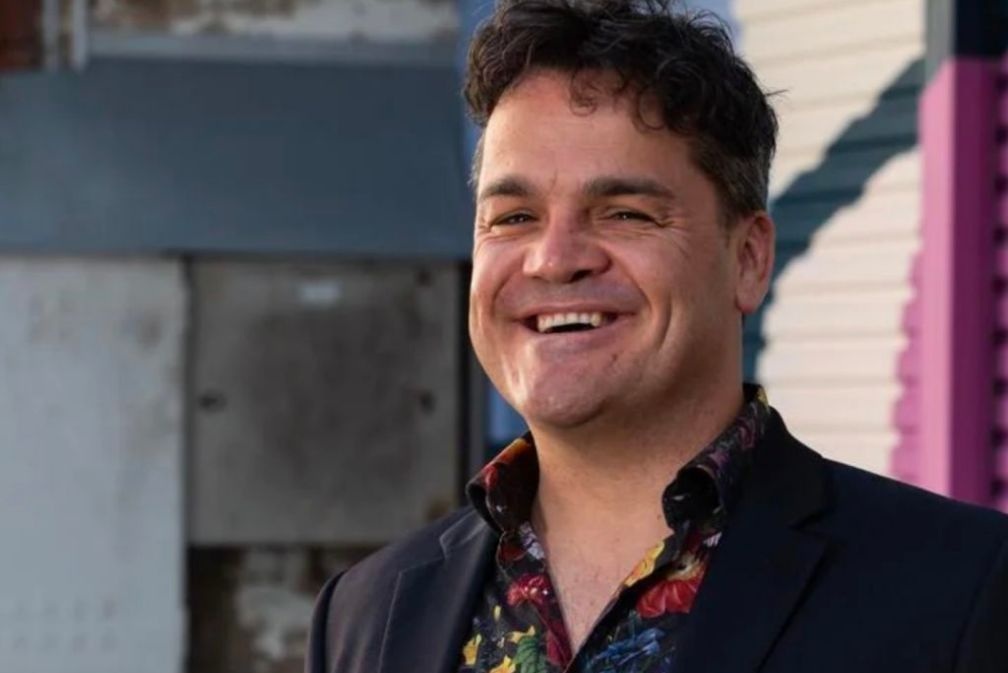
The search for the organization’s next CEO has begun.


Kris Stewart
Courtesy QMusic
Trending on Billboard
BRISBANE, Australia — Kris Stewart, CEO of QMusic, the trade body that produces BIGSOUND and the annual Queensland Music Awards, is stepping down after five years in the role.
Stewart took the top job in June 2021, after eight years serving as artistic director at Brisbane Powerhouse. He departs ahead of the 2026 QMAs, which this year moves from the state capital Brisbane for the very first time, and will be presented April 22 on the Gold Coast.
Related


In a statement issued earlier this week, Stewart says it’s the right time to move on to a new challenge and for QMusic to introduce new leadership. “The past five years have been some of the most exciting of my career, and I’ve thoroughly enjoyed the chance to work with my peers in the music industry and the team here at QMusic,” he remarks. “While sad that I’m finishing, I’m proud of everything I’ve achieved and leave knowing the organization has never been stronger.”
The search for the organization’s next CEO has begun.
QMusic chair Jake Challenor applauds the outgoing chief executive, noting he oversaw “significant growth” across the organization as total revenue in that time more than doubled and partnerships across government and industry have expanded.
Also, Stewart led QMusic’s advocacy at both a state and federal level, including contributing to the Federal Parliamentary Inquiry into live music, establishing the Queensland Parliamentary Friends of the Music Industry, most recently held last week, and supporting the creation of the Night-Life Economy Commission, led by the state’s first Night-Life Economy Commissioner, venue operator and Powderfinger bass player John “JC” Collins.
The QMusic board and Stewart agreed that this was the right time for a leadership transition, Challenor explains, as the organization shifts to a member-voted Company Limited by Guarantee (CLBG), registered with ASIC. a process that is ongoing and close to finalization.
“With the organization in a position of strength,” comments Challenor, “now is the right time to hand over to a new leader to guide QMusic through its next chapter. As QMusic transitions to a CLBG, this marks an important step in the organization’s evolution – strengthening governance, improving flexibility, and aligning operations with best practice in service of Queensland artists and the industry.”
QMusic, Challenor continues, “is financially stable, well-supported by its funding partners, and backed by an experienced and passionate team. We thank Kris for his contribution and leadership, and wish him every success in what comes next.”
The Queensland contemporary music community and its trade body are in a unique situation, with a golden opportunity at stake. Brisbane is the host city for the 2032 Summer Olympic and Paralympic Games, a moment that will cast a spotlight so bright that the state’s musicians ought to benefit.
With an Olympic Games, the host and its neighbors typically enjoy ungraded infrastructure, and new venues. Brisbane is no different, though the billions plugged into the project doesn’t mask problems at the grassroots music level.
In an impassioned speech last week at Queensland’s Parliament House, Stewart pointed to the troubling closure of two important music venues on the Sunshine Coast.
“What we need to recognize is success is not about a race to the top. The pyramid of the music industry can’t be built with massive success of a few people at the top, and a battle for everyone who is the foundation of our industry,” he noted on the night. A healthy industry, he added, “is held up by the foundations. It’s held up by our grassroots.”
In a separate message on LinkedIn, in which he announced his departure from QMusic, Stewart remarks that his time there has been “some of the most enjoyable years of my career” and that he has a “few irons in the fire.”
More From Pro