

- Recent research into the human microbiome is revealing how closely connected it is to our health. Similarly, scientists are exploring how the microbiome in wildlife species can aid conservation efforts.
- Studies show that human action (including climate change and close proximity to people) is altering the microbiomes of multiple wildlife species. The implications of how these changes may be impacting wildlife survival and health remain unclear.
- Researchers are also exploring how supporting a diverse wildlife microbiome can improve animal health in captivity, aid recovery during rehabilitation, and even boost reintroduction success. Microbiome studies are underway on numerous species, ranging from Australian koalas to African meerkats and cheetahs.
- Though still an emerging field, fecal microbiota transplants (FMTs) are just one possible tool that researchers and conservationists are exploring in trials to see how the restoration of a healthy diverse microbiome can support wildlife conservation.
Human microbiome research is a blossoming field of study, shedding light on the millions of microbes living within us — microscopic species frequently vital to our health. In tandem, researchers across the globe have also been delving into the microbes living inside wildlife in hopes of developing a new conservation and rewilding tool.
Early research on endangered Tasmanian devils (Sarcophilus harrisii) in Australia, for instance, found that the gut microbiome of this carnivorous marsupial, when kept in captivity, differs vastly from its cousins in the wild. This echoes other studies on a range of species in captivity, showing a species-specific response — some animals have lower microbiome diversity in captivity, while others have higher.
In the case of Tasmanian devils, low microbial diversity in captive populations raised numerous health concerns, as that deficiency could potentially leave animals susceptible to illness and disease.
“Initially we had concerns that their reduced gut microbiome in captivity would be an issue when they were released, and we wanted to know if we needed to manage this [issue] in captivity or undertake actions for when the [animals] were released” to better protect them in the wild, says Carolyn Hogg, research manager of the Australasian Wildlife Genomics Group at the University of Sydney.
But for Tasmanian devils reintroduced to the wild, at least, it turned out no intervention was needed. Monitoring of the released devils’ microbiomes, via the collection and analysis of their feces, showed that the animals were able to regain a “wild” microbiome, a process beginning after only a few months. “The results showed we do not need to worry,” Hogg says.

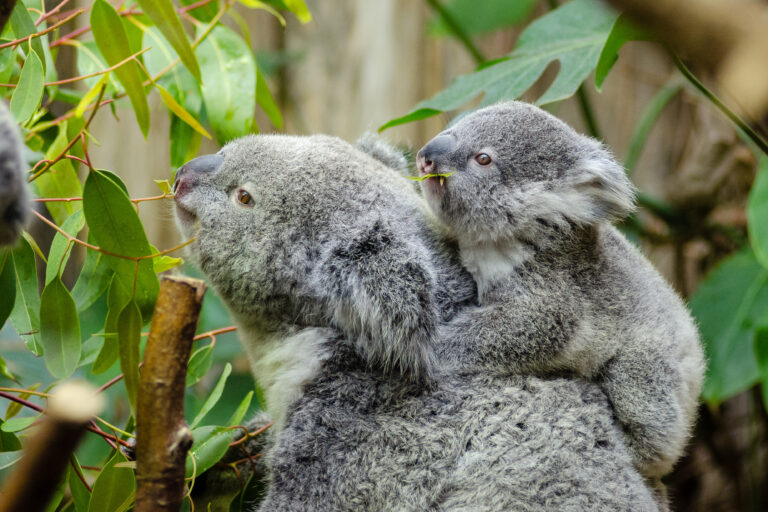
Elsewhere in Australia, microbiome studies of koalas (Phascolarctos cinereus) tell a different tale. Findings suggest that koalas likely need to be translocated or released into habitats closely matching their original forest area, possibly due to their microbiome, says Michaela Blyton, a molecular ecologist and microbiologist at the University of Queensland.
Koalas are endangered in parts of Australia, so releases and translocations are underway to restore populations — an important conservation method. But released animals often don’t fare well in the wild, says Blyton, and have to be returned to rehabilitation centers; at worst, they may die.
One possible reason: Research by Blyton’s team shows that gut microbiome composition has an influence on the koala diet, enabling consumption of specific species of eucalyptus, the animal’s principal food source.
“The gut microbiome is actually an important component defining the ecological niche of [koala] diet, where they can live, and what they can feed on,” she says. “If the [eucalyptus] species that’s there isn’t appropriate for the microbiome, then they’re stuck. Whereas if you translocate them into a mixed forest, then they have options.”

Journey into the microbial wild
Understanding the world’s wildlife microbiome — with its many hundreds of thousands of species — is still a nascent field, but researchers are already spotlighting how human activities are changing nature at its smallest scale.
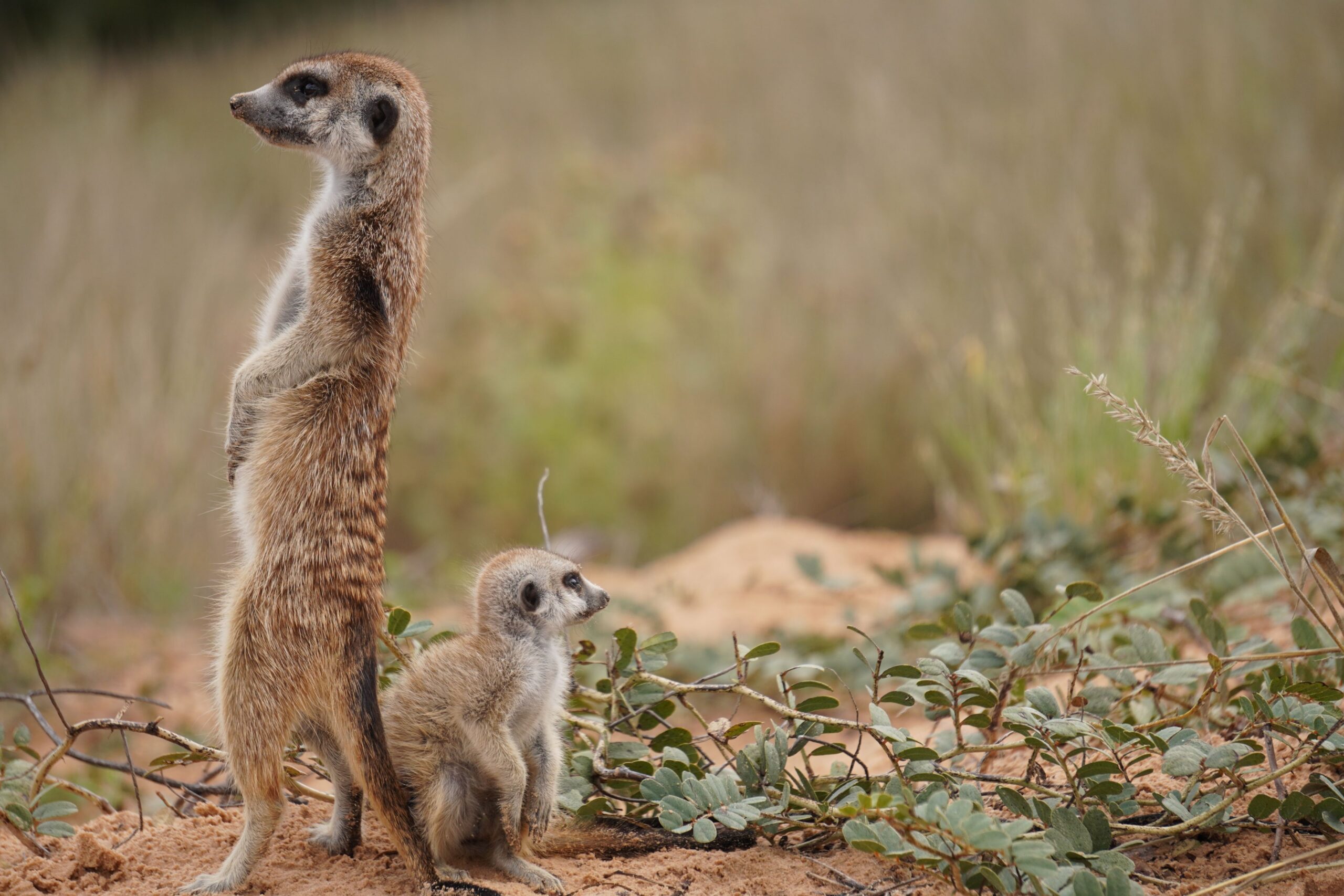
A 2023 paper found that climate change and increasing temperatures in Southern Africa’s Kalahari Desert are altering the gut microbes of meerkats (Suricata suricatta). Researchers used fecal sample data for this small carnivorous mammal stretching back roughly three decades, which offered insights into how the microbe community changed over time.
“We can see from a taxonomic perspective already, there’s some bacteria that are slowly but surely becoming less abundant in the gut microbiomes,” says Dominik Melville, an evolutionary ecologist at the University of Ulm in Germany and a co-author on the study.
Other researchers have found that proximity to human populations can cause alterations in the gut microbiome of tigers (Panthera tigris) in India, with possible knock-on effects for health.
Similarly, numerous frog species’ skin microbiomes are susceptible to alterations in the environment, including changes resulting from habitat fragmentation, drought and climate change, potentially leaving these amphibians vulnerable to the deadly chytrid fungus that has devastated frog species worldwide.
Ongoing tracking of microbiome alterations in animal microbiomes could offer insights into the reasons for some species’ long-term health declines, says Melville. In the case of the meerkats, the impacts of microbiome changes are still unknown, with further studies planned to hopefully find answers.
“What we do know in meerkats is that at the same time as these [microbiome] bacteria have declined, and maximum temperatures have increased in the Kalahari, the survival [rate] has gone down within the meerkat population,” he says. But he adds, “It’s likely we’re looking at an indirect effect.”
A deepened understanding of the inner workings of animal gut microbes could not only help biologists better track wildlife health, but offer solutions. One promising application is the concept of “microbial rewilding” as a direct conservation intervention to bolster reintroduction success rates.
“The idea of microbial rewilding is that we should be rewilding the microbiomes, along with rewilding the animal, [before reintroduction] because these communities [living inside] the animal are completely inextricable,” says Sally Bornbusch, at the Smithsonian’s National Zoo and Conservation Biology Institute in the U.S.
Conservation implications
Fecal microbiota transplants (FMTs), a technique practiced with success on some medical conditions in people, offer one potential route of rewilding gut microbes.
The technique uses feces taken from a healthy animal and packages it into a pill, or some other form, for transplant into an unhealthy animal or one whose gut biome has been altered by captivity. Though the idea of a so-called poop pill may sound gross on first hearing, the consumption of feces (or coprophagy) is not uncommon among some wildlife species, says Bornbusch.
“What everyone loves to say is, ‘everything poops,’” she notes. “Screened feces is an accessible form of microbial therapy that we can harness for medical treatments.”
Bornbusch has collaborated on projects that used poop pills to deliver microbes to about a dozen animal species, and has seen no adverse effects; the goal, she says, is to restore a robust, healthy microbial community.
In one such project, rescued and malnourished elephant seal pups (genus Mirounga) were given fecal microbiota transplants from healthy pups to help them recover. “Preliminary results show that it may improve the rehabilitation process for these orphaned and stranded elephant pups before they’re released back out into the wild,” Bornbusch says.
In Australia, Blyton notes that FMTs could improve the health of koalas (populations of which are suffering a chlamydia epidemic), and also boost reintroduction efforts. Her team’s research has already demonstrated that the koala gut microbiome can be altered using poop pills, changes that then allow the animals to eat a wider range of differing eucalyptus, potentially aiding reintroductions.


Other projects have used fecal microbiota transplants to help cheetahs (Acinonyx jubatus) recover healthy microbiomes after antibiotic treatments.
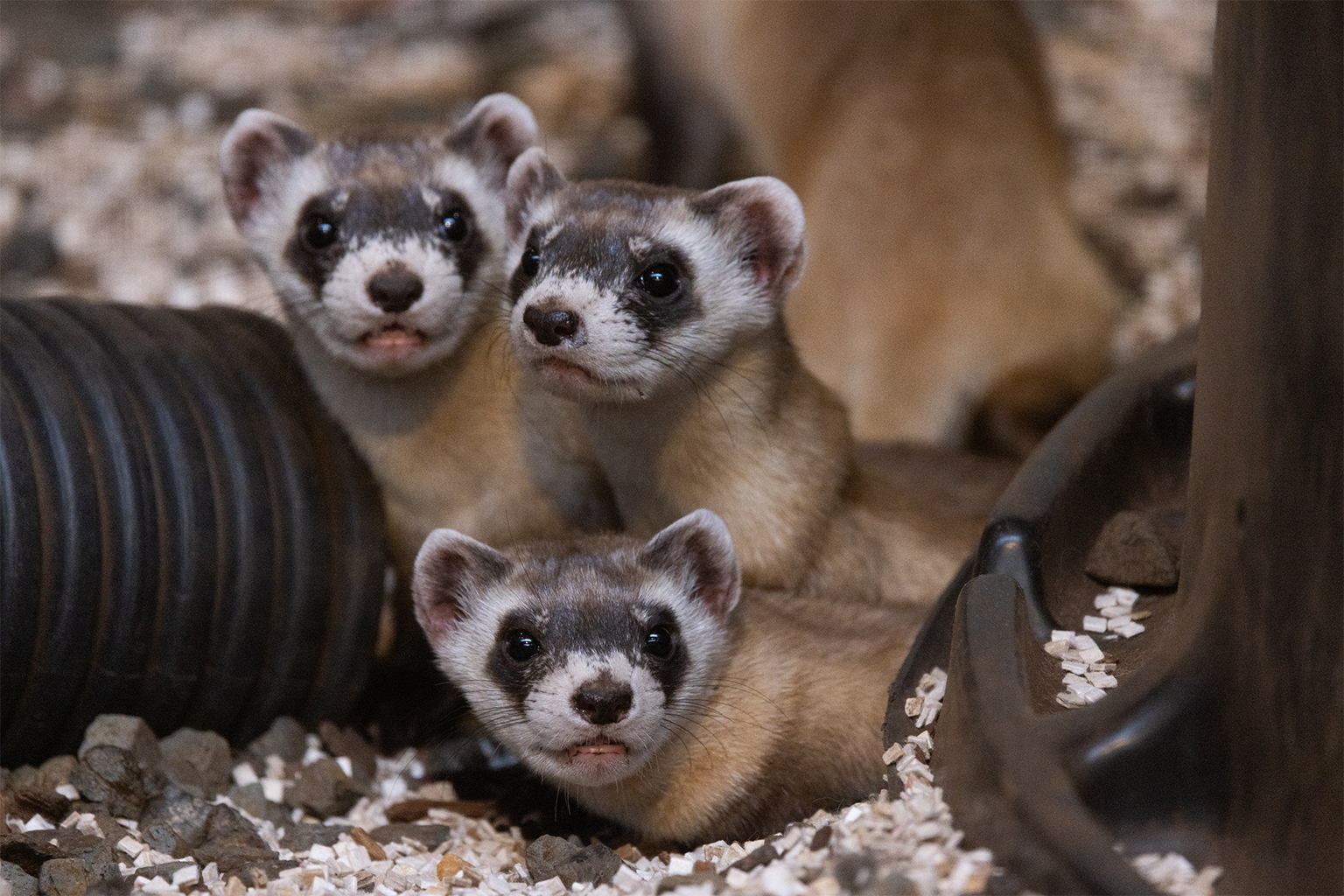
An ongoing pilot project in the U.S. is testing FMTs to help rewild black-footed ferrets (Mustela nigripes) and especially to see if animals that have gone through a successful soft release can help captive-bred ferrets. The question Bornbusch hopes to answer is whether this treatment will “lessen morbidity and mortality during the soft release phase.”
Laurie Marker, executive director of the Cheetah Conservation Fund, sees great potential in cheetah microbiome research, as the species is notoriously plagued by health problems. With numbers in the wild dwindling, the reintroduction of captive cheetah populations is likely to be a key conservation strategy in future.
For now, however, research is mainly shedding light on captive populations because obtaining microbiome samples via feces found in the wild is challenging, given that scat samples degrade if not collected quickly and stored.
“As we learn more about the wild population and what their actual healthy microbiomes look like, we can start understanding how to keep cheetahs healthy in captivity,” says Marker.
There is still a long way to go before microbial treatments become a regular part of the conservation toolkit for maintaining health or aiding reintroductions, says Melville, who notes that the research is still in its infancy, with more in-depth work needed before informed decisions can be made. “We often don’t understand enough about commensal, pathogenic and symbiotic taxa in the microbiome of wild animals,” he explains.

Last year, the IUCN, the global wildlife conservation authority, formed a specialist group calling for integration of microbial research, including the microbiome, into global conservation action, and underlined the need for further study.
“This is still a very interesting, up-and-coming field that has huge potential,” says Melville. “By learning more about wildlife microbiomes, we’re also learning a lot more about our relationship with our [human] gut microbiota. And that is often, I think, overlooked or not discussed.”
Banner image: Research shows that a koala’s gut microbiome directly influences its diet limitations, determining the species of eucalyptus it can eat. Translocations and reintroductions should take this relationship into account, says Michaela Blyton. Image by Mathias Appel via Flickr (Public domain).
Citations:
Cheng, Y., Fox, S., Pemberton, D., Hogg, C., Papenfuss, A. T., & Belov, K. (2015). The Tasmanian devil microbiome — Implications for conservation and management. Microbiome, 3(1), 76. doi:10.1186/s40168-015-0143-0
Zhu, L., Wang, J., & Bahrndorff, S. (2021). Editorial: The wildlife gut microbiome and its implication for conservation biology. Frontiers in Microbiology, 12. doi:10.3389/fmicb.2021.697499
Blyton, M. D., Pascoe, J., Hynes, E., Soo, R. M., Hugenholtz, P., & Moore, B. D. (2023). The koala gut microbiome is largely unaffected by host translocation but rather influences host diet. Frontiers in Microbiology, 14. doi:10.3389/fmicb.2023.1085090
Risely, A., Müller‐Klein, N., Schmid, D. W., Wilhelm, K., Clutton‐Brock, T. H., Manser, M. B., & Sommer, S. (2023). Climate change drives loss of bacterial gut mutualists at the expense of host survival in wild meerkats. Global Change Biology, 29(20), 5816-5828. doi:10.1111/gcb.16877
Anusha, G., Khan, A. S., Krishnan, G., & Umapathy, G. (2025). Anthropogenic factors shape the gut microbiota of tigers in Indian tiger reserves. Global Ecology and Conservation, 63, e03874. doi:10.1016/j.gecco.2025.e03874
Jiménez, R. R., Alvarado, G., Sandoval, J., & Sommer, S. (2020). Habitat disturbance influences the skin microbiome of a rediscovered neotropical-montane frog. BMC Microbiology, 20(1). doi:10.1186/s12866-020-01979-1
Buttimer, S., Moura‐Campos, D., Greenspan, S. E., Neely, W. J., Ferrante, L., Toledo, L. F., & Becker, C. G. (2024). Skin microbiome disturbance linked to drought‐associated amphibian disease. Ecology Letters, 27(1), e14372. doi:10.1111/ele.14372
Rollins-Smith, L. A., & Le Sage, E. H. (2023). Heat stress and amphibian immunity in a time of climate change. Philosophical Transactions of the Royal Society B, 378(1882). doi:10.1098/rstb.2022.0132
Bornbusch, S. L., Clarke, T. A., Hobilalaina, S., Reseva, H. S., LaFleur, M., & Drea, C. M. (2022). Microbial rewilding in the gut microbiomes of captive ring-tailed lemurs (Lemur catta) in Madagascar. Scientific Reports, 12(1), 22388. doi:10.1038/s41598-022-26861-0
Contos, P., Gibb, H., Murphy, N. P., Jellinek, S., & Wood, J. L. (2025). Rebuilding microbiomes: Facilitating animal-microbe interactions through ecological restoration and rewilding. Journal of Environmental Management, 375, 124344. doi:10.1016/j.jenvman.2025.124344
Blyton, M. D., Soo, R. M., Whisson, D., Marsh, K. J., Pascoe, J., Le Pla, M., … Moore, B. D. (2019). Faecal inoculations alter the gastrointestinal microbiome and allow dietary expansion in a wild specialist herbivore, the koala. Animal Microbiome, 1(1), 6. doi:10.1186/s42523-019-0008-0
Bornbusch, S. L., Crosier, A., Gentry, L., Delaski, K. M., Maslanka, M., & Muletz-Wolz, C. R. (2024). Fecal microbiota transplants facilitate post-antibiotic recovery of gut microbiota in cheetahs (Acinonyx jubatus). Communications Biology, 7(1), 1689. doi:10.1038/s42003-024-07361-5
FEEDBACK: Use this form to send a message to the author of this post. If you want to post a public comment, you can do that at the bottom of the page.
Credits

