







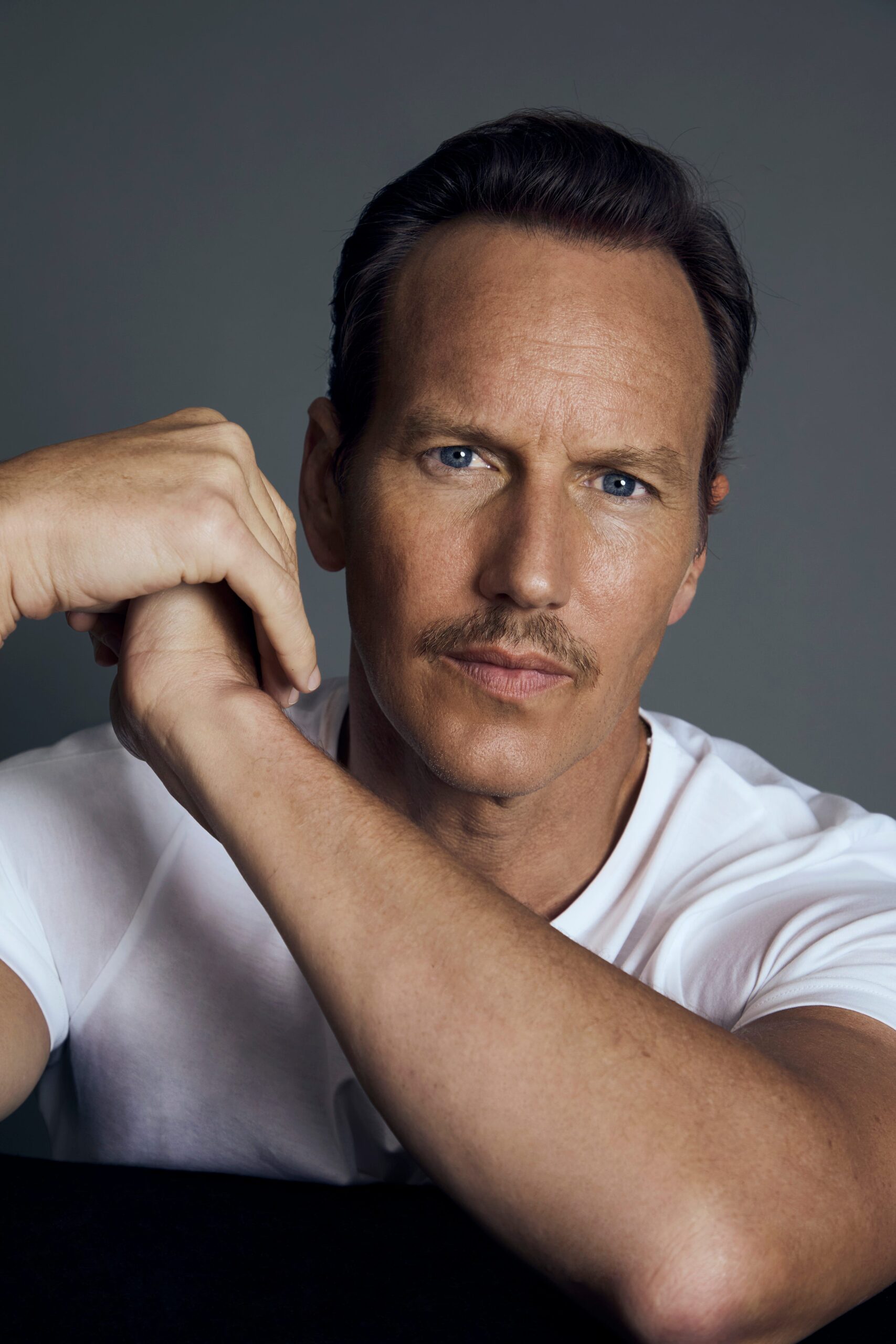
The following story contains spoilers for the series finale of Cape Fear.
PATRICK WILSON NEEDS to be on the move. The 53-year-old actor and fitness enthusiast has long channeled his physical energy into elite challenges like marathons, CrossFit, and HYROX. So it’s fitting that he’s also channeled his creative energies into the career of a consummate journeyman actor.
Over his career, Wilson has been in provocative films like the 2005 psychological thriller Hard Candy and Todd Field’s 2006 melodrama Little Children, based on the Tom Perrotta novel; superhero tentpoles like Zack Snyder’s 2009 adaptation of Watchmen and James Wan’s Aquaman movies; and prestige television like HBO’s celebrated 2003 Angels in America miniseries, the second season of FX’s Fargo anthology, and a bottle episode of Girls that’s remained the topic of internet discourse to this day. He’s a staple of the horror genre, starring in several installments of the Insidious and The Conjuring franchises. He’s a multiple Tony nominee who’s appeared on stage in The Full Monty, Oklahoma!, and a revival of Arthur Miller’s All My Sons, and is currently a producer behind Broadway’s The Lost Boys. He also performs frequently with his band, the Wilson Van (And if that last one comes as a surprise, well, have you seen this guy sing?)
Most recently, Wilson stars alongside Amy Adams star in Apple TV’s adaptation of Cape Fear, produced by Steven Spielberg and Martin Scorsese. The two play married lawyers (effectively splitting the role of Sam Bowden played by Nick Nolte in the 1991 movie and Gregory Peck in the 1962 movie) being toyed with by Javier Bardem’s playfully sadistic Max Cady (a role made famous by Robert De Niro and Robert Mitchum before him). And in an example of art being informed by life, Wilson went viral for his character’s shirtless power cleans.
How on earth does he find the time? “It’s hard,” Wilson says. “But you prioratize the things you need to do. I need music in my life, and if I have a show coming up, okay, then I adjust everything accordingly. If I have a HYROX race but I’m going to Europe tomorrow to shoot a movie for three weeks, okay, I’ll find some gyms along the way and prepare to hit it even harder when I’m back. It’s just priorities, man.”
We talked to Wilson about Cape Fear’s shocking finale, how fitness has intertwined with his career as an actor, and the dream project he’s still working toward.


MEN’S HEALTH: You’ve got a diverse depth of work going back decades. Does any project still hold a special place in your mind?
PATRICK WILSON: Every movie has a little special place in my life. One of the great things is films become so personal to people. I had a waiter the other night in Vermont who said, “I saw Insidious when I was a kid. It terrified me.” That used to freak me out—Insidious when you were a kid? I was already 20 years into my career by then. But I love it, because I love that movies are still so important to people.
MH: You’re big into fitness—you’re a big runner, you compete in HYROX. Does it help you as an actor?
PW: It does. Listen, I think physical fitness is very personal for people. So I’m not one to scream from the rooftops that everyone should lift, or do HYROX, or CrossFit, or run marathons, or swim, or whatever I may want to do. For me, it helps tremendously to stay physically in shape for roles, but the mental fortitude is the most important part. I don’t do well sitting. I’m most creative when I’m getting that endorphin rush. And that mindset has absolutely helped me in my career. It means I’m a hustler, a grinder. It’s like the wall that you hit in a workout, when you get to an ugly spot and then push through—when I look back at my career, I know I was never being complacent. I’m always thinking, Am I doing enough? What else can I do? That echoes my gym life too: Can I go faster? Can I be stronger?
MH: How do you work it all into the schedule of an actor who’s always traveling for shoots?
PW: You have to find time or make time for your workouts. We shot Cape Fear in Atlanta and I literally picked the house I’d be staying in [during production] because it was near a coffee shop and a gym. Those are the two most important things for me when I’m on location: Where can I get a good cup of coffee? Where can I find a good gym? So I found a place that was a walkable distance from Union Performance Academy, a gym I love in Atlanta, and a HYROX gym.
But TV hours can be pretty tough. I can’t be so crazy regimented about my workouts, because some days work takes over, some days my life takes over, and some days my family priorities take over. So I fit in my workouts if and when I have the time. This morning, I’m here with you, but normally I’d be working out. So now instead of working out at 9 a.m., I’ll work out at 6 p.m. You have to be able to adjust.


MH: Anything is better than nothing, even if it’s just 20 minutes here or there.
PW: One hundred percent. Coming from CrossFit, I know I can get a good workout in 20 minutes that’ll just smoke you.
MH: Between Cape Fear, the Insidious and Conjuring franchises, and movies like Bone Tomahawk, you seem to have a taste for horror.
PW: I like highs and lows, so it’s only fitting that I love a good horror that’s got that tension and release. That’s what I look for in my own life. That’s not to say I wouldn’t love doing a New York movie where we sit around and talk at a bar. I’m down with that too. But in this movie and TV landscape, if you want to cut through, you’ve got to be different, you’ve got to be stimulating. Horror, to me, is probably the most wide open genre. And if you look at the box office, it’s clearly been the most successful genre over the past several years.
Without getting into the weeds, it’s not like I chose to be this horror guy. I did a lot of movies early on that didn’t hit and weren’t successful. If they had been more successful, maybe I might’ve gone that route. But I got into a creative relationship with James Wan and the success of the Insidious and Conjuring franchises enabled me to look at horror in a different way. And I enjoy doing it. There’s something very theatrical about horror that reminds me of coming up and doing theater. It’s fun to chew on.
MH: To your point, Cape Fear and The Conjuring and Bone Tomahawk are all very different kinds of horror.
PW: Massively different. That’s the thing about the genre: you can have Sinners and you can have Obsession within a year of each other. One made for a hundred million dollars, one made for a few hundred thousand dollars. That’s the wide range of horror—no other genre can do that so successfully.


MH: In Cape Fear, the script included a scene of Tom exercising to work through his stress, and you suggested he do power clean lifts as opposed to the usual jogging scene we often see in TV and movies. In a later scene, he does pushups in prison to relieve his anxiety. Fitness is a big part of your life—what was it about Tom that made you realize it would be a part of his too?
PW: As an actor, you think in terms of where you go to meet the character and where you bring the character to meet you. Production always asks for [real-life] photos that you put up in the characters’ room when building sets. And I have all these medals from races I’ve run over the years—HYROX, marathons, 10Ks, half-marathons, Empire State Building Run-Up, all these physical challenges I’ve done over the years—just sitting there in my bedroom at home. I thought, You know what? I think Tom should have these in their bedroom. We never really feature them overtly, but if you look in the shots of my bedroom on the show—
MH: They’re there.
PW: Those are all my medals. And it’s not like we needed an episode about it or needed Tom to talk about it. I just thought it was a good way to show that he’s somebody who, throughout his life, has always been dedicated, that he has a physical drive. Yes, Tom is a white-collar lawyer, but you also learn that he was a Marine. He has that physicality to him. I thought it’d be interesting to zero in on the guy who looks so conservative and clean-shaven, but when you really look at him, you think, You know what? I bet he can hold his own.
This was all before I saw what Javier was going to do, but because of the legacy De Niro set with his physicality for Max Cady, I had an idea. And I didn’t want these adversaries to be so far from a physical match that you look at Javier and me and say, “Oh, that guy’s going to kick his ass.” It’s not dissimilar to [playing the villain Ocean Master in] Aquaman. There’s something sort of schoolyard about one character looking at another and thinking, Can I beat him up?
MH: You and Javier have very specific types of physicality for your characters. Max seems more hulking, and Tom seems more lean and energetic.
PW: It’s funny, physically we’re probably similar. It’s not like me standing next to Momoa—no offense to Javier! Javier and I are around the same height, he’s maybe a little shorter than me, and not that much of a different build. So it was a matter of our clothing, our scene work, and how we were shot that helped separate us physically.
MH: You, Amy, and Javier have to play a really complicated group dynamic. Was it important that you develop a kind of twisted chemistry to sell all the insane things these characters inflict on each other?
PW: For sure. Listen, chemistry is not just who your character wants to sleep with. These three characters, they have an intimate relationship. The bar scenes, the fights, the tension—there’s some very intimate stuff between me and Javier, for sure. Intimacy is not always based on sexuality.
It doesn’t hurt that Amy, Javier, and I are all in our 50s. We have kids, careers, and we’ve been doing it a long time. So we all come to work and there’s no ego about it. That’s how the chemistry is created. Chemistry is created through a lack of selfishness, through being interested in the other person. What can I learn from you?


MH: The final 20 minutes of the Cape Fear finale are so intense. Unlike the movies, your characters make the decision to let Max Cady live. What did you think of that?
PW: Should he have lived? I mean, yeah, I guess he should have lived. Maybe it’s the purist in me, but as broken as the justice system is, this is why it’s there. If they’d killed him, I think they would’ve carried that. They would’ve felt like they murdered him. It would be one thing if two people are pointing a gun at each other and one of them shoots, like, “It was me or him.” But I think at that point, we’re drowning him. We needed to let him up. Those characters are not killers like that.
MH: In the final seconds of the episode, Amy’s character looks over her shoulder. Do you think that was meant to leave the series open to a second season? Or was it just a creative choice?
PW: I’ll be real honest with you—and this is no disrespect, I love everyone on the show so much—but I have no idea what else we could do. I don’t know what else Max Cady could do to us other than kill our kids or kill one of us in order to up the ante. And then after that, there’s nothing. I don’t know where that would go. I really don’t.
MH: There’s been a lot of renewed interest in Girls, between a new generation discovering the show and Lena Dunham releasing her memoir. You played an iconic guest role on the show that people still bring up. How do you reflect on that?
PW: With joy. I loved doing it, and I had a great time with Lena. It was a real “water cooler moment,” as they say, in the zeitgeist. It was shocking for a lot of different reasons, and I like to do things that are unexpected. Each year, I like to have one thing up in the air that makes people go, “What? He did that?”
MH: You’ve done so much in your career. What’s something you still need to do?
PW: I’d love to make a Western. I love Westerns and I’d love to do my version of what Clint Eastwood did. It doesn’t even need to be a period piece. It could be a contemporary Western. In particular, I’d like to write, direct, and star in my own project. Okay, that sounds like I want it to be all about me! But it’s not that. It’s because I’m—“envious” is such a negative word, but I’m envious of the writer-director. I so admire them. I directed [2023’s Insidious: The Red Door], but it was part of the larger Insidious franchise, and we had a great writer in Scott Teems, whose script I was shepherding. But I’d love to write my own original idea and see it come to fruition. And I’m working on something, crafting that kind of personal story and getting it on the screen. Being in it would just be icing on the cake.
MH: I’m going to put you on the spot. Do you have a dream co-star for it?
PW: My wife [actress and writer Dagmara Dominczyk] [Laughs].
This interview has been edited for length and clarity.


Evan is the culture editor for Men’s Health, with bylines in The New York Times, MTV News, Brooklyn Magazine, and VICE. He loves weird movies, watches too much TV, and listens to music more often than he doesn’t.


