






Advertisement


Nigeria’s Human Capital Future Depends on How Well We Work Together
By Lawan Bukar Maigana
Nigeria’s greatest resource is its people. Their health, education, skills and ability to earn a living will shape the country’s prosperity and determine the opportunities available to future generations. For this reason, investing in people is central to national development. It is an effort that requires government leadership, private-sector investment and the active participation of society as a whole.
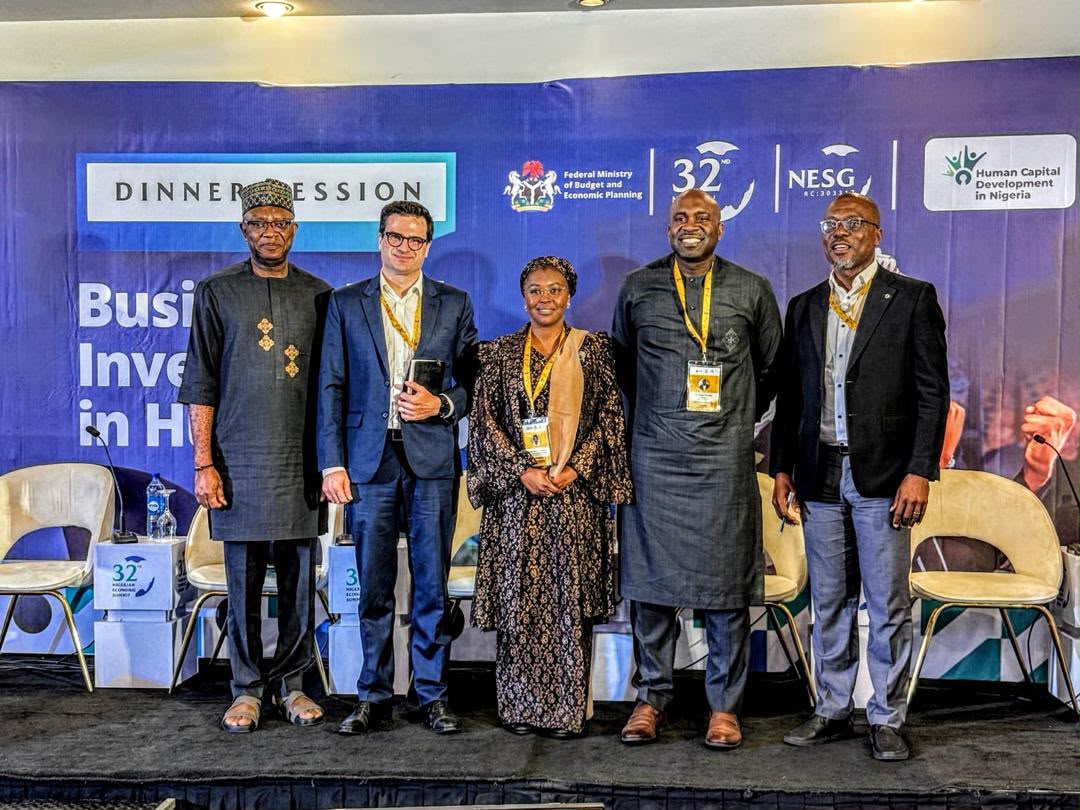
This was the message of the National Coordinator of the National Human Capital Development Programme 2.0 (HCD 2.0), Rukaiya el-Rufai, at the 32nd Nigerian Economic Summit (NES#32), held on October 26 and 27, 2026, at the Transcorp Hilton Hotel, Abuja. Speaking during a panel session on “Business-Led Investment in Human Capital”, she called for a society-wide approach to human capital development, with stronger coordination across sectors and accountability for measurable results.
El-Rufai emphasised that efforts to expand opportunities should translate into tangible improvements in the lives and livelihoods of Nigerians. The session examined how businesses, government and development partners could work together to advance the country’s human capital development agenda across health and nutrition, education and skills, and labour and livelihoods.
Other panellists included Ekenem Isichei, Deputy Director of Programme Advocacy and Communications (Nigeria) at the Gates Foundation; Dr Joe Abah, Regional Director for Africa at DAI Global; and William Benthall, Global Director of Public Affairs and Government Relations at Glovo and Delivery Hero.
The message is particularly relevant to a country with a large young population and significant opportunities to improve the wellbeing and productivity of its people. A child’s health and nutrition influence the ability to learn and develop. The quality of education determines the knowledge and skills acquired, while access to decent employment creates opportunities for young people to apply those skills and contribute to the economy. Progress across these areas can improve individual lives and strengthen the country’s development prospects.
At the Summit’s dinner session, El-Rufai used the story of Amina, an illustrative Nigerian girl who will be 22 in 2048, to demonstrate how decisions made today will shape the next generation. Amina’s future will be influenced by her mother’s health and nutrition during pregnancy, the care she receives after birth, the quality of her education and the skills she develops as she grows. By the time she enters adulthood, these investments will have a bearing on her health, opportunities and ability to earn a living.
Nigeria’s human capital indicators show why sustained attention to these areas remains important. Findings from the 2023–2024 Nigeria Demographic and Health Survey put under-five mortality at 110 deaths per 1,000 live births, while approximately 40 per cent of children under five are stunted. About 73 per cent of children aged 7–14 are unable to read a simple story and answer questions about it, while 26 per cent of primary-school-age children are out of school. In the first quarter of 2024, 14.4 per cent of young people were not in employment, education or training.
Improving these outcomes has benefits that extend beyond individual households. Modelling presented during the discussions suggests that earnings could increase by 50 per cent if all children achieved global benchmark learning outcomes. Earnings could also rise by 23 per cent if all children completed 13 years of schooling instead of the current average of about nine years. These projections illustrate the economic value of ensuring that children receive a strong foundation and young people have opportunities to develop their potential.
Through HCD 2.0, the Federal Government is advancing a coordinated approach to these priorities. The Programme is organised around three pillars: health and nutrition; education and learning; and skills, employment and livelihoods. It provides a framework for bringing relevant institutions and stakeholders together, aligning interventions and strengthening attention to results across the different areas of human capital development.
The private sector is an important partner in this national effort. Businesses depend on a healthy, educated and skilled workforce to operate, expand and remain competitive. They also have the capacity to contribute through investment, innovation, technology, workplace training and employment creation. Greater engagement with businesses can help connect education and skills development to the changing needs of the labour market, while opening up more opportunities for Nigerians.
HCD 2.0 recognises this role through the Private Sector Partnership Group (PSPG), with the Nigerian Economic Summit Group (NESG) serving as its Coordinating Secretariat. The arrangement provides a platform for facilitating private-sector engagement, mobilising business resources and expertise, promoting public-private collaboration and aligning investments with national human capital development priorities.
NESG has demonstrated this role by convening the HCD Policy Forum in March 2026 under the PSPG. The forum brought together government, business and development stakeholders to discuss private-sector-led investment, skills gaps, early interventions and sustainable human capital development. It provided an opportunity to examine how businesses could support national priorities and contribute to better outcomes in health, education and employment.
The NES#32 discussions also highlighted the connection between business investment, skills and job creation. Contributions from William Benthall of Glovo/Delivery Hero brought a business perspective to the discussion, while the example of a Business Process Outsourcing (BPO) supplier employing 3,000 agents illustrated the employment opportunities that investment in people and services can support. Such examples point to the value of closer relationships between employers, education institutions and government in preparing young Nigerians for available opportunities.
Government leadership remains central to this process. Public institutions provide the policy direction, essential services and enabling environment within which individuals and businesses can thrive. Private-sector participation strengthens this effort by bringing additional investment, expertise and employment opportunities. Development partners, civil society and communities also contribute through their experience, resources and engagement with people at the grassroots. Bringing these contributions together can extend the reach and impact of human capital interventions.
Sustaining progress will also require predictable financing and strong institutions. Development partners continue to play an important role in supporting human capital initiatives, while greater domestic ownership and investment will help consolidate the gains. Giving health, education and skills development appropriate attention in national and state budgets will support implementation over time. Strong institutional arrangements can also preserve progress and maintain momentum across successive administrations.
Nigeria’s position on the World Bank’s 2025 Human Capital Index Plus (HCI+) provides further context for the work ahead. The country ranks 131 out of 325 countries and economies, with a score above the Sub-Saharan African average but below the lower-middle-income country average. Education remains an area requiring particular attention. HCD 2.0 has set a 2030 ambition to raise Nigeria’s Human Capital Index to 0.6 and place the country among the top 80. Although the HCI+ ranking and the 0.6 target are different measures, both reflect the importance of continued investment and improvement.
Achieving the 2030 ambition will depend on translating national priorities into coordinated action. Federal and state governments, businesses, development partners, civil society and communities each have contributions to make. Regular monitoring, reliable data and accountability will help stakeholders assess progress, identify areas requiring attention and direct resources where they can make the greatest difference.
The discussions at NES#32 reflects the growing importance of bringing these efforts together. Human capital development is not only a government priority; it is also an economic and social concern for businesses, families and communities. When people are healthy, educated and equipped with relevant skills, the benefits extend across households, workplaces and the wider economy.
Nigeria’s human capital development journey requires more than good policies and ambitious targets. It demands sustained commitment, shared responsibility and deliberate action from every stakeholder. The decisions made today will determine the quality of life, opportunities and productivity of the next generation. Government must provide leadership, businesses must invest, development partners must support, and communities must remain actively engaged. Ultimately, the progress Nigeria makes in developing its people will depend not on what individual stakeholders can achieve alone, but on how effectively they work together towards a shared national goal.
Lawan Bukar Maigana is the Knowledge Management and Communications Consultant for the National Human Capital Development Programme HCD 2.0 and can be reached via email: [email protected]


