



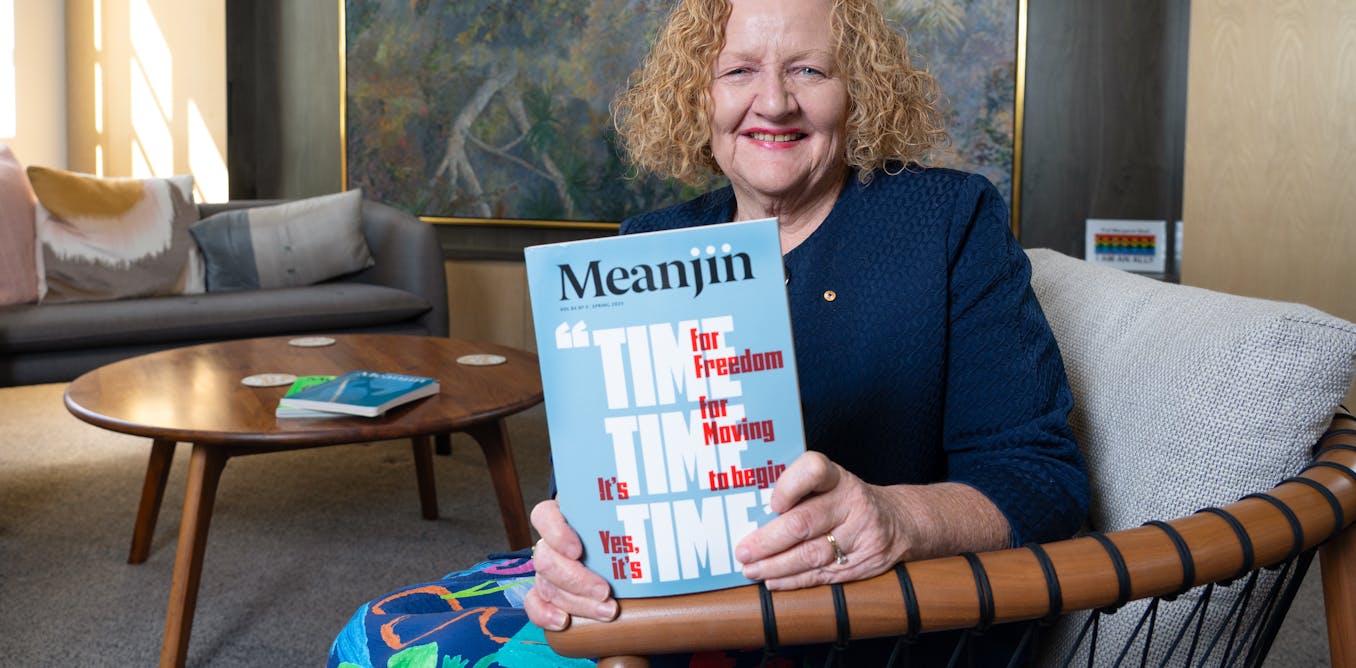
Literary journal Meanjin has been resurrected. The 85-year-old journal will return to its origins in Brisbane, where it was founded in 1940 by editor Clem Christesen.
Its new home is QUT, where the journal will complement the university’s creative writing program. It could be good timing for QUT to take custody of a national literary treasure: a report this week revealed enrolments in Australia’s creative arts programs, including QUT’s, are in decline. Could Meanjin be a future drawcard?
Meanjin closed late last year after its former publisher, Melbourne University Publishing (MUP), withdrew its funding on “purely financial grounds” in September. It ran its (then) final issue in December, and its two staff – editor Esther Anatolitis and deputy editor Eli McLean – were made redundant. The closure sparked widespread condemnation.
There was a petition, protests and countless horrified articles, quoting acclaimed authors like Peter Carey. As Crikey reported, “multiple foundations, university figures and organisations approached MUP to explore ways to save the journal, but these attempts were all rebuffed”.
Professor Warren Bebbington, chair of MUP, acknowledged the publisher had been approached to acquire Meanjin by many organisations. But, he said, “QUT’s understanding of the journal’s legacy surpassed those of the other expressions of interest received”.

Julienne van Loon
Ben Eltham, who reported on Meanjin’s closure for The Conversation, has called the magazine’s return “a victory for everyone who fought to save this vital masthead for the future of Australian literature”.
A new custodian
Meanjin’s name comes from a Yuggera word for central Brisbane. Yagarabul and Gabi Gabi Elder Gaja Kerry Charlton contextualised this language in a 2023 article.
The magazine operated in Melbourne from 1945, when the University of Melbourne invited Christesen to relocate the journal there. In 2007, it moved to Melbourne University Publishing.
Eltham called the explanation – “purely financial grounds” – for shuttering Meanjin “callous and actuarial”. As many have pointed out, literary journals are not known as profitable ventures. Former editor Sophie Cunningham told the Sydney Morning Herald Christesen had even self-funded the magazine at times.
QUT describes itself as Meanjin’s “custodian”. This word has a slightly different connotation to “publisher”. Indeed, the language of custodianship was widely used in commentary on the closure, including by its departing editors.
What next for Meanjin?
QUT states it will appoint an editorial board “to ensure Meanjin’s independence, values and standards are maintained”. It will recruit an editor through “a national competitive search”.
However, some specifics are yet to be clarified. This includes the future of the magazine’s cultural and literary advisory board, which supported the editor on several critical factors, notably First Nations matters. These were a priority of the journal in recent years. Anatolitis told Crikey neither she nor this board were notified nor formally consulted about the decision before the public announcement.

QUT
QUT plans to “take time to thoughtfully re-establish the journal in Queensland”. It will “consider how to most effectively reinvigorate Meanjin, respecting the journal’s founding vision and literary legacy while enhancing its relevance and rebuilding of readership to ensure a viable future”.
Creative arts enrolments down
New education research shows enrolments in Australia’s tertiary creative arts courses declined by as much as 50% from 2018 to 2023.
QUT is among the worst affected. Enrolments in its creative arts courses dropped around 43% over this period, which saw 48 Australian creative arts degree programs discontinued.
The study’s report called for “urgent deliberate policy reform” – including changing “policy messages sent to students and institutions”. It linked the creative arts problem to the 2021 introduction of Job-Ready Graduates, a scheme that substantially increased the cost of Australian arts and creative courses.
Being the new home of a well-respected literary journal might be the right message at the right time for QUT’s School of Creative Arts. Especially if it tilts towards being a “custodian” – and away from commercial restrictions implied by “viable”.
‘Viable future’ and important responsibility
What does the phrase “viable future” mean – especially in close proximity to a comment on readership numbers? After all, Christesen founded the journal in wartime, citing in his first editorial that “in an age governed by the stomach-and-pocket view of life”, there is a duty to talk poetry.
In 2013, Robyn Annear noted in the Monthly that “the absence of literary magazines would discommode contributors far more than readers”. Of course, many of these readers are also writers – a point former Overland editor Jeff Sparrow made back then.
A 2024 Creative Australia research report into literary journals also leaned towards communities of writers, rather than reader numbers, in discussing cultural value. Journals, it explained, provide a space that supports experimentation, diversity in voices and writing community.
Writing for The Conversation shortly after Meanjin’s axing, publishing researchers Julienne van Loon, Millicent Weber and Bronwyn Coates estimated that more than 10,000 people had gained literary workforce skills through associations with the journal. Sampling volumes from 1954 to 2024, they estimated 34 writers and 12 publishing professionals, on average, had contributed to each issue.
Like other institutions that continue to support literary journals around the country, QUT takes on an important responsibility in reviving this 85-year-old publication, “in an age governed by the stomach-and-pocket view of life”.