



A chief consideration when playing with a slide is the tuning. Many of our favorite slide players – Elmore James, Duane Allman, Johnny Winter, Derek Trucks – play slide almost exclusively in an open tuning, such as open E or G.
One great benefit of using an open tuning is that you can lay the slide across the strings at a given fret and sound a pleasing major chord.
But when playing slide in standard tuning, you don’t have that luxury and lose access to some of those familiar sounds. As a result, more attention and care is necessary in order to avoid unwanted sounds. You have to go “peckin’” to find the right ones!
Doing this enables me to play a solid rhythm part throughout the track, and when it’s time for the slide parts, I use both hands to deliberately mute strings I’m not playing on at any given moment, so that only the “right” notes ring out.
Blackberry Smoke’s Charlie Starr: Tips for playing slide in standard tuning – YouTube

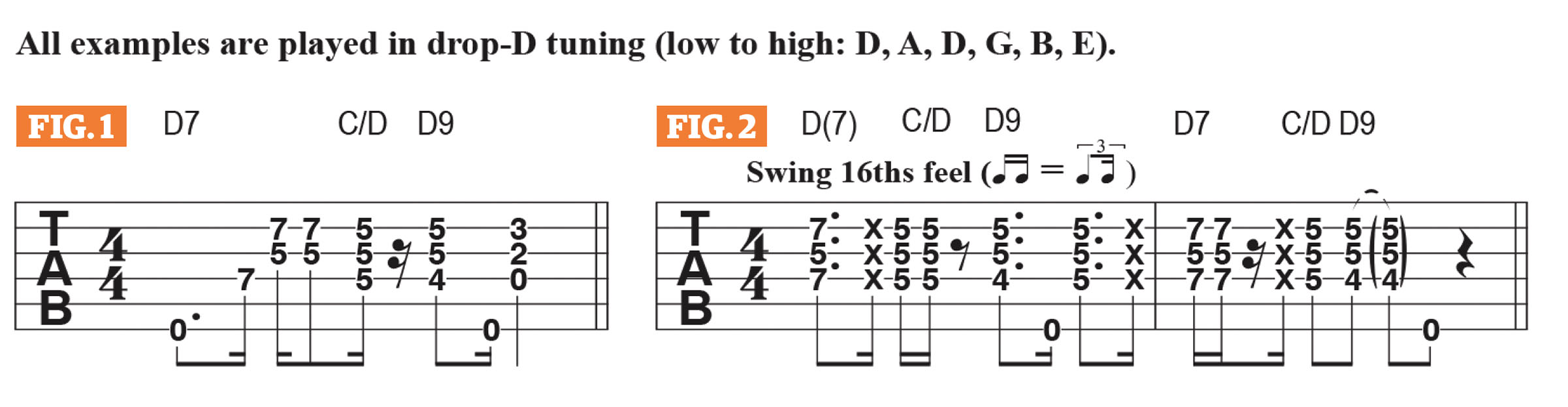
Free on the Wing opens with a beautiful D7/D9 keyboard part. Figure 1 illustrates the chord shapes, and Figure 2 shows how the part is played.
To ”answer” the keyboards, I play a vocal-like melody with a slide, as shown in Figures 3 and 4.

I prefer to use hybrid picking when playing slide, combining flatpicked downstrokes with fingerpicking. Duane Allman, Derek Trucks and Warren Haynes strictly fingerpick when playing slide, but I like the versatility of having the sound of fingerpicking augmented with the sound of the pick.
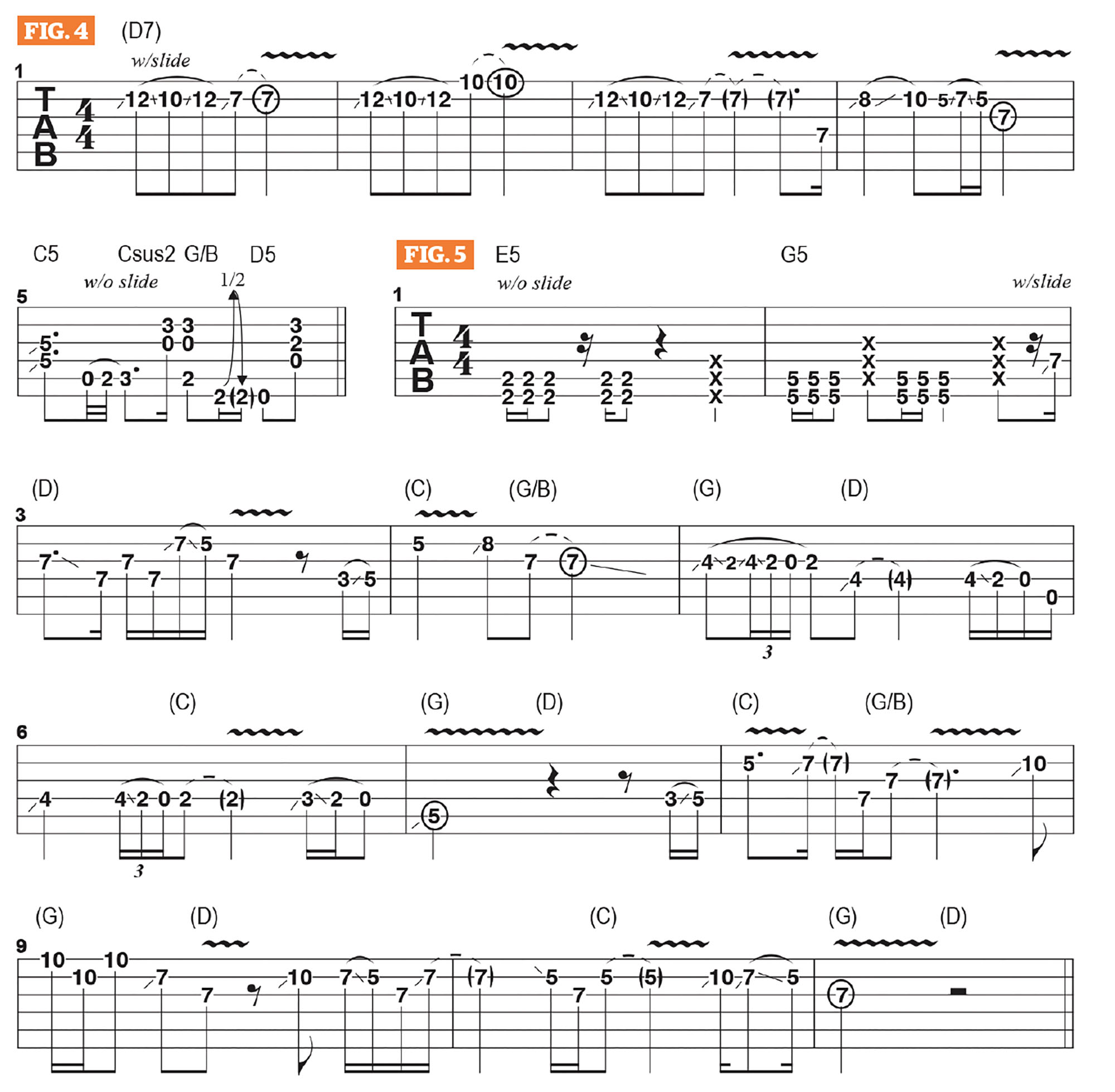
The slide solo comes out of the bridge section, illustrated in Figure 5. Drop-D tuning enables me to barre the power chords on the bottom two strings in measures 1 and 2, after which I jump to the slide solo, which is played over the repeating progression C – G/B – G – D – C – G – D.
As I do with the slide parts earlier in the tune, I play the solo in a very vocal-like manner, phrasing as deliberately and precisely as possible. Throughout the solo, I’m careful to sound only one note at a time as I mute the surrounding strings.
Many guitarists are wary of getting into slide playing because of these challenges, and starting in standard tuning or drop-D is a great way to dive in. Give it a shot! You’ll be surprised and delighted by the many great sounds you can discover and create.
- This article first appeared in Guitar World. Subscribe and save.
” data-join-the-conversation-text=”Join the Conversation”>
You must confirm your public display name before commenting
Please logout and then login again, you will then be prompted to enter your display name.
