

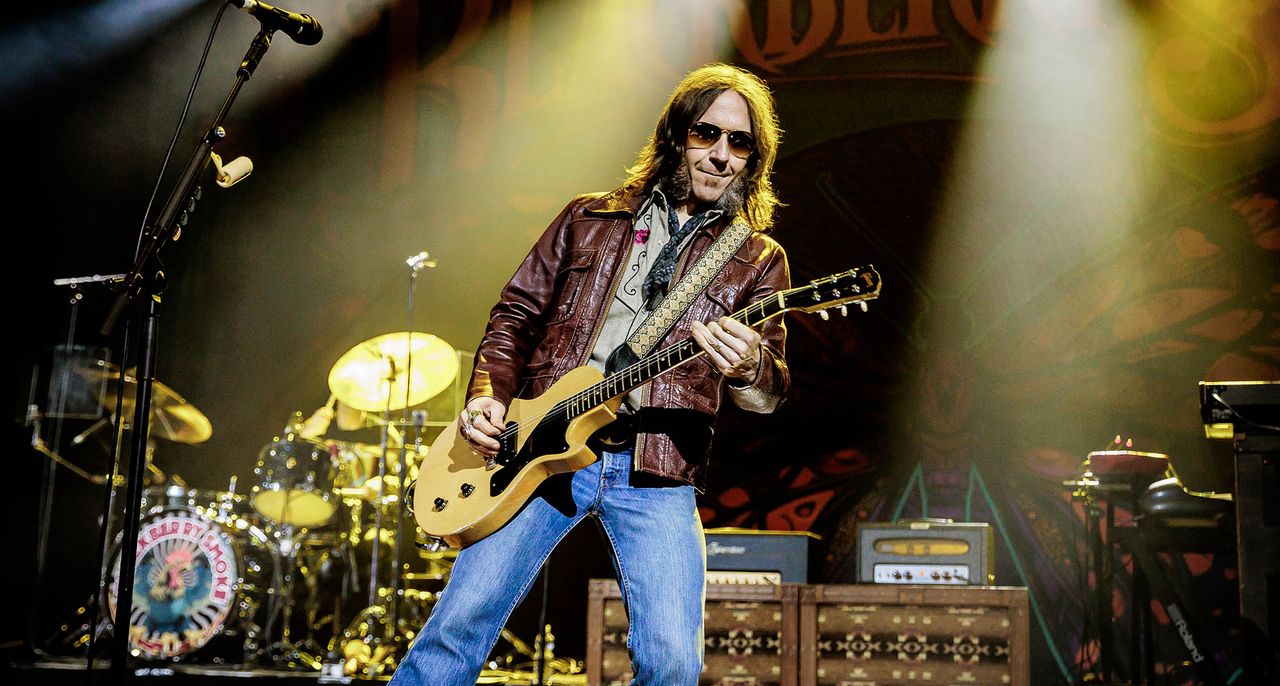
Blackberry Smoke’s Charlie Starr: The moment I started playing pedal steel licks on guitar – YouTube
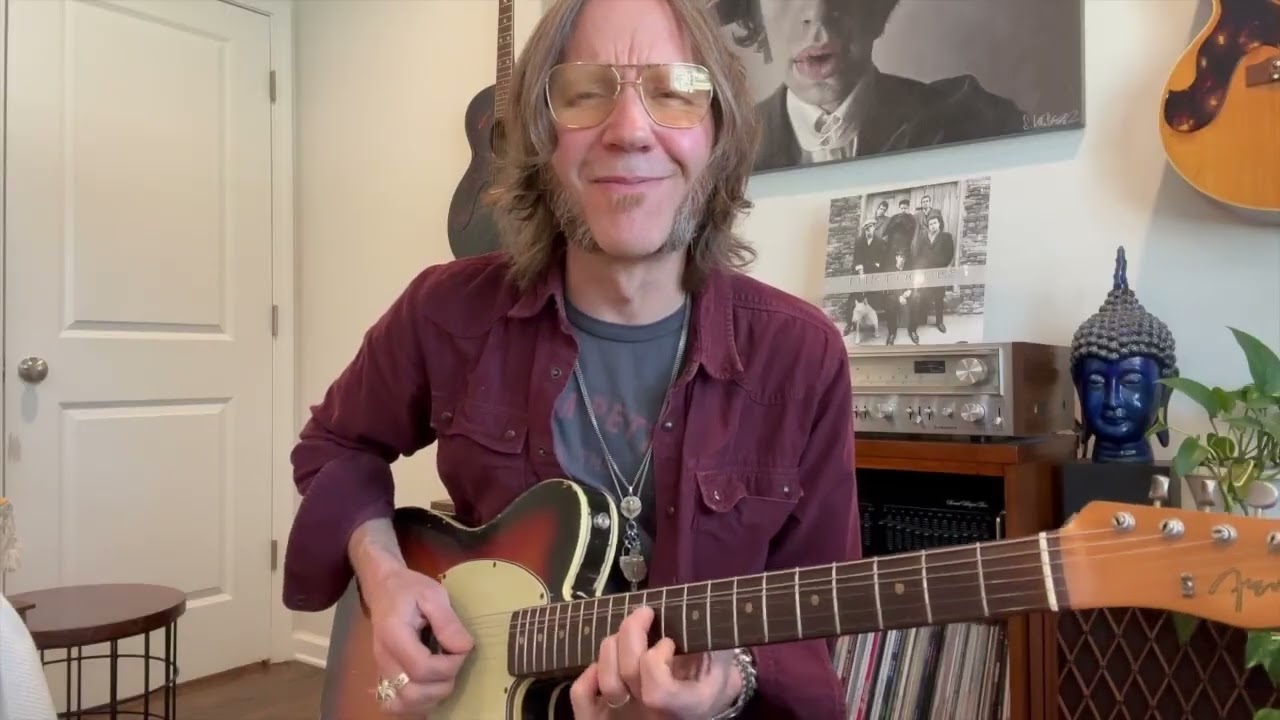
When I was about 12, my friend’s dad was hipping me to all kinds of incredible music.
He gave me the 1974 Gram Parsons album Grievous Angel, which includes Ooh Las Vegas, a song that features some really cool pedal steel guitar licks that can be replicated with a Parsons/White B-Bender-equipped Fender Telecaster, which I talked about last time. In this column, I’d like to share what I learned from all this.
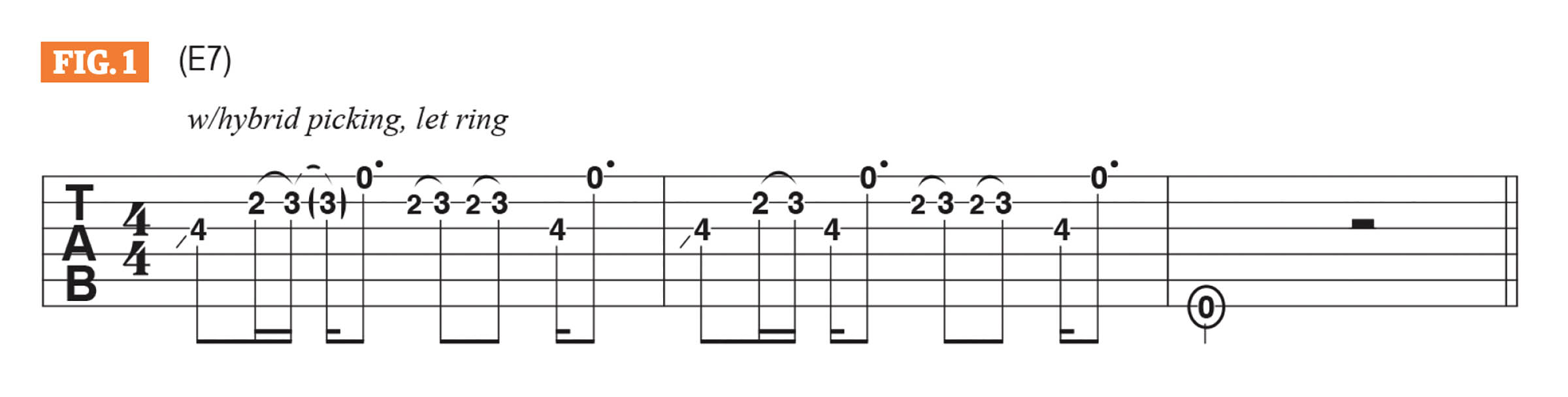
The track kicks off with a lick played in the key of E, along the lines of Figure 1. Here, I begin with a slide up to B on my G string’s 4th fret, followed by a C#-to-D hammer-on the B string then the open high E string.
Article continues below
I hybrid-pick this lick, flatpicking the G string and fingerpicking the notes on the top two strings, and allow the notes to ring together as much as possible.
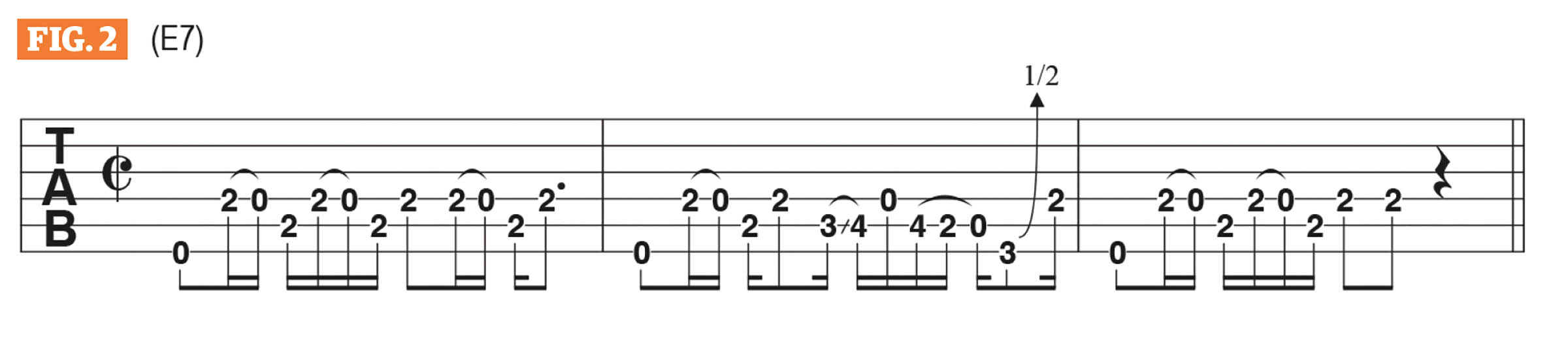
There’s another part of the song, also performed with hybrid picking, along the lines of Figure 2. Here, the open low E string repeatedly alternates against E-to-D pull-offs on the D string, followed by a double pull-off at the end of bar 2, C#-B-A.
What I didn’t know at the time was that that particular lick was not played on a conventional guitar, but rather on a pedal steel, by Al Perkins. I had assumed it was played by James Burton on his Telecaster.
The tone of the pedal steel on this track is so clear, clean and bright and sounded to me like a Tele! Figure 3 is played in the style of this solo, kicking off in bar 1 with a quick ascending lick based on the E major pentatonic scale (E, F#, G#, B, C#) and followed in bars 2-4 with a phrase based on oblique bends.
An oblique bend is performed by combining bent and unbent strings. Here, the G string is bent up a whole step while notes on the top two strings remain stationary. Essential to playing this lick is the use of hybrid picking, as the notes on the top two strings repeatedly alternate with the bent G string.
What makes the lick challenging to execute is the note on the high E string is at the 10th fret, while the note on the B string is at the 12th fret.
At first, I thought, “Is the guitar in open G tuning?” But I soon discovered that it wasn’t a standard guitar at all – it was the pedal steel. And this was the beginning of my journey of trying to replicate pedal steel licks on Telecasters.
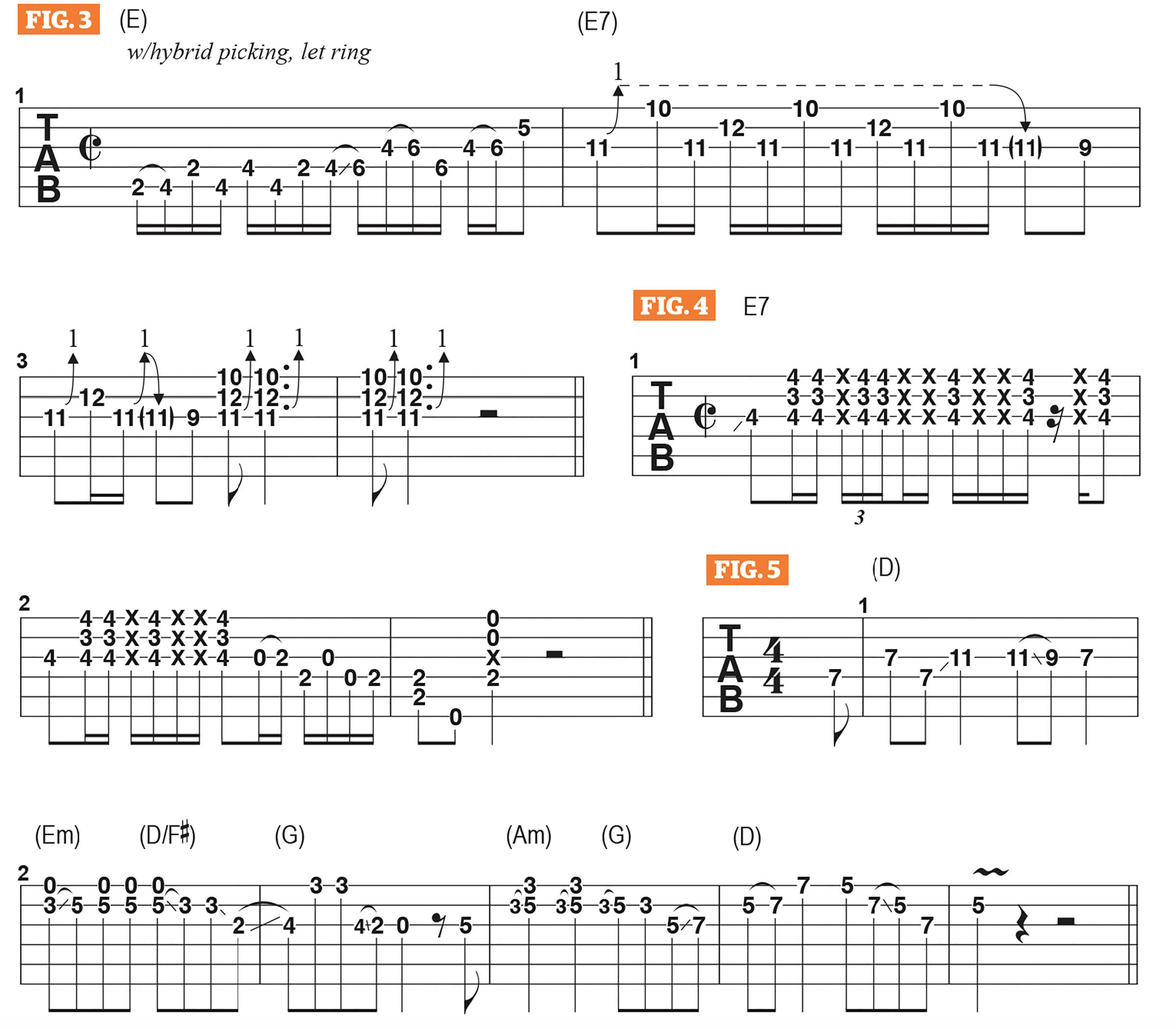
At the end of the tune, James comes in with a funky chordal lick based on an E7 voicing, not unlike Figure 4.
When I got a hold of a B-Bender guitar, I started to write songs with it, such as Pretty Little Lie [from The Whippoorwill].
Figure 5 replicates the opening B-Bender lick on standard guitar; many of the slide and hammer-on articulations here were actually sounded by pulling down on the B-Bender. Our song Lonesome for a Living features both B-Bender guitar and pedal steel.
If you want to hear some great B-Bender playing by Clarence White, check out the Byrds’ Live at the Fillmore – February 1969 and Dr. Byrds & Mr. Hyde.
White’s guitar now belongs to the great Marty Stuart, who has taken the art of B-Bender playing even further. And for a B-Bender masterclass, listen to Albert Lee’s playing on Dave Edmunds’ Sweet Little Lisa.
- This article first appeared in Guitar World. Subscribe and save.
” data-join-the-conversation-text=”Join the Conversation”>
You must confirm your public display name before commenting
Please logout and then login again, you will then be prompted to enter your display name.
