






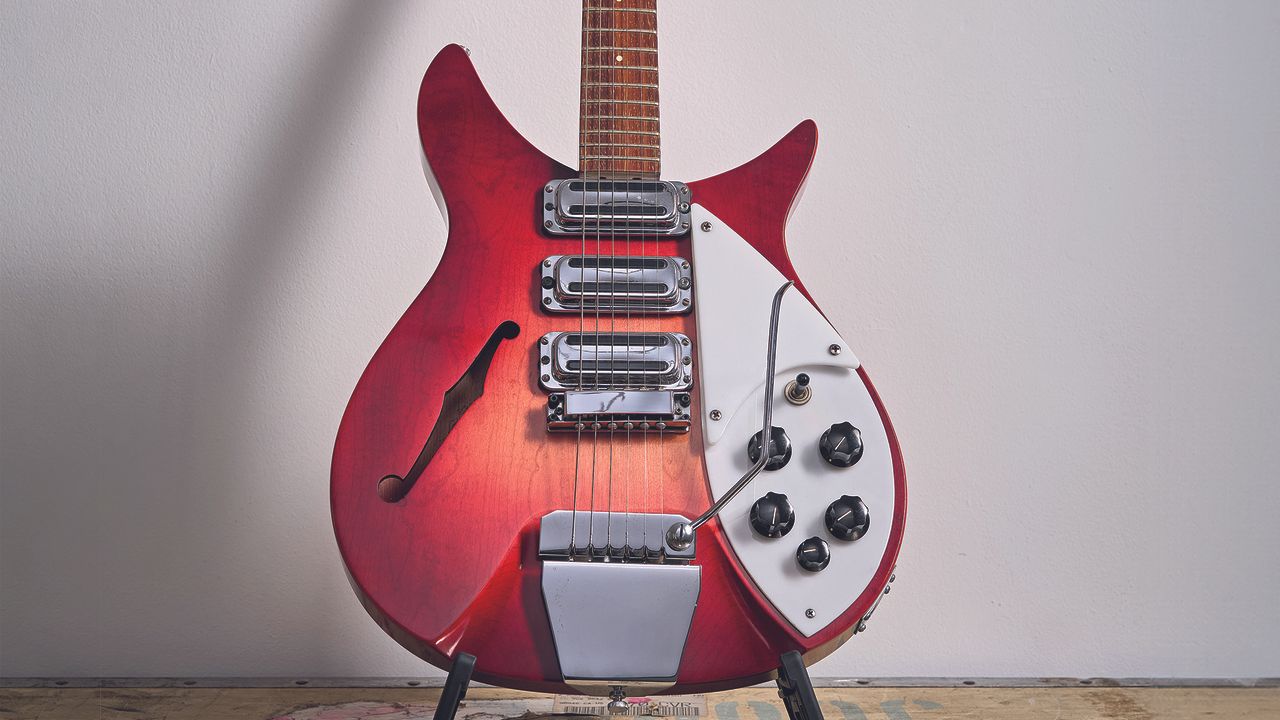

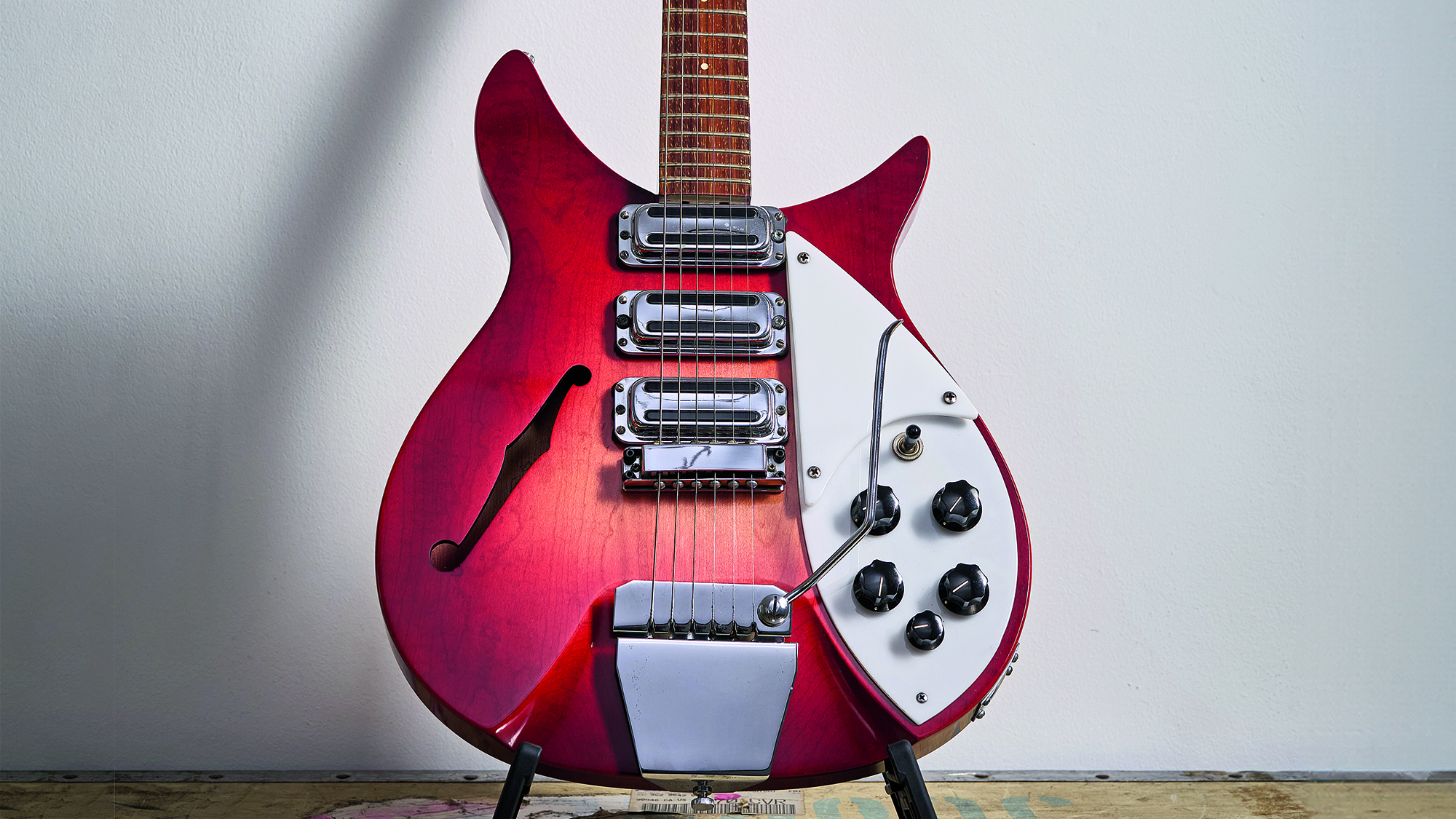
“Nothing’s changed on it,” says Christie’s Amelia Walker of the glowing NOS look of John Lennon’s 1964 Rickenbacker Model 1996. “The Rickenbacker wasn’t used for a huge amount of time – it was a sort of replacement while his black 325 was being mended – but it’s got such a distinct look because it was one of the English [Rose-Morris] models with the f-hole like a violin,” she adds.
The guitar has now sold for $1,270,000 as part of the mammoth Jim Irsay Collection auction. But it had a long history leading up to the sale. Guitar historian Tony Bacon picks up the story here.
“In 1964, Rickenbacker began exporting guitars to the British distribution company Rose-Morris. Rickenbacker had produced some of its short-scale 300-series guitars with an f-hole, unlike those with the regular sealed top. Rose-Morris liked the f-hole and asked for it on the bigger-body guitars it bought, too, instead of Rickenbacker’s regular slash-shape soundhole,” Tony explains.
Article continues below
“The firm had its own model-number system and catalogued its Rickenbacker line accordingly – 1993 (Rickenbacker’s 330/12), 1995 (615), 1996 (325), 1997 (335), and 1998 (345) – but stopped Ricky imports a few years later as sales faltered.
“Rose-Morris came to the rescue, happy to provide one of its ‘British’ model 1996 versions of the 325, finished as standard in fireglo red-sunburst, rather than John’s preferred black.
“He used it for the remaining shows, but soon had his regular 325 back in a reasonably playable condition, ready for the band’s first sessions of 1965 at Abbey Road. He later gave the 1996 to Ringo Starr [in 1968], who sold it at auction in 2015.”
More Treasure From Christie’s Jim Irsay Auction! – YouTube

“The Rickenbacker doesn’t necessarily have any key recordings associated with it,” Amelia Walker adds. “It was basically used [as a replacement] at Hammersmith during the Beatles’ Christmas Show in 1964 [to 1965]. And then after that it was kept in Lennon’s attic studio at Kenwood.
“You can see the guitar in photographs right by his Farfisa and the Brenell tape machines that he had up in the attic. It’s right there, so you can assume that it may have figured in compositions or on demos, but I don’t think it was used on any [official] recordings.”
- This article first appeared in Guitarist. Subscribe and save.
” data-join-the-conversation-text=”Join the Conversation”>
You must confirm your public display name before commenting
Please logout and then login again, you will then be prompted to enter your display name.


