






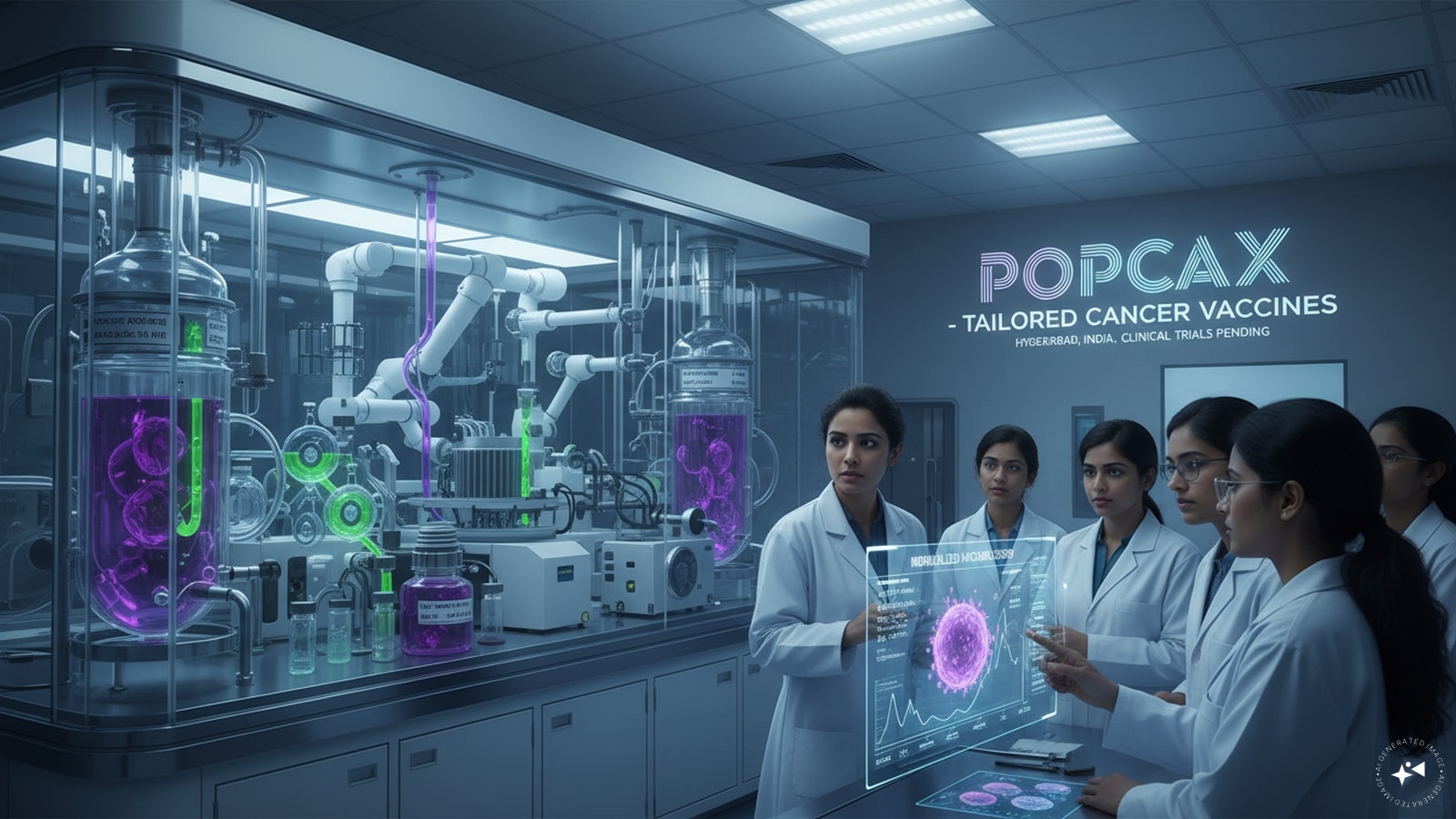
India’s biotechnology sector is making a push into next-generation cancer treatments, with Hyderabad-based PopVax launching a platform to develop personalised cancer vaccines using messenger RNA (mRNA) technology.
The company, backed by the Gates Foundation, Ethereum co-founder Vitalik Buterin, the US government agency BARDA and Facebook co-founder Dustin Moskovitz, has launched the RNA Foundry in Hyderabad. The facility will offer services to design and manufacture vaccines tailored to individual cancer patients using genetic information obtained from sequencing their tumours.
The approach is based on the fact that cancers carry different genetic mutations from one patient to another. A personalised vaccine is designed to train the patient’s immune system to recognise and attack cancer cells carrying those mutations.
PopVax aims to bring the design and manufacturing of these vaccines under one roof at the RNA Foundry.
How do personalised mRNA cancer vaccines work?
The vaccines use messenger RNA technology, the same broad approach used in several Covid-19 vaccines. The mRNA carries instructions that help the immune system identify specific targets on cancer cells.
PopVax plans to use the platform and manufacturing processes developed for its broadly protective mRNA Covid-19 vaccine candidate, PVX-001, which has entered clinical trials in Australia.
Storage and transportation could also be an advantage. The company says its proprietary vaccine-delivery system can remain stable for more than nine months in a regular refrigerator at temperatures of 2-8°C.
How effective are personalised cancer vaccines?
Personalised mRNA cancer vaccines developed by US companies Moderna and Merck have shown efficacy against skin cancer in Phase III clinical trials.
However, the clinical effectiveness of vaccines developed by PopVax through the RNA Foundry has yet to be established. The company expects evidence from compassionate-use treatment in a small number of patients around the world to help support the launch of clinical trials in the coming years.


