




Advertisement


Independence Day: Tinubu Highlights 4% Growth, $6bn Non-Oil Exports
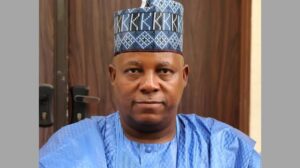
President Bola Ahmed Tinubu, in his Independence Day address on Thursday to Nigerians, has declared that the country is entering an “age of prosperity” following what he described as three years of difficult economic reforms, citing more than four per cent growth, falling inflation, improved foreign-exchange stability and over $6 billion in non-oil export earnings.
Tinubu said the government’s economic priority had shifted from correcting longstanding distortions to creating conditions for sustained growth and broader improvements in living standards.
He said the economy had grown by more than four per cent in 2026, with both the oil and non-oil sectors contributing to the expansion.
The latest official data show that Nigeria’s real GDP grew by 4.43 per cent year-on-year in the second quarter of 2026, up from 4.23 per cent in the corresponding quarter of 2025.
Tinubu also highlighted falling inflation, improved foreign-exchange stability, rebuilding of foreign reserves and increased non-oil exports as evidence of what he described as a stronger economic foundation.
According to the President, Nigeria recorded more than $6 billion in non-oil export revenue in 2025, describing the figure as evidence of growing capacity among Nigerian businesses to earn foreign exchange outside crude oil.
The emphasis on non-oil production comes against the backdrop of official data showing that the non-oil sector accounted for 96.08 per cent of Nigeria’s real GDP in the first quarter of 2026.
Tinubu said the next phase of economic policy would focus less on emergency stabilisation and more on translating macroeconomic improvements into lower costs for households and businesses.
“Our priority is to bring down the cost of living,” he said, adding that the government would pursue the objective by reducing the cost of producing and transporting goods.
He linked this strategy to increased agricultural production, mechanised irrigation, improved access to seeds and fertiliser, storage facilities and transportation infrastructure.
The President said investments in roads, railways and ports were intended to connect farms and factories more efficiently to markets, arguing that lower production and logistics costs should eventually translate into cheaper goods for consumers.
He also placed industrialisation and job creation at the centre of the next phase of the administration’s economic programme.
Tinubu said the government would deploy Nigeria’s gas resources to power industries, support the revival of factories, expand digital connectivity, develop job-relevant skills and improve businesses’ access to infrastructure and finance.
“I want to see more Nigerians making things,” he said, outlining a vision of an economy in which domestic farms supply Nigerian cities and factories, while Nigerian companies increasingly sell their products to international markets.
The President’s emphasis on industrial production comes as manufacturing has continued to record growth. NBS data show that real manufacturing GDP grew by 3.29 per cent year-on-year in the first quarter of 2026.
Tinubu also identified agriculture as a major pathway for reducing food costs and creating employment, promising continued investment in mechanisation, irrigation, inputs, storage and transportation.
He said the government’s objective was not simply to expand the size of the economy but to increase productivity and ensure that economic growth creates productive opportunities for millions of Nigerians entering the labour market.
“We will use our gas to power new industries,” he said, adding that the administration would support businesses seeking to restore factories and expand digital participation in communities.
The President acknowledged, however, that economic growth had not eliminated hardship, noting that many households continued to struggle with food, education, healthcare and transportation costs.
He said the government was therefore strengthening targeted social interventions alongside its broader growth strategy.
Among the measures he cited were improvements to the National Social Register, the Nigerian Education Loan Fund, consumer credit through CREDICORP, and continued investment in primary healthcare and basic education.
Tinubu said these interventions should serve as a bridge for vulnerable Nigerians while the wider economy generates more productive opportunities.
He maintained that the reforms implemented since 2023 had been necessary to correct structural weaknesses in the economy, particularly those associated with costly subsidies and distorted foreign-exchange arrangements.
The President acknowledged that the reforms had imposed significant costs on households and businesses but argued that abandoning them would reverse the progress made toward economic stability.
The administration has previously pointed to improved macroeconomic indicators as evidence of its reform programme. The Central Bank’s 2025 outlook reported estimated GDP growth of 3.89 per cent in 2025, while foreign reserves were estimated at $45.01 billion at the end of the year.
The President’s latest address, however, places greater emphasis on what comes after stabilisation: expanding production, reducing costs, attracting investment and creating employment.
That shift is significant because the government’s stated economic challenge is now moving from correcting macroeconomic distortions to ensuring that improved indicators translate into tangible gains for households.
Tinubu said the government would continue to strengthen infrastructure connecting producers to consumers, expand access to finance and skills, and create conditions for private businesses to invest and employ more Nigerians.
He described the emerging phase as an “age of prosperity,” saying the ultimate measure of the reforms would be whether Nigerians experience greater opportunity and improved living standards.
“Nigeria has corrected its course,” he said. “We have passed through our own Red Sea.”
The President’s economic message therefore centred on a transition from stabilisation to production—with agriculture, manufacturing, energy, infrastructure, exports and job creation positioned as the main channels through which the government intends to convert economic recovery into broader prosperity.


