





Advertisement


ICPC’s Red Flag and Tinubu’s Response — Why Nigeria Must Stop Fighting Corruption Backwards
By Nafisat Bello
There is something profoundly significant about an anti‑corruption agency raising a red flag — and the highest level of government responding with action. For years, Nigeria’s fight against corruption has followed a predictable and frustrating cycle: investigations begin, shocking discoveries emerge, suspects are named, money is recovered, outrage spreads, and then attention shifts to the next scandal while the systems that enabled the abuse remain untouched.
The latest development surrounding the Integrated Personnel and Payroll Information System (IPPIS) offers a chance to break that cycle.
President Bola Ahmed Tinubu’s directive for a comprehensive forensic audit of IPPIS — and of the Federal Government’s wider personnel, payroll and administrative systems — should not be dismissed as another routine announcement. It is a direct response to concerns raised by the Independent Corrupt Practices and Other Related Offences Commission (ICPC), and an acknowledgment of a truth Nigeria has long avoided: we cannot defeat corruption by chasing individual offenders while leaving vulnerable systems intact.
The directive followed a Federal Executive Council resolution of August 19, 2026, triggered by ICPC findings on suspected ghost workers, questionable government entities and weaknesses in public‑sector control systems. That sequence is important. The ICPC investigated. It exposed vulnerabilities. The findings reached the highest level of government. The Presidency responded with a systemic intervention.
This is how anti‑corruption institutions should influence governance.
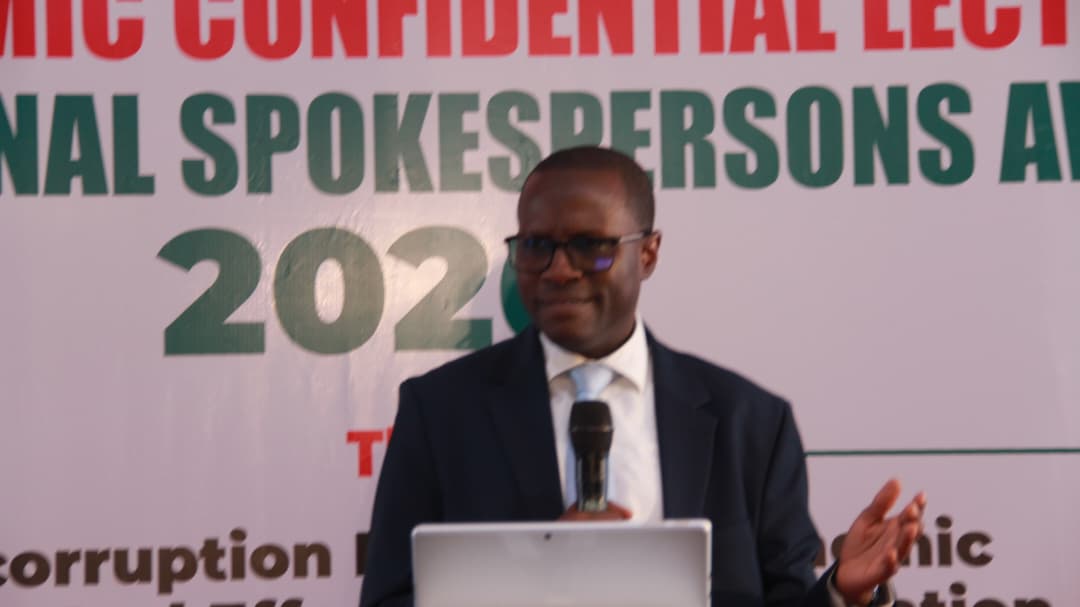
At the National Spokespersons Awards and Economic Confidential Annual Lecture in Abuja, ICPC Chairman Dr. Musa Adamu Aliyu, SAN, revealed disturbing insights from the Commission’s investigation. According to the ICPC, 908 suspected ghost workers were identified on IPPIS, and ₦941.99 million was traced to accounts linked to the alleged payroll fraud.
The numbers are alarming, but the deeper significance lies in the questions they raise.
If hundreds of fictitious workers could enter a system designed to sanitise the Federal Government’s payroll, the real issue is not simply who collected the money. It is:
Who created the identities? Who validated them? Which controls failed?
Who had the authority to introduce or approve them? Were the weaknesses technological, administrative or deliberately engineered? And who benefited from keeping those weaknesses alive?
These questions shift the conversation from corruption to systems failure.
For too long, Nigerians have treated ghost workers as the disease. They are not. They are symptoms. The real disease is the institutional weakness that allows ghosts to acquire identities, enter government systems, receive salaries and remain undetected.
Delete a ghost without closing the loophole that created it, and another ghost will take its place.
President Tinubu’s order for a forensic audit is significant because it goes beyond deleting names. It seeks to examine the architecture of government systems — personnel, payroll, pension, identity, biometric and financial controls.
The goal is simple: determine whether irregularities resulted from technical defects, weak processes, inadequate segregation of duties, human negligence or deliberate manipulation.
This is where serious anti‑corruption reform begins.
The same loophole that allows a fictitious employee to receive a salary could allow a fictitious company to obtain a contract or an illegitimate entity to access public resources. That is why the audit must extend beyond IPPIS to the entire ecosystem of government entities.
The audit is also expected to verify the legal basis of ministries, departments, agencies, commissions, councils and parastatals. In plain language, Nigeria must answer a question that should never have become complicated:
Who genuinely belongs to government — and who has merely found a way to appear as though they do?
It is astonishing that a country facing severe fiscal pressures still struggles to determine which entities are legitimately drawing from public resources.
Under Dr. Musa Adamu Aliyu, SAN, the ICPC has demonstrated why anti‑corruption agencies must look beyond arrests and prosecutions. An arrest removes an offender. A prosecution punishes a culprit. Asset recovery returns stolen funds. But fixing a defective system prevents thousands of future offences.
That preventive dimension is the most valuable form of anti‑corruption work.
The IPPIS investigation shows how systems analysis can lead to investigation, financial recovery and institutional reform. In July 2026, the Federal High Court reportedly issued a final forfeiture order for ₦941,994,079.86 linked to the payroll scheme. The presidential directive now pushes the process further — from recovering stolen funds to examining the machinery that enabled the theft.
Nigeria has never lacked committees, investigations, audits or white papers. What we have lacked is implementation. The forensic audit must therefore be rigorous, independent and professionally executed. It must not become another impressive report that disappears into government archives.
Where fraudulent identities were created, accountability must follow. Where administrators ignored irregularities, responsibility must be established. Where technology was manipulated, vulnerabilities must be closed. Where procedures are defective, they must be redesigned. Where entities lack legal foundation, decisive action must be taken.
Anything less would reduce a potentially transformative intervention to another temporary headline.
Every fraudulent salary payment is money that could have funded a classroom, hospital, road or security operation. Every fictitious entity increases the burden on the treasury. Every unresolved control weakness invites another fraudster.
Government cannot demand fiscal discipline from citizens while tolerating indiscipline within its own systems. Fiscal responsibility is not only about raising revenue or removing subsidies — it is also about protecting existing resources.
A government that seeks more revenue while allowing funds to leak through fraudulent payroll systems is filling a bucket without repairing the holes.
Nigeria celebrates billions recovered after theft. But the greatest anti‑corruption success is not recovering ₦1 billion after it disappears — it is creating a system in which the ₦1 billion cannot disappear at all.
If the forensic audit can reveal how fraudulent identities entered IPPIS, how questionable entities gained recognition, how controls were bypassed and where responsibility failed, Nigeria will gain something more valuable than another recovery figure: institutional knowledge.
And institutional knowledge, when converted into stronger controls, can save billions over time.
Payroll and personnel systems should cross‑check identities across databases, detect duplicates, flag unusual payment patterns and create reliable audit trails. Technology cannot eliminate corruption, but it can make manipulation harder, easier to detect and more costly to conceal.
The ICPC has raised the red flag. The Federal Executive Council has deliberated. President Tinubu has ordered a forensic audit. But the real test is what happens next.
The ICPC must continue its investigations without fear or favour. MDAs must cooperate fully. Those against whom credible evidence exists must face consequences. Every loophole identified must be closed.
Nigeria does not need another war against ghost workers that ends when the ghosts disappear from the newspapers. It needs systems in which ghosts cannot enter the payroll in the first place.
President Tinubu therefore deserves credit for responding to the findings with a directive that extends beyond simply deleting suspected ghost workers. Likewise, the ICPC Chairman deserves recognition for championing anti-corruption reforms through investigation, advocacy and strategic communication.
The ultimate measure of this intervention will not be the number of ghost workers removed or the amount of money recovered. It will be whether Nigeria has the courage to follow the trail to its source, hold those responsible accountable and permanently close the doors through which the ghosts entered.
If that happens, Nigeria will not only fight corruption — it will finally begin to prevent it.
Nafisat Bello writes from Kubwa, Abuja.


