

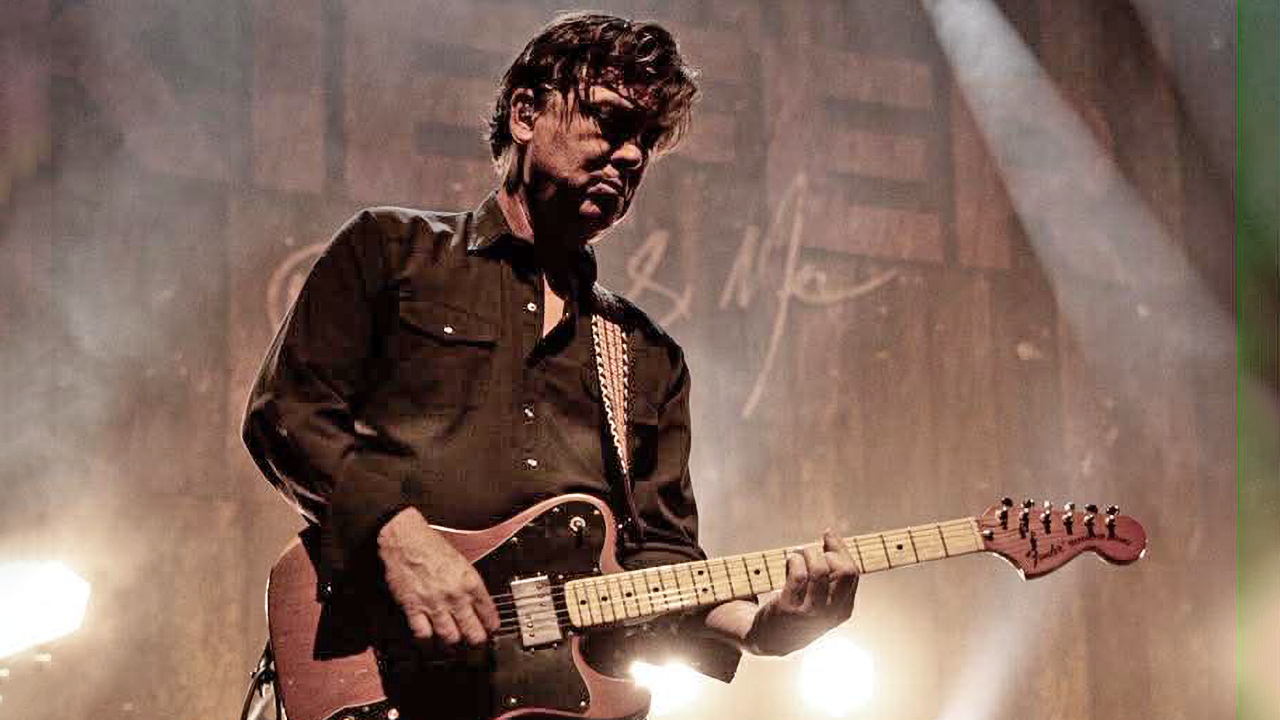
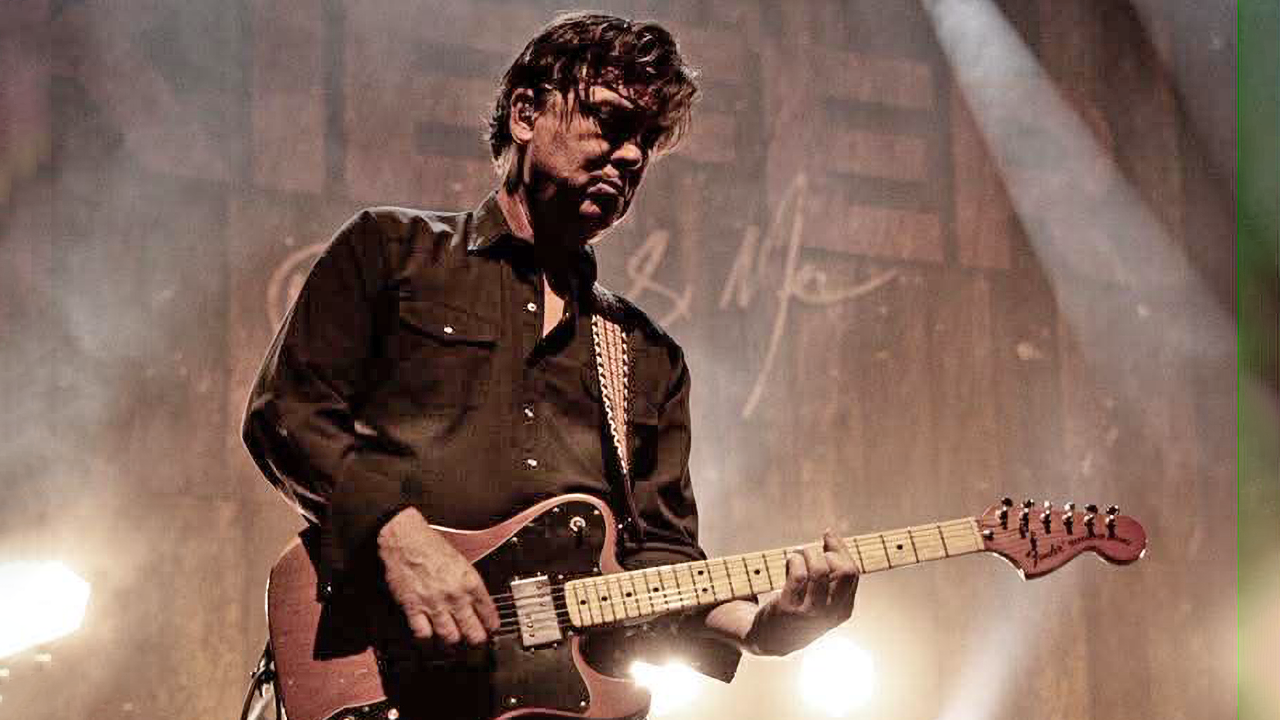
Doug Pettibone has worked with everyone from Jewel to John Mayer, but his time with Lucinda Williams has defined his career. “It’s been the greatest gig for me,” he says.
“She was the first artist who told me, ‘Just play – be you.’ Before that, people were like, ‘Can you play like this?’ and you had to emulate. But Lucinda allows musicians to bring the music and have it be a part of her whole thing.”
He reflects: “I’m most proud of [2003’s] World Without Tears. I did all the guitars on that record. She said, ‘Just play what you play,’ and that record represents what I do.”
Article continues below
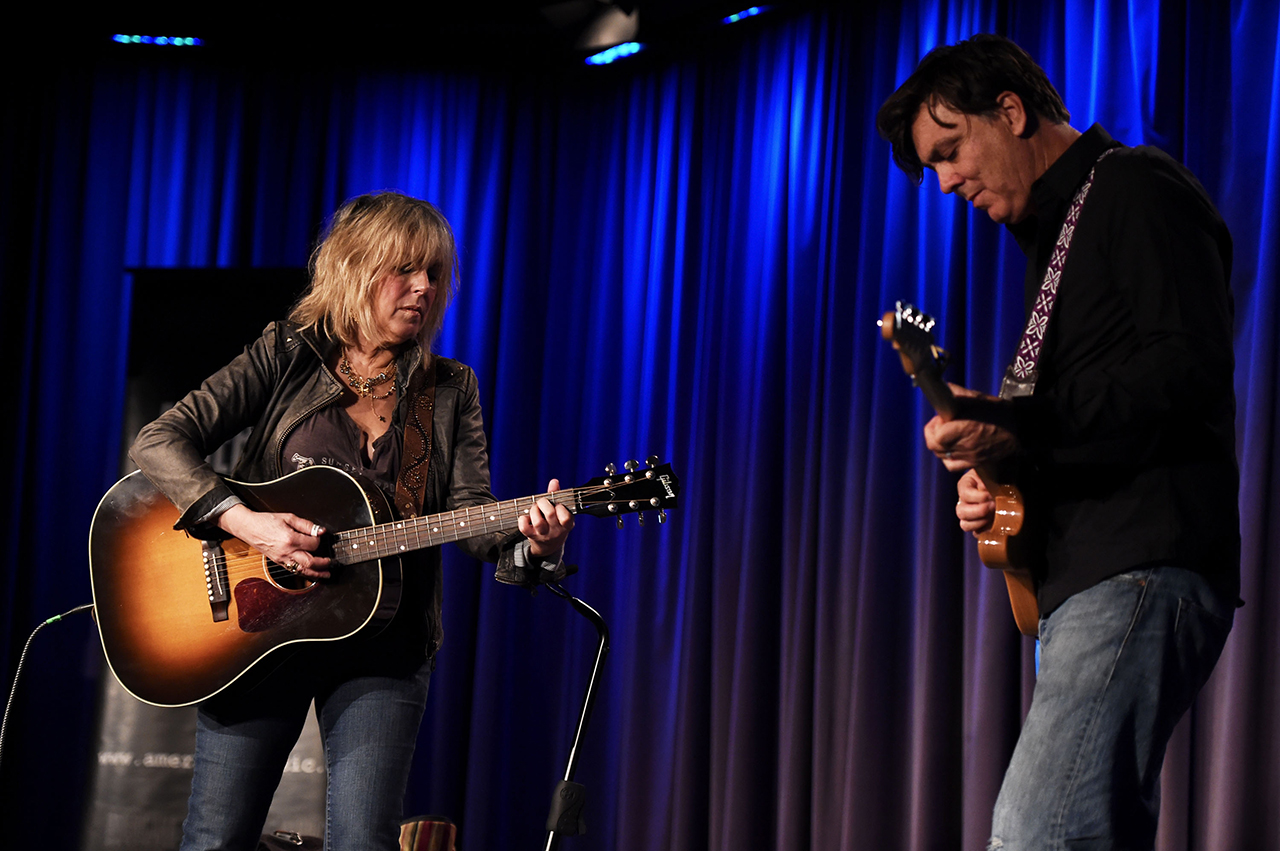
Williams recently added Marc Ford to the band, forming a two-headed monster with Pettibone. “There’s absolutely no ego,” he says. “The more successful somebody is, the less they have to prove. You get all that shit out of the way and get down to the music.”
I started sight-reading when I was 10. That helped me learn adult chords and time signatures that weren’t the standard stuff on the radio. I don’t really play classical anymore, but I do work the fingerstyle stuff into my playing. Sometimes I’ll have a pick and I’ll put it between my fingers and fingerpick, just for a different texture.
He’d come over from London to study jazz at Cal State University, and to make extra money he’d teach guitar. I had a really crappy guitar and I was learning folk songs; but the only thing I really remember about him is that he was my first teacher.
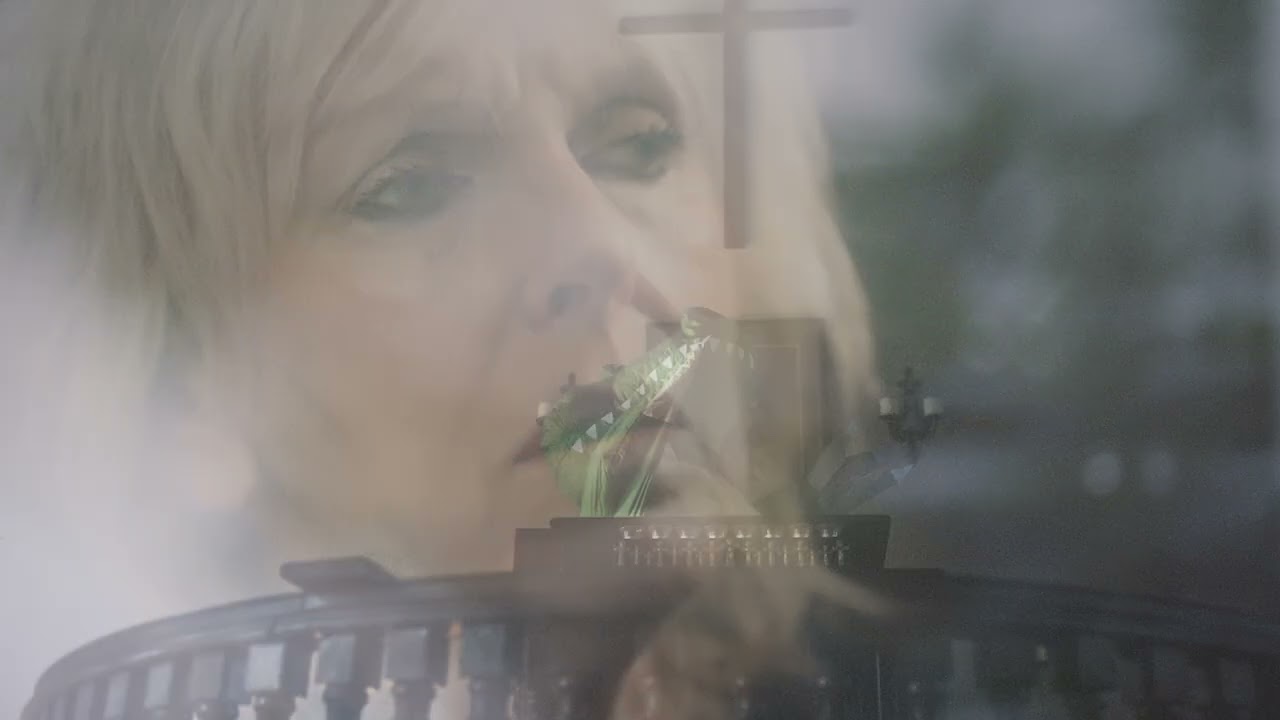
Lucinda Williams “The World’s Gone Wrong” (Official Music Video) – YouTube
Have you spoken with Andy since?
Years later, I ran into him at NAMM. I was with a friend, and I said, “Hey, check this out!” I go, “Hey, Mr. Summers!” He was like, “Yes?” I said, “Did you ever teach guitar at a place called Ernie Ball’s? You were my guitar teacher!” He goes, “Oh, yeah; your mom used to drive you to lessons.” I was like, “What have you been doing since then?” He got a kick out of that!
How did you make the jump into session work?
I was in an original band out of university, and this guy Dusty Wakeman, a great friend who produced some of Lucinda’s early stuff, watched us one night. He wanted to do a development deal, so we went into the studio in Burbank and did three songs. He liked what I did, so he started pulling me into sessions.
Her bass player said he couldn’t recommend me, because the last guy he recommended got fired!
Early in your career, you hooked up with Jewel after she released Spirit. What was that like?
I got the Spirit tour after I was recommended by the guitar player on the album. I toured with her for probably a year and a half. We started working on her next record, but she ended up going with a producer in Nashville who brought in all his guys, and that was the end of that.
But it was insane. It was my first big tour. We’d be walking through an airport and she’d be on the cover of every magazine on the newsstand. She couldn’t really go out and hang. But she’s really cool, a lot of fun, and really musical. I had a blast. Great band!
After that, you worked with Tracy Chapman and then got the gig with Lucinda Williams.
Yeah, Tracy Chapman was my second big gig. Shortly after that I got a call to audition for Lucinda. I’d been turned on to her music by an ex-girlfriend’s mom. It had really interesting guitar parts – Gurf Morlix, Charlie Sexton, Buddy Miller; all those guys were playing on the records. It was a really cool mixture of Americana.
The parts were interesting and simple, but also complex and rootsy. And on top of that you’ve got her poetry, her fantastic stories, and her voice. When I saw her I was like, “Oh my God – she’s amazing!”
How did you get the gig?
Her bass player, Taras Prodaniuk, told me she was looking for a guitar player. But he said he couldn’t recommend me, because the last guy he recommended got fired! I really wanted the gig, so I looked at all her records to see who played on them and who produced them; and by this time I knew most of them.
So I called them all and said, “Can you do me a favor – call Lucinda and see if I can get an audition?” I guess everybody called her that same day! She was like, “I think it’s a sign from God. We need to hear this guy.”
Her manager called me, and he was kind of pissed off for whatever reason. He goes, “Why do you think you’ve got to audition with Lucinda?” I’m like, “Well, I don’t think I have to. I’d like to.” He goes, “The audition is in Nashville tomorrow.” I go, “Cool – I’m here in Nashville!” I happened to be there rehearsing with some of the guys from the Mavericks, a band we had that was going to Europe for a tour.
How did he react to that?
He goes, “Well, there’s 45 songs you’ve got to know by tomorrow.” But because Taras had told me about it about a month and a half before, I knew all the songs. So I said, “No problem!”
He goes, ‘Sit down at that steel and let’s see what you got.’ I was like, ‘This is when I finally get found out!’
I went down to the audition, but I didn’t think it went well at all. I kind of messed up because I’m not great at auditions. But after two songs, Lucinda was like, “Oh, my gosh! This is perfect. You’re the one!” Then she said, “We’re leaving next week.” I said, “Well, I’ve gotta go to Europe.” So they got another guitar player to take my place for two weeks, and then it was perfect.
Lucinda had gone through a number of guitarists before you joined. What’s kept you coming back for more?
She gets what I do; I get what she does. It’s as simple as that. It’s a great match musically and spiritually. But I took off for a while – I was with her for 10 years, then I went and worked with other people.
One of those was John Mayer.
I did the Born and Raised tour, and it was great. Don Was, who produced, and Greg Leisz, who played on the record, said they needed somebody to do the pedal steel stuff. I did that for about two years. I learned a lot working with John. He’s a good dude. He gets a lot of shit in the press but he’s a solid, solid guy, and a gentleman. He’s the best.
What’s a memorable moment from your time with John?
I’m not virtuosic by any means on pedal steel, and I never soloed too much, but I can fake it! We were rehearsing, and Chuck Leavell, the keyboard player, goes, “Hey, Doug, why don’t you sit down at that steel and let’s see what you got?” I was like, “Oh, shit – this is when I finally get found out!”
I sat down and we played and jammed, and I was pretty limited with what I could do. John said, “I guess the only way you can get better is by playing more.” Instead of firing me and getting somebody who could really play, he would throw me solos every night on the steel, so I got a lot better.
I thought that was a pretty solid thing for him to do. And that was when he had his sights set on the Grateful Dead thing, Dead & Company. We’d get messages every night saying, “Okay, let’s work on this song tomorrow at soundcheck.” It was like Friend of the Devil, or whatever he had to figure out.
He’d say, “We gotta crack this code,” and we’d jam on Grateful Dead songs for hours. It was fun. It was like going to music camp. I loved every minute of that gig.
What led you back to Lucinda Williams?
Her guitar player had COVID, and they found out I’d moved to Asheville, North Carolina, a few hours from Nashville, so they asked if I’d come and fill in. I showed up, played, and I was like, “Oh my gosh, I really miss this.” It was a nice feeling to play with her again. I could stretch out, and the more I stretched out, the more she liked it.
A lot of players don’t listen. The ones you wanna play with are the guys with big ears
It just felt like home. Everybody had grown up a little bit more, and it was just a great spot to be in. I’ve been back with her for about four years now.
The dynamic is different because Lucinda’s stroke prevents her from playing much guitar. So it’s you and Marc Ford. You two seem to have great chemistry.
I’ve always been a fan of Marc’s playing. He opened for us years ago and we played together during the encore. I could tell we had something. A lot of guitar players don’t listen. The ones you wanna play with are the guys with big ears.
It’s like you’re having a great conversation with somebody. We work out some parts, then some stuff is not worked out – it just happens. He’s a great musician.
What’s your main rig with Lucinda like now?
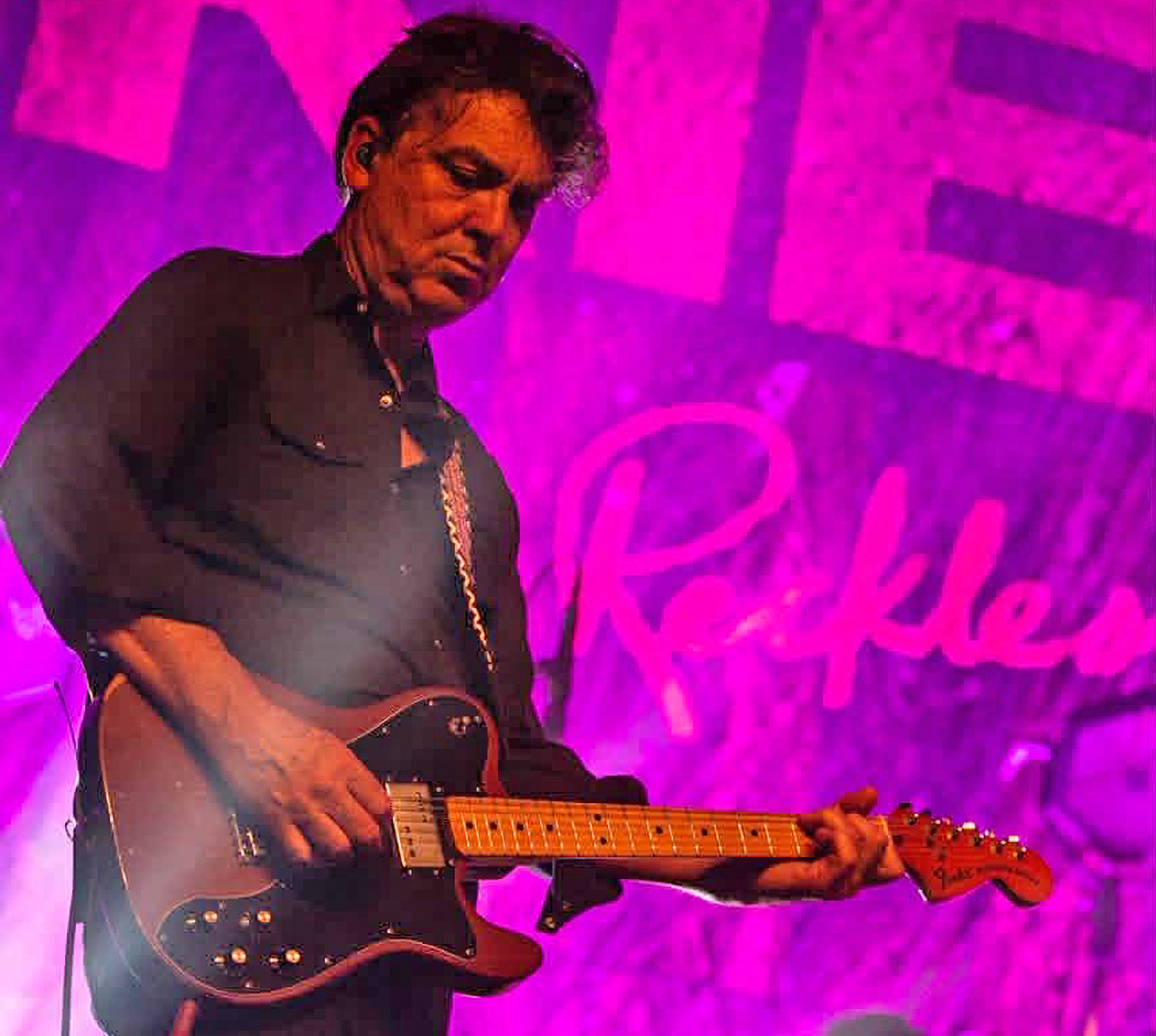
I’ve got a ’67 Gretsch semi-hollow for recording, and I’ve been getting into Japanese guitars like Tokai. I picked up a ’57 Stratocaster reissue from the ‘80s, which is really cool. On stage I’ve been using those, plus a newer Tokai 335, a ’58 Les Paul Jr., and a ’62 Strat reissue from the ‘80s.
Then, going into my ’68 Fender Deluxe, I have a few pedals down because we’ve been doing a lot of fly dates. We rent gear in Europe and just bring our pedalboards. So I’ve got a tiny one that fits in my suitcase.
What’s next for you?
I’ve been writing more – I wrote seven out of the 10 songs on Lu’s last record. We wrote another one last night, and we’re gonna go record today. I do a lot of remote recording from the road. People, send me tracks, please! And I’d like to break more into the soundtrack thing and get more of those gigs.
- Williams’ latest album, World’s Gone Wrong, is on sale via Highway 20 Records.
” data-join-the-conversation-text=”Join the Conversation”>
You must confirm your public display name before commenting
Please logout and then login again, you will then be prompted to enter your display name.
