




Considering a room revamp, but not sure where to begin—or how much to invest? In our latest series, One-Room Renos, we explore renovation projects big and small, from soft-good upgrades you can accomplish in a weekend to total overhauls that cost a small fortune and take months (or longer).
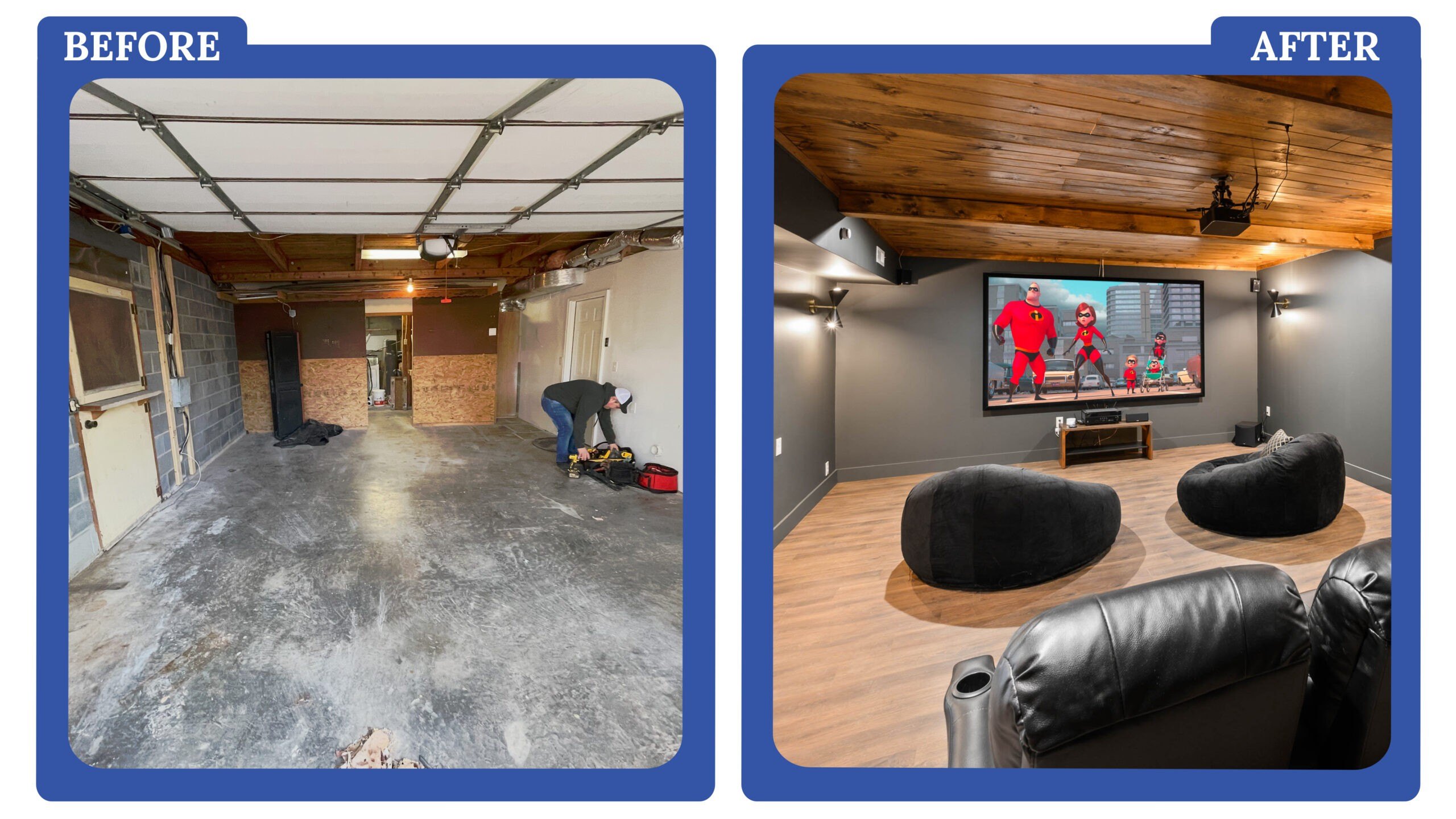
Today, an entrepreneur shares how he converted a two-car garage into a home theater for 10 in a short-term rental in Gatlinburg, Tennessee.
Tell us a bit about your garage-to-home-theater conversion plan.
The idea was for a vacation rental, not the home we live in, so it wasn’t so much about what we wanted for ourselves as what we thought guests would want.
What was the first step?
Whenever we begin a big remodel, we research the local rental market to see what amenities guests are willing to spend more for. This property is in a very family-friendly destination, where garages aren’t a necessity. So converting the garage into a space people would actually use made a lot of sense.
What are some considerations when you’re converting a garage into a living space?
When you convert a garage, you can leave the garage door and frame it from the inside, or you can remove the door entirely and add siding or whatever your exterior is. The advantage to leaving the garage door on tracks and framing around it is that it’s easier to convert back if you ever decide to do that, or if you sell to a buyer who wants to put back a garage.
What did you decide?
We removed the door. If we ever sold, odds are the buyer would choose to keep it as a rental, and for a rental, a garage isn’t a necessity or even a value-add. Plus, if we had left the garage door in place, that would have been confusing to guests. They might see a garage door and start wondering where the garage is.
Did you have a vision?
We wanted a big screen and we wanted surround sound, so that had to be built in. We also needed the room to be dark so it would feel like a theater. And we wanted to be able to seat 10 people.
How did you come up with the build plans?
We partnered with a friend who is a Nashville-based general contractor. He defined the scope of the project, starting with taking the garage doors off and framing in the garage. He put in new sheet rock and new flooring. He also handled permitting. Because we changed the framing and did electrical work, both had to be inspected.
How did you come up with the interior design?
My wife and I pieced together the design, but it wasn’t our first time taking on a project like this. In the past, we’ve worked with Somerled Designs to help design theater rooms in other properties.
What was the timeline of this project?
The theater took four weeks.
Where did the money for this project come from?
We own 14 short-term rental properties, and the profits allow us to pay cash for renovations on new properties.
Did you end up staying on budget?
We did. There weren’t any big surprises.
Tell us about your seating.
We wanted seating that would be middle of the road in terms of price. The seats needed to be easily cleaned and not fall apart after a year or two. We knew we wanted leather, which led us to find a company called 4Seating. They’re an online retailer specializing in home-theater seats. We chose based on the size of the room—you need your walkways to be 3 feet wide—and we did two rows of five seats. We also added two big beanbag chairs in the front.
What about the A/V equipment?
With an in-home theater, you could easily spend $100,000 on just A/V equipment. For most people, that level of splurge isn’t necessary. We still wanted quality, so we chose high-end tech that fit with that budget. For example, we went with a BenQ projector.
How did you choose the flooring?
We thought about carpet. Carpeting makes a lot of sense in a room like this because it absorbs sound. For this room, however, we knew the big beanbag chairs would absorb sound, so we went with luxury vinyl planking (LVP).
What other features did you include?
We put in dimmable wall sconces to give that feeling you get when you walk into a theater.
Does the in-home theater add to the home’s value?
This house is a short-term rental, so its appraised value is typically based on its annual gross revenue. That said, we bought the home in 2021, and a year later, when we refinanced it, we had to do an appraisal. We bought at $499,000 in 2021, and in 2022, it appraised for $1.2 million. That was based on a lot of upgrades, not just the theater. It helps that this garage conversion project increased the home’s square footage, which always adds value, so long as it’s heated and under a roof, which this is.
You’ve installed six theaters in different rental homes. What have you learned?
The biggest thing is making the system easy to use. Kids are most likely going to be playing with it. You don’t want multiple remotes if you can help it. With more remotes, there’s more that can go wrong.
What kind of feedback do you get from Airbnb guests about the theater?
We hear a lot that the theater was their kids’ favorite part of the trip. Some people tell us that they watch a movie every night. It’s definitely a popular amenity, and it’s popular because most people don’t have a theater in their own home.
What do you like most about this theater?
It doesn’t feel at all like you’re watching TV at home. You can really feel the sound of the bass as it reverberates. This is more of an immersive experience than just watching TV. When we watch a movie, it feels amazing.
The realtor.com® editorial team highlights a curated selection of product recommendations for your consideration; clicking a link to the retailer that sells the product may earn us a commission.