







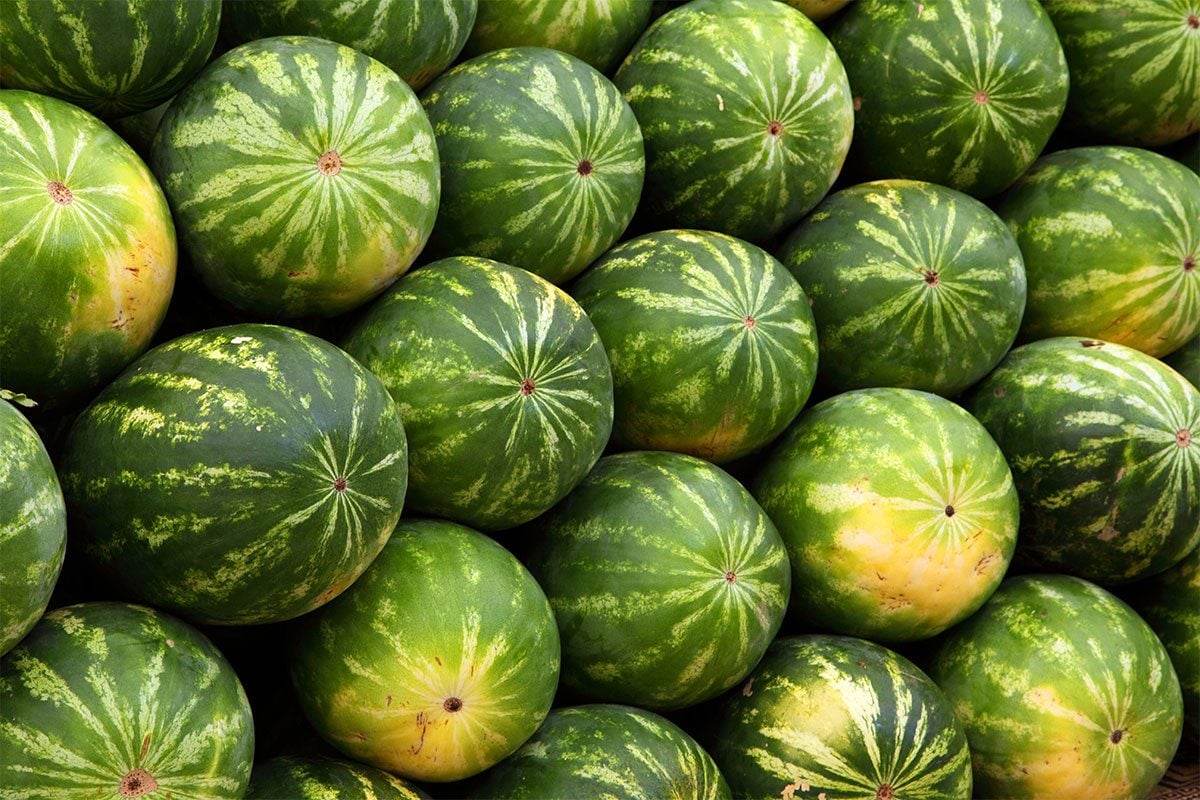


Three clues will tell you which watermelon is the sweetest and the ripest.
My kids are home for the summer, which means I’m trying to keep a steady supply of fresh fruit in the fridge before someone decides a bag of chips counts as lunch. I’ve been pitting peaches, hulling strawberries, and slicing enough watermelon that picking a good one has become a very important life skill.
Every summer, a new trick promises to take the guesswork out of it. Some people swear by the yellow patch. But lately, social media has become convinced the secret is hiding in the blossom end—that little circle opposite the stem.
In my experience, it’s best not to rely on one viral hack. The best watermelons are the ones that check a few boxes, and fortunately, most of the indicators are easy to spot before you ever get to the checkout.
How to Pick a Perfect Watermelon
No single magic test will tell you exactly what a watermelon will taste like once you slice it open. But if you’re comparing a few melons in the bin, these are the clues worth paying attention to.


Look for a yellow field spot
Turn the watermelon over and look for the large patch where it rested on the ground while it was growing. This is called the field spot, and it’s one of the easiest indicators of ripeness. You’re looking for a field spot that’s pale yellow or golden rather than white or barely visible. That deeper color suggests the watermelon had more time to ripen on the vine before it was harvested, allowing the fruit to develop more sweetness.
It’s not a guarantee, of course, but if I’m only checking one thing before putting a watermelon in my cart, this is usually where I start.
Pick one that feels heavy
Watermelon is about 90% water (it’s right there in the name), so a ripe one should feel heavy for its size. If you’re choosing between two watermelons that look similar, pick them both up. The heavier one is usually the juicier one, and juicy watermelons tend to be the sweetest—which is especially important in drinks like watermelon margaritas and watermelon martinis, where the juice really gets to shine.
The difference may be subtle. You probably won’t find one that weighs twice as much as the one next to it, but if one feels noticeably denser in your hands, that’s generally a good sign.
Check the blossom end
If your social media algorithms are anything like mine, you’ve probably seen people flipping over watermelons to inspect the blossom end, the small circular scar opposite the stem. The theory is that a smaller blossom-end scar means the fruit developed more evenly on the vine, resulting in a sweeter watermelon.
It’s an interesting idea, and plenty of gardeners and longtime watermelon growers swear by it. There are also countless videos online from shoppers who insist it’s the only trick they’ll ever use.
I’ll admit, I was skeptical about this one at first. But once I started paying attention, I noticed that every really good watermelon I’ve brought home lately has had a fairly small blossom end. Is that scientific proof? No. It could certainly be a coincidence, and there’s still very little research showing blossom-end size reliably predicts sweetness. But it’s happened often enough that I’ve found myself checking it every time I buy a watermelon.
I still wouldn’t use it as my only test. Think of it as one more clue to consider alongside a good field spot and the watermelon’s density. If all three line up, you’ve given yourself pretty good odds.
Related:
- Refreshing Watermelon Desserts for Cool, Fruity Summer Treats
- Cucumber Watermelon Salad
- How to Make Watermelon Ice Cream


