

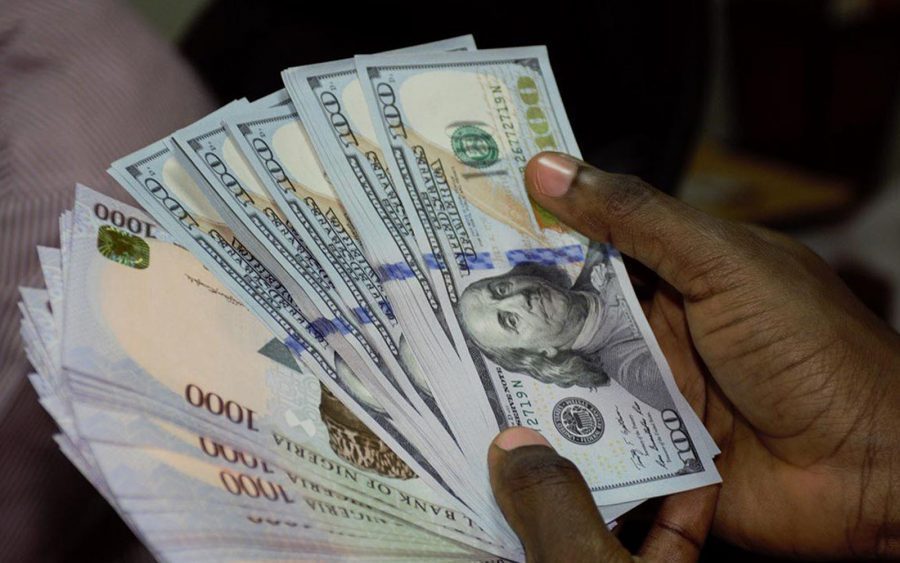
How the Naira–Dollar Exchange Rate Drove Market Volatility in 2025
By Zeenat Sambo
Since the unification of foreign exchange in 2023, the naira has been on a journey to find its footing. In 2025, its performance has been mixed, with distinct phases of depreciation, stabilisation, and eventual appreciation at different points.
The currency in the year under review reflected a gradual transition from early-year weakness to a stronger, more orderly foreign exchange market by year-end.
January: Weak Opening and Depreciation
The naira began 2025 under pressure, extending weakness from the previous year.
In the parallel (black) market, exchange rates in early January traded around ₦1,490–₦1,520/$1, before weakening further later in the month to about ₦1,565–₦1,570/$1.
At the official market, the naira traded within the ₦1,490–₦1,520/$1 range, reflecting continued fragility and limited foreign exchange supply.
February: Partial Recovery
February recorded a modest recovery in official market trading.
Data showed the naira traded as low as ₦1,491/$1 in early February, slightly stronger than mid-January levels. During the first week of the month, official exchange windows recorded rates around ₦1,490–₦1,500/$1.
Meanwhile, parallel market rates remained higher than official quotes, indicating persistent demand pressure and constrained dollar supply.
March: Unstable but Range-Bound Trading
March reflected continued foreign exchange pressures without extreme volatility.
The naira opened the month around ₦1,500–₦1,510/$1 on the Nigerian Autonomous Foreign Exchange Market (NAFEM). While no major crash or appreciation occurred, the currency traded within a slightly weaker band compared with February.
In the parallel market, rates fluctuated between ₦1,550–₦1,590/$1 earlier in the month before weakening further to ₦1,600–₦1,605/$1 by month-end.
April: Moderate Depreciation
The naira weakened further, with official USD/NGN rates rising above ₦1,580/$1 and peaking near ₦1,610/$1 by mid-to-late April.
In the parallel market, the currency traded above ₦1,600/$1 early in the month and reached highs of approximately ₦1,620/$1, reflecting sustained pressure from strong dollar demand.
May: Recovery and Slight Improvement
Although May opened on a weak note, conditions improved toward the end of the month.
The naira strengthened in the parallel market from ₦1,620–₦1,628/$1 in early May to about ₦1,610 (buy) – ₦1,615 (sell) by month-end.
This marked the beginning of a broader recovery trend that became more pronounced in the second half of the year.
June: Strengthening Phase
June recorded a notable strengthening of the naira.
On the official market, the currency closed at approximately ₦1,529.71/$1, representing a 3.56% monthly gain. In the parallel market, the naira improved from around ₦1,610/$1 at the beginning of the month to about ₦1,570/$1 by June 30.
This improvement was supported by increased dollar inflows from exporters, portfolio investors, and improved forex market liquidity.
July: Stabilisation
In July, the naira entered a period of relative stability.
Official rates hovered around ₦1,534/$1, while the parallel market traded mostly within ₦1,550 (buy) – ₦1,560 (sell) at the start of the month and closed within a similar range.
August: Gradual Strengthening
The third quarter began with further gradual appreciation.
Official market rates steadied around ₦1,533/$1, while the parallel market improved from ₦1,545–₦1,550/$1 early in the month to about ₦1,540/$1 by month-end.
Reduced volatility, rising external reserves, and improved weekly performance supported market confidence and sustained gains
September: Stronger Trading
On September 1, 2025, the naira opened stronger at approximately ₦1,526.09/$1 on the official market.
In the parallel market, the currency traded around ₦1,540.33/$1 early in the month before strengthening further to about ₦1,495.33/$1 by the end of September.
October: Fourth-Quarter Gains
October continued the positive momentum seen in late September.
Official market rates traded around ₦1,465–₦1,470/$1, while the parallel market strengthened from ₦1,480–₦1,490/$1 early in the month to approximately ₦1,440–₦1,450/$1 by month-end.
This improvement laid the foundation for stronger performance in subsequent months.
November: Momentum Builds
In November, the naira maintained most of its gains.
The official NAFEM rate averaged around ₦1,460.53/$1 early in the month and closed between ₦1,450–₦1,460/$1.
The parallel market began November trading at ₦1,445–₦1,455/$1 but weakened slightly toward month-end to ₦1,465–₦1,470/$1, maintaining a modest premium over official rates.
December: Strong Year-End Finish
Despite increased festive-season demand, the foreign exchange market remained orderly.
In early December, official rates traded near ₦1,460–₦1,470/$1, while the parallel market ranged between ₦1,465–₦1,475/$1.
By December 31, 2025, the naira closed the year strongly at approximately ₦1,429/$1 on the official market—marking a rare instance of full-year appreciation after several years of depreciation.
In the parallel market, rates remained stable at about ₦1,480–₦1,490/$1, underscoring improved confidence even in informal trading channels.
Outlook
The naira–dollar exchange rate dynamics in 2025 were shaped by market volatility, shifting demand-supply conditions, and evolving government policies. However, analysts project further strengthening of the naira in 2026.
Expectations point toward a narrower and firmer trading range, supported by stronger foreign exchange fundamentals, higher FX inflows, reduced speculative pressure, and enhanced price discovery within Nigeria’s forex market.
