


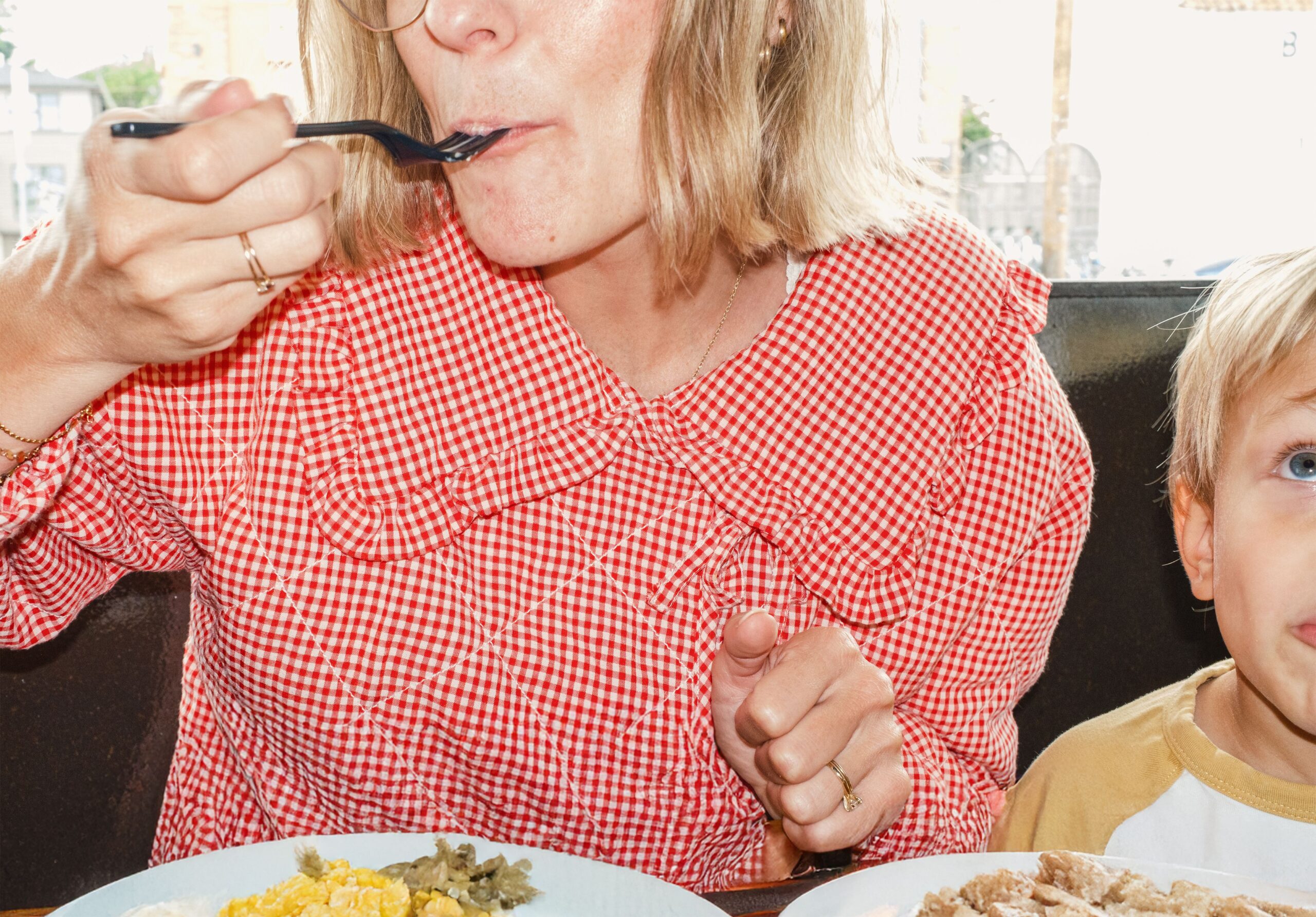
I stand at the stove next to a little boy. My son is six, leaning close to the Mauviel pot. The copper needs a polish, but I’m unconcerned.
“Whisk,” I say, trying to impart a sense of urgency.
The child-sized silicon tool in his hand lazes in the custard.
“Whisk,” I repeat, cupping his knuckles, guiding the movement. My tone lightens. “We don’t want scrambled egg pudding.”
“We’re making chocolate pudding,” he says, eyes wide.
“I know. But if we don’t whisk, the eggs will cook, and guess what?”
He scrunches his nose. “Scrambled egg pudding!”
“Right.”
Thus concludes my cooking lesson. As my son whisks, my gaze shifts from his technique to the custard’s surface, where I watch for slow bubbles to form. The mixture of cocoa and eggs and sweetened condensed milk sloshes, cresting the pot’s lip, dripping down the tarnished side. A stovetop mess doesn’t bother me. When I cook with my son, I focus on what we’re making together, not the minor mishaps along the way. Years of working in restaurant kitchens taught me that even seemingly major issues are often fixable. I once worked for a pastry chef who believed no custard was precious (immersion blender, chinois). But making pudding with my son is precious—precious beyond measure—for both of us.
I like to think I’m over the notion of reparenting, but cooking with my kid makes it clear I’m reparenting myself, or at least validating the adult I’ve become: namely, a recovered perfectionist. I encourage him to flip through cookbooks, understanding that, when we measure out 28 grams of cornstarch, a cloud will rain down on the counter. Albumen will trail when he cracks an egg. Whole spoonfuls of sugar will miss the bowl. There will be unsanctioned spatula licks.
Truthfully, I welcome the cooking chaos. C’mon—we’re making “Creamy Dreamy Chocolate Pudding” on a Saturday afternoon. What’s at stake but having fun and enjoying a treat…once it’s chilled for “at least two hours or up to three days”?
Actually, everything. I know all too well how these moments of connection can misfire and accumulate, amounting to something personality- and life-altering.
I was raised by women who so prided themselves on their cooking that they were territorial about it: the food other people prepared was bland and unappetizing, suspicious in its lack of care. My grandmother attended culinary school in Chicago and sold homemade candies out of her home. My mother inherited that commissariat élan. What was breakfast if not warm pear coffeecake or sugar-capped muffins pocketed with apricot jam?
With cookbooks on the bookshelves, cooking magazines in the mail pile, and Julia Child reruns booming on TV, unsurprisingly, I wanted to take part in the activities where the women in my family were most in control. I learned the twin powers of secrecy—my grandmother didn’t need a recipe for crepes—and perfection. There was a right way to dip a measuring cup into the drum of flour. A right way to, in the days before cookie scoops, nudge a mass of dough into a completely round ball with only a knife and a teaspoon. And I saw the result of anything less than perfection: sheet pans of meringue cookies shucked into the garbage; oven doors slammed; tearful, cursing, self-berating the whole house heard.
Had I not learned, before the onset of my decades-long eating disorder, that food was more than substance, that it was worth revering, that it held sacred pleasures, I might not be in recovery today. Corrupt as it was, food was pleasure. I took cookbooks to my bedroom to copy out recipes in my meticulous print. A dizzying wave of nostalgia bathed my memories of oozing cinnamon sugar pooling on pillowy fruit dumplings in my grandmother’s dining room.
That veneration led me to develop an awareness of fine dining at the moment that molecular gastronomy was hitting Chicago. At the height of my self-starvation in college, when my diet consisted of spinach salads and chocolate-banana protein bars that have ceased to exist, I was saving my minimum-wage earnings to book 12-course meals at Alinea; months after leaving in-patient treatment, I started staging for James Beard-recognized pastry chefs. I was lucky. My mentors were exacting and forgiving, egoless in their proficiency with semifreddo. We ate hearty family meals and munched on cake scraps and used janky tools that looked like they’d done battle with the robocoupe. There was give and play in cooking, even when one devoted one’s life to it.
Slowly, I started to bring this ethos to my life outside of work. It’s no wonder that, as my perfectionism waned, so did my disordered eating. It seemed such a waste of energy and time and joy.
To make vanilla sugar, bury a dry vanilla pod into a jar of sugar. Within days, the sugar will be orchidaceous, headily fragrant, transformed. It is impossible to reverse. Perfectionism is similar. It breeds so quickly in children and requires a lifetime to undo—really, you can only use up your vanilla sugar and start fresh. Fortunately, we are more mutable than sugar.
As my son’s whisking slows, I study the custard. Is it thickening? Burbling?
“I’m done,” he says.
“Okay,” I say. “I’ll take over.”
Modeling for him an easy, joyous relationship to food and teaching him reverence, without imparting the perfectionism, is a work in progress. It means not only cooking together, but also delighting in a new grocery store or a new café or a completely exceptional gastronomical experience. Two years ago, when he was four, my husband and I took him to a Michelin-starred restaurant in Brittany. “A chef restaurant,” we called it. Atop a feather-down cushion, he ate course after course, sampling seaweed butter and poached oysters and passionfruit gelées.
Twice a month, I say goodnight to my son before his bedtime, make myself a cup of ginger tea, and log on to a Zoom meeting. There, I facilitate a peer support group for people in recovery from eating disorders. I listen, I nod; I type gentle reminders in the chat about not using numbers—after all, we’re here to “connect, not compare.”
Mostly, I am astonished to be so removed from the mindsets and behaviors that once consumed my life. But what I connect to, anew, is what participants share about their parents—and their children. They remember their mothers chastising them at meals and in dressing rooms; they recount their kids asking why they’re not eating breakfast or why they’re only having Ensure on holidays.
There’s a no-naming-foods rule—otherwise I might talk about the chocolate pudding. How there were a handful of moments along the way when I could have been ego-driven or fussy or bossy about the process, leftovers of my own perfectionism. How good it felt to let go, how pleased my son was when, that evening, we peeled the plastic from the ramekins, sprinkled the surface with fleur de sel, dolloped on whipped cream, and, each of us, dug in.