






By Alex Kimani – Sep 28, 2026, 7:00 PM CDT
- Hormuz disruptions have doubled shipping traffic around southern Africa, but most vessels simply transit the region rather than stopping at its ports.
- South Africa is missing the potential shipping windfall, as inefficient ports, aging infrastructure and logistical bottlenecks discourage bunkering and port calls.
- The rerouting brings higher security, environmental and fuel costs, even as billions flow into major Southern African oil, gas and LNG projects.

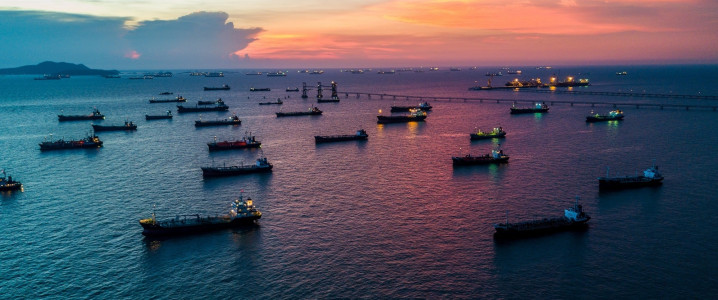
Over the past seven months, shipping traffic through the Strait of Hormuz has dwindled to a trickle, with Iran effectively closing the critical maritime chokepoint ever since the U.S. and Israel launched attacks against it. Consequently, major global shipping companies rerouted their vessels via South Africa’s Cape of Good Hope, with traffic around the southern tip of Africa having doubled since the war erupted in February. Unfortunately, the projected Southern African economic windfall in the form of surging demand for bunkering (fuel), port calls and maritime services has largely failed to materialize. Indeed, there has been no significant increase in vessel arrivals at main ports like Durban or Cape Town, with the vast majority of diverted cargo ships and tankers simply transiting South African waters rather than stopping for bunkering, repairs or cargo handling thanks to a mixture of logistical and economic challenges.
First off, the South African detour is around 5,000 miles longer, adding up to 14 days and more than a million dollars in extra fuel costs per trip compared to standard Middle East and Suez routes. Quite naturally, shipping companies prefer to minimize extra costs and further delays, with many choosing to sail past the coast to reach their European or Asian destinations.
Second, South Africa’s critical maritime gateways continue to struggle with serious operational inefficiencies and aging infrastructure. Indeed, in the latest global Container Port Performance Index (CPPI) co-published by the World Bank and S&P Global Market Intelligence, Cape Town was ranked dead last out of 400 evaluated global ports. The World Bank attributed this to persistent seasonal weather disruptions such as high winds, equipment failures, and low berth utilization, causing ships to spend nearly half of their total port time stuck waiting outside productive berths. The Port of Durban hasn’t fared much better, receiving a 398th ranking.
Transnet, South Africa’s state-owned logistics operator, has struggled for years with equipment shortages, ageing cranes, limited container capacity and inadequate rail links. The rail bottlenecks force more freight onto trucks, worsening congestion around Durban and other major ports. The World Bank says South Africa and other Sub-Saharan African ports face another disadvantage from their heavy dependence on imports. Containers arriving in large volumes are harder to move quickly through terminals and storage yards than cargo at major export hubs, where containers can be positioned in advance.
Despite these shortcomings, Durban was voted as the most improved container port globally, thanks to the share of productive time vessels spent at the berth increasing significantly to 76% while vessel waiting times at anchorage plummeted from a peak of 20 ships down to zero.
Southern Africa is getting much of the traffic but little of the money. Governments now have to spend more on maritime surveillance, search-and-rescue operations and emergency response as far more ships pass their coastlines without entering their ports. Piracy and other maritime security risks have also increased, while the surge in crude, fuel and LNG tanker traffic raises the risk and potential cost of a major spill. The pressure extends into regional energy markets. Southern African importers are already paying more for fuel and now face stronger competition from Asian buyers for West African supplies, pushing tanker rates higher and making replacement barrels more expensive to bring into the region.
The energy crisis is also sending billions of dollars into Southern Africa’s oil and gas sector, even as the region pays more for imported fuel and shipping. New and revived projects stretch from Angola and Namibia to Mozambique and Tanzania. Mozambique LNG, the $20-billion project led by TotalEnergies (NYSE), resumed construction in January 2026 after the lifting of a years-long force majeure. The project is designed to produce 13.1 million tonnes of LNG annually, while ExxonMobil’s (NYSE) $30-billion Rovuma LNG project targets capacity of up to 18.6 million tonnes per year.
Tanzania is pursuing an even larger investment. Its proposed $42-billion Lindi LNG project, involving Shell (NYSE) and Equinor (NYSE), would commercialize some of the country’s more than 47 trillion cubic feet of offshore gas resources. The planned $3.5-billion Dangote Southern Africa Corridor Pipeline, meanwhile, would connect Namibia, Botswana and South Africa and move more bulk fuel distribution away from road transport.
Those investments could bring export revenue and infrastructure spending into the region, but they also put billions of dollars of new energy infrastructure along a coastline facing greater security and shipping risks. Mozambique has already demonstrated the danger: the insurgency in Cabo Delgado forced TotalEnergies to halt its LNG project for years. More tanker traffic around Southern Africa adds another layer of maritime security and environmental risk as these projects move forward.
By Alex Kimani for Oilprice.com
More Top Reads From Oilprice.com
- SpaceX Sends Starship to Orbit and Deploys 26 Starlink V3 Satellites
- TotalEnergies Targets 3% Annual Oil and Gas Growth Through 2030
- European Gas Prices Rally on U.S.-Iran Stalemate
Download The Free Oilprice App Today





Alex Kimani
Alex Kimani is a veteran finance writer, investor, engineer and researcher for Safehaven.com.


