



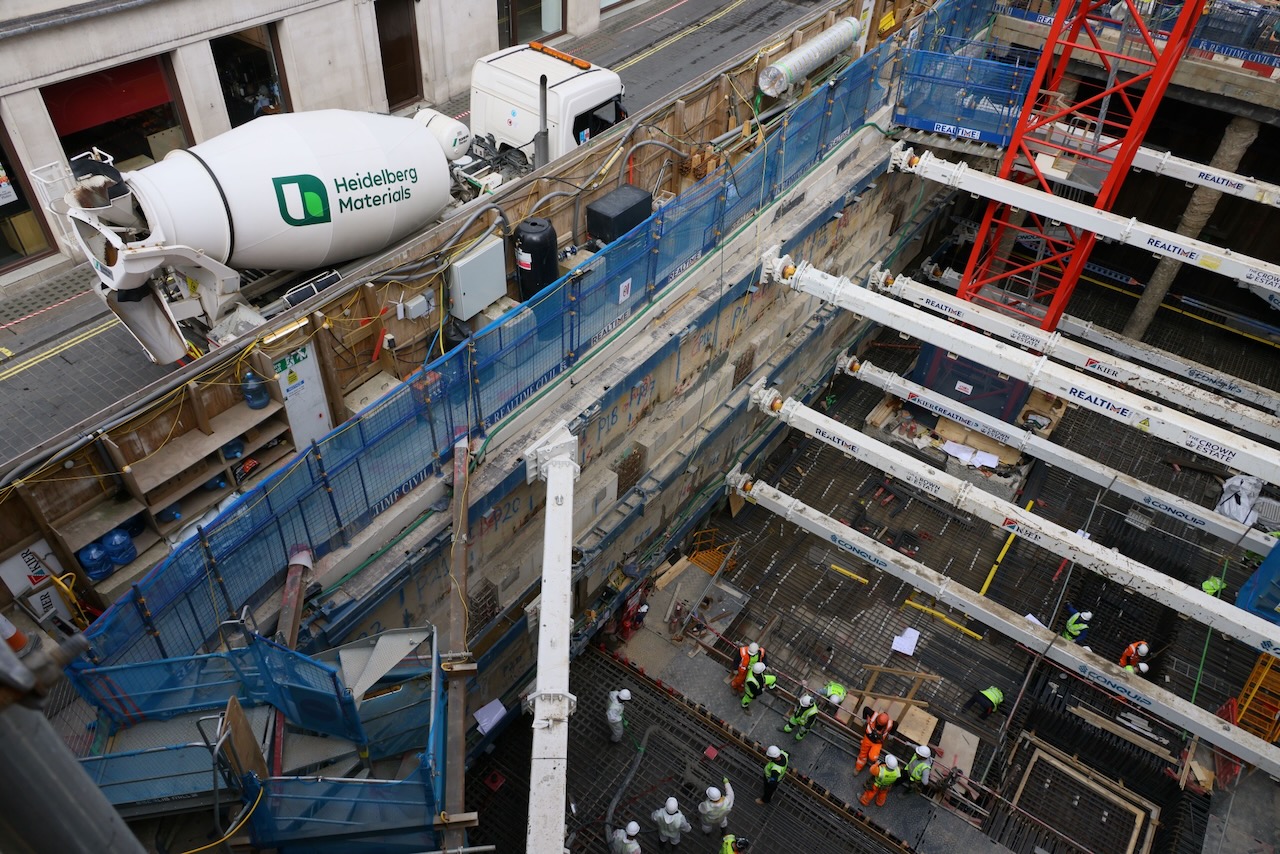
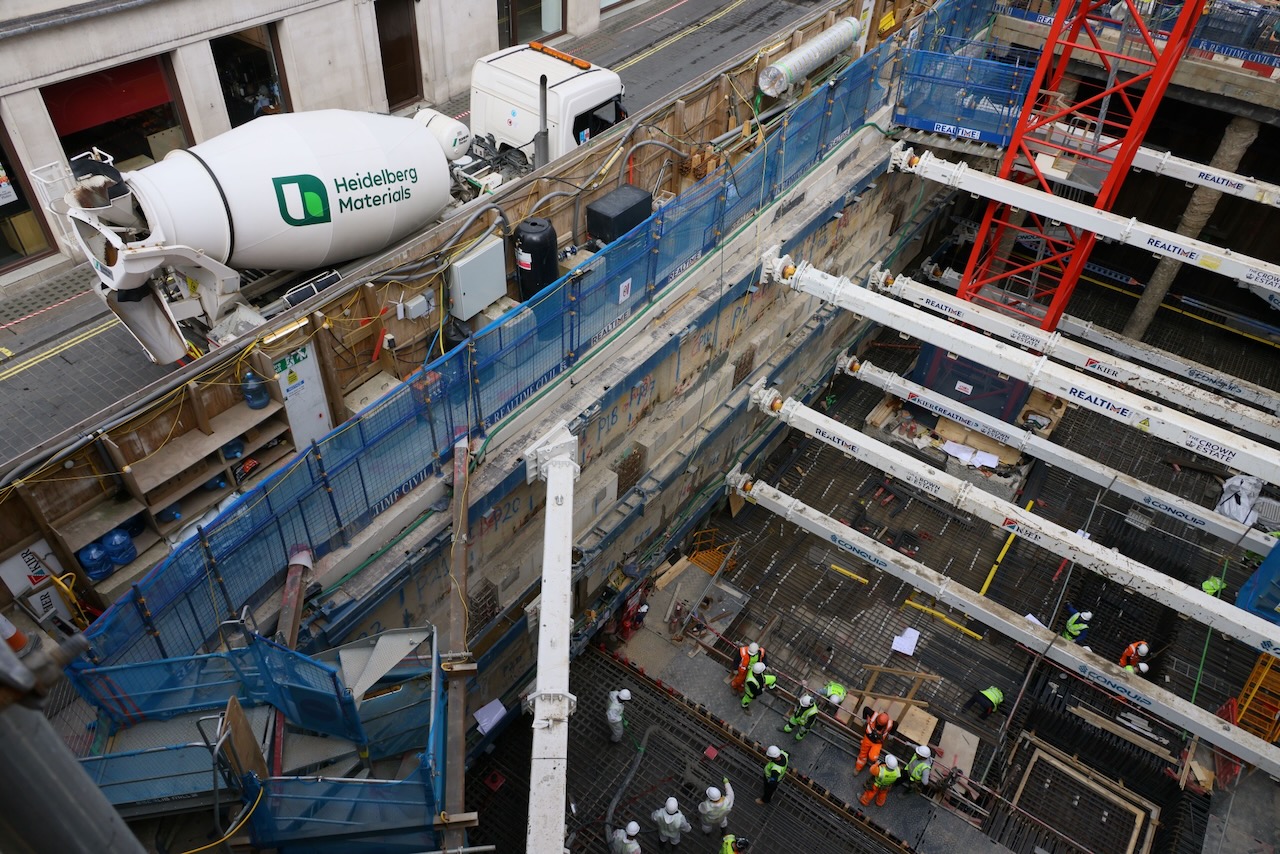
The concrete offered a 35% carbon reduction compared to standard CEM I, and this job marks the first time Heidelberg’s evoBuild low carbon concrete, with cement decarbonised through CCS, and using low carbon GGBS have been used together in the UK.
The redevelopment of the office building, owned by The Crown Estate, has been designed by architect DSDHA with sustainability in mind. It is targeted to achieve a NABERS 5* rating, a WELL Platinum Certification and BREEAM Outstanding.
Working with groundworks contractor Realtime Civil Engineering for main contractor Keir, Heidelberg Materials developed the low carbon concrete to help meet the project’s sustainability goals while also enhancing durability.
The evoBuild cement being used in the concrete is produced at the company’s Brevik plant in Norway, where the use of carbon capture and storage reduces the CO₂ emissions associated with its production by around 50 per cent.
In addition, the concrete contains evoBuild GGBS, a by-product of steel making, which is less permeable than standard CEM I cement, increasing the durability of the concrete and extending its life.


Heidelberg Materials is also supplying evoBuild low carbon concrete containing its waterproofing system to protect the basement floors from water ingress.
In total around 3,000m3 of evoBuild concrete is being supplied to the project from the company’s King’s Cross plant.
Colm Henry, contracts manager for RCE, said: “Realtime Civil Engineering had the pleasure of working with a progressive client team on 33-35 Piccadilly, which allowed us to engage Heidelberg Materials to successfully develop the evoBuild low carbon concrete mix.
“Previously, low carbon saving mixes affected the concrete performance on initial curing times but the evoBuild mix has overcome this issue. This benefits our overall carbon footprint with no compromise on our construction programme.”
Got a story? Email news@theconstructionindex.co.uk


