




Mastermind. Visionary. Trailblazer. Just a taste of the descriptions Opeth leader Mikael Åkerfeldt will see any time he Googles his name. It’s entirely warranted too, when you take into consideration the fearless ambition, ferocious intelligence and majestic flair at the heart of progressive metal landmark albums like Blackwater Park – which celebrates its 25th anniversary and silver certification this month.
With sprawling 10-minute-plus symphonies like The Leper Affinity, The Drapery Falls and its concluding title track, it’s the kind of record stacked with enough mold-shattering detours for most bands to happily make a career out of.
Article continues below
“That’s how we did it in those days,” Åkerfeldt coolly shrugs, pulling up a chair next to the piano and acoustic guitars in his living room. “Mainly because I didn’t have any means to record at home. When I was writing Still Life, I would demo riffs on a four-track at [Katatonia founder] Anders Nyström’s house to help remember the ideas.
“Then just before Blackwater Park, I had another friend who had gotten an early version of Cubase, so I’d program some basic drums. I made demos of Harvest, The Drapery Falls, Bleak and the title track; but they were far from finished.”
He says the final recordings ended up sounding “completely different,” with many ideas and sections – and in some cases, entire tracks – casually made up on the spot. If it felt good enough, the band would move on. With no outside feedback until producer Steven Wilson got involved later down the line, they had no way of knowing whether they’d struck gold.
In the end, it worked out for the best, proving Åkerfeldt was right to stick to his guns. “I guess I’m lucky when it comes to the instincts I tend to follow, because more often than not they’re spot-on,” he says.
We were rehearsing in a rough neighborhood. We didn’t even own amps at this point. Peter and I were getting the subway back early in the morning. This guy came up to us, sat down next to me and put a knife against my groin – down there.
Opeth – Blackwater Park (Audio) – YouTube
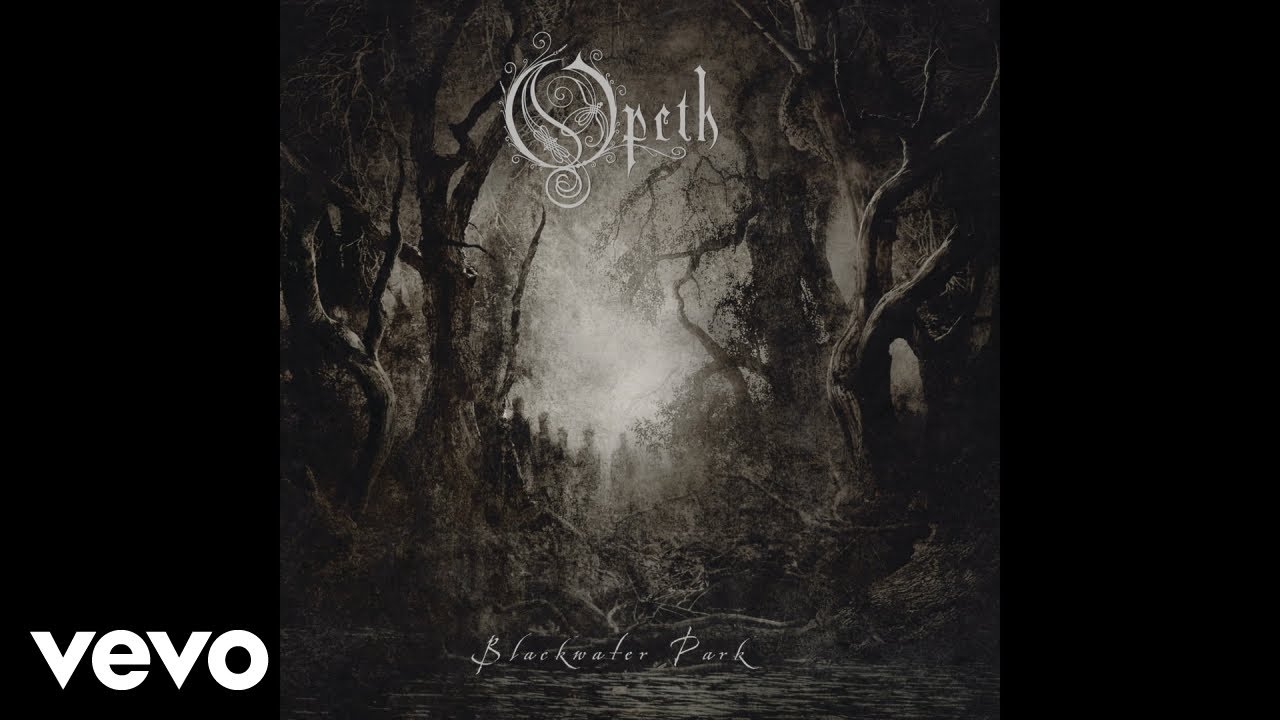
“He was clearly on something and asking for money. He started going through our stuff. We could have tried taking him down, but with a knife to my groin I was petrified. When he got off the subway he went for my guitar, and I shouted, “Fuck, no!” There was a bit of a struggle.
Was it the black PRS CE24 that you ended up using on the album?
It must have been. That was my main guitar around then. Not an instrument you’d want stolen! The weirdest thing was he said he played the accordion and tried to be nice while he was robbing us – as if to say, “I’m a musician, too!”
You loaded almost every track on Blackwater Park with a wealth of ideas. The title song is watertight as far as world-beating extreme metal heaviness goes.
It has some cool riffs! It’s a bit droney, because it sticks to the same dropped D key. It’s quite punishing to play, even more so for the drummer because half the song has double bass drums. I got a bit lazy with the songwriting for the second half. I wish I’d experimented more to make it less predictable.
But lots of people love that track. Some of it’s a bit meat-and-potatoes metal compared to the other tracks, which ebb and flow. I’m proud of the spacey bit in the middle; it came out pretty cool and odd. I remember thinking of songs like Oh Well by Fleetwood Mac when I wrote the acoustic sections.
Meet the NEW OM Mikael Åkerfeldt – YouTube
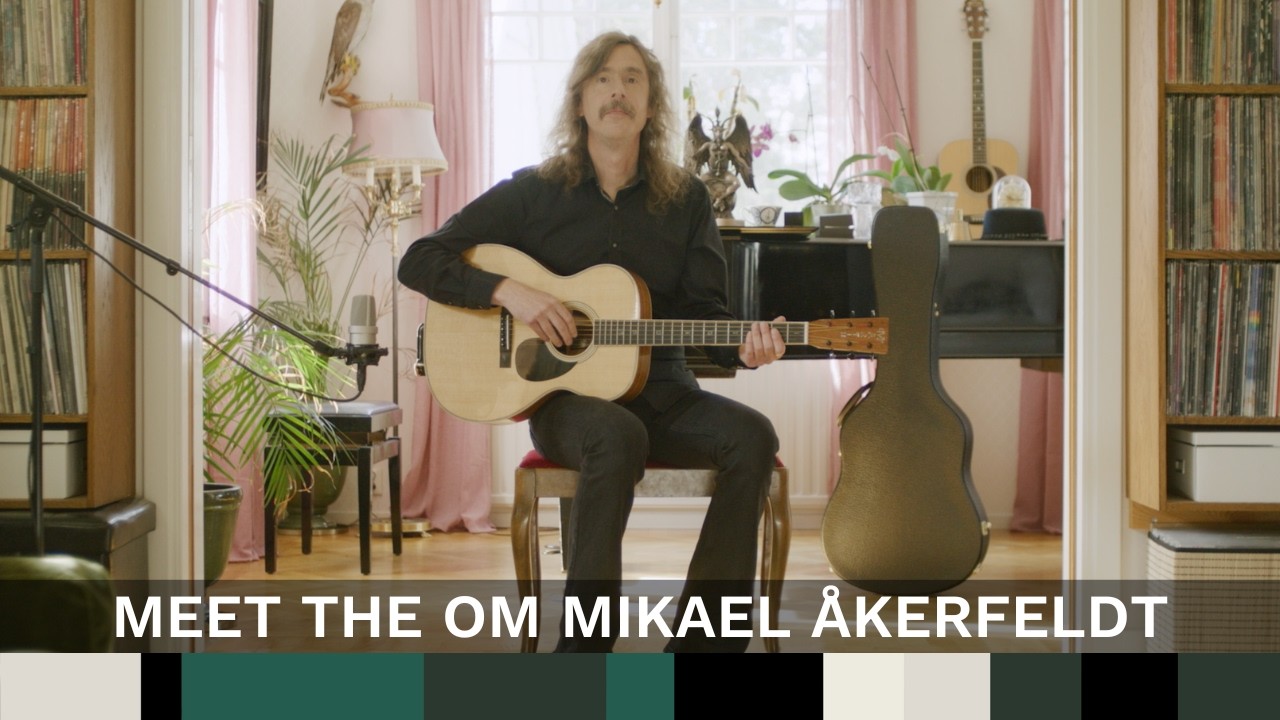
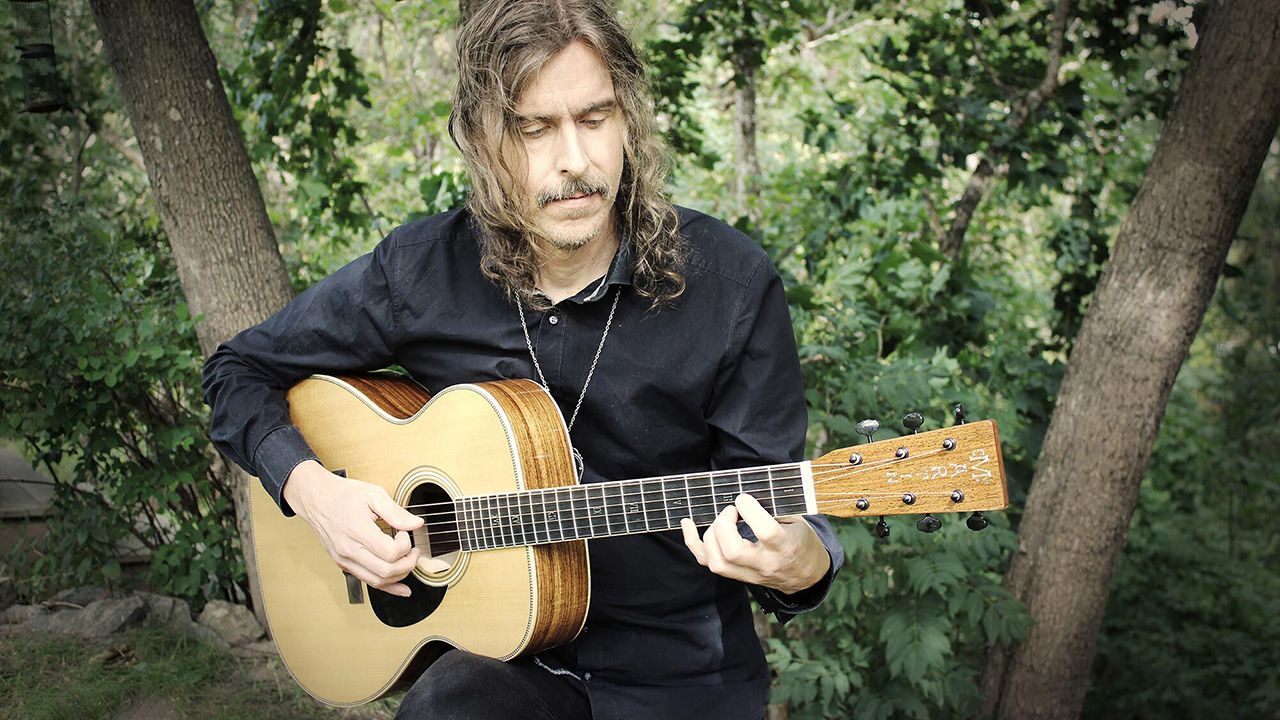
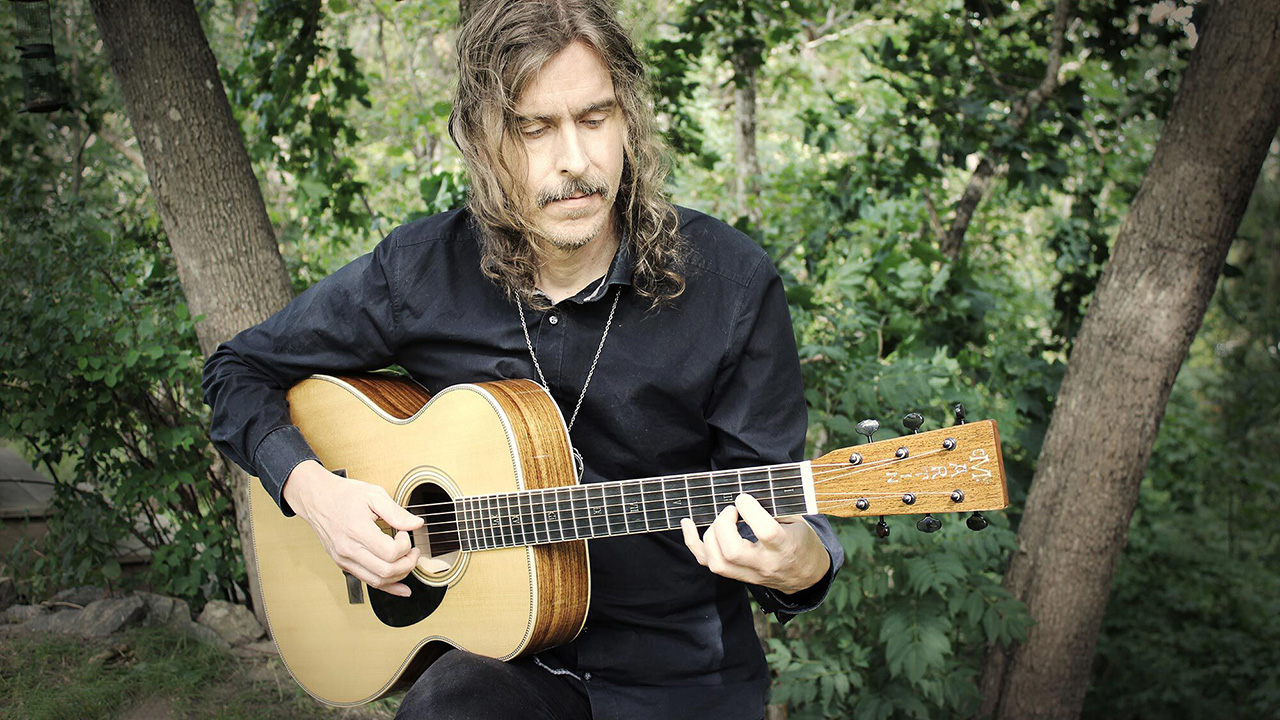
Speaking of acoustics, you unveiled your new Martin OM series signature acoustic last year.
I’m the first Swedish musician to have a Martin signature. I have number one right here next to me. I used to work in a guitar shop selling Martin guitars, so it was a huge full-circle moment, particularly for the younger me who had nothing going for him!
Fast-forward 30 years, I’m walking through the factory in Nazareth with the CEO asking me if I wanted a signature. I don’t deserve a signature model of anything, to be honest! But I’ve been doing this music for a long time and we have a fanbase that loves the odd type of shit we do, so I can understand why it made sense.
People can become a bit elitist when bands get big later on. Maybe it’s human nature.
What made you choose the OM series in particular?
I prefer recording with smaller guitars. Jumbos and dreadnoughts can be harder because the bass is boomy. What I love about the orchestral models is that you can just stick a mic in front and nothing needs to be EQ’d. They have this top-mid that cuts through, which is helpful when you have shitloads going on, like in our music.
For that reason, I prefer how they ring. They also sit easier in your lap. I wanted something with a big sound if you’re sat around a campfire, which is the kind of thing I might do. I’m still happy to play larger acoustics at home, though.
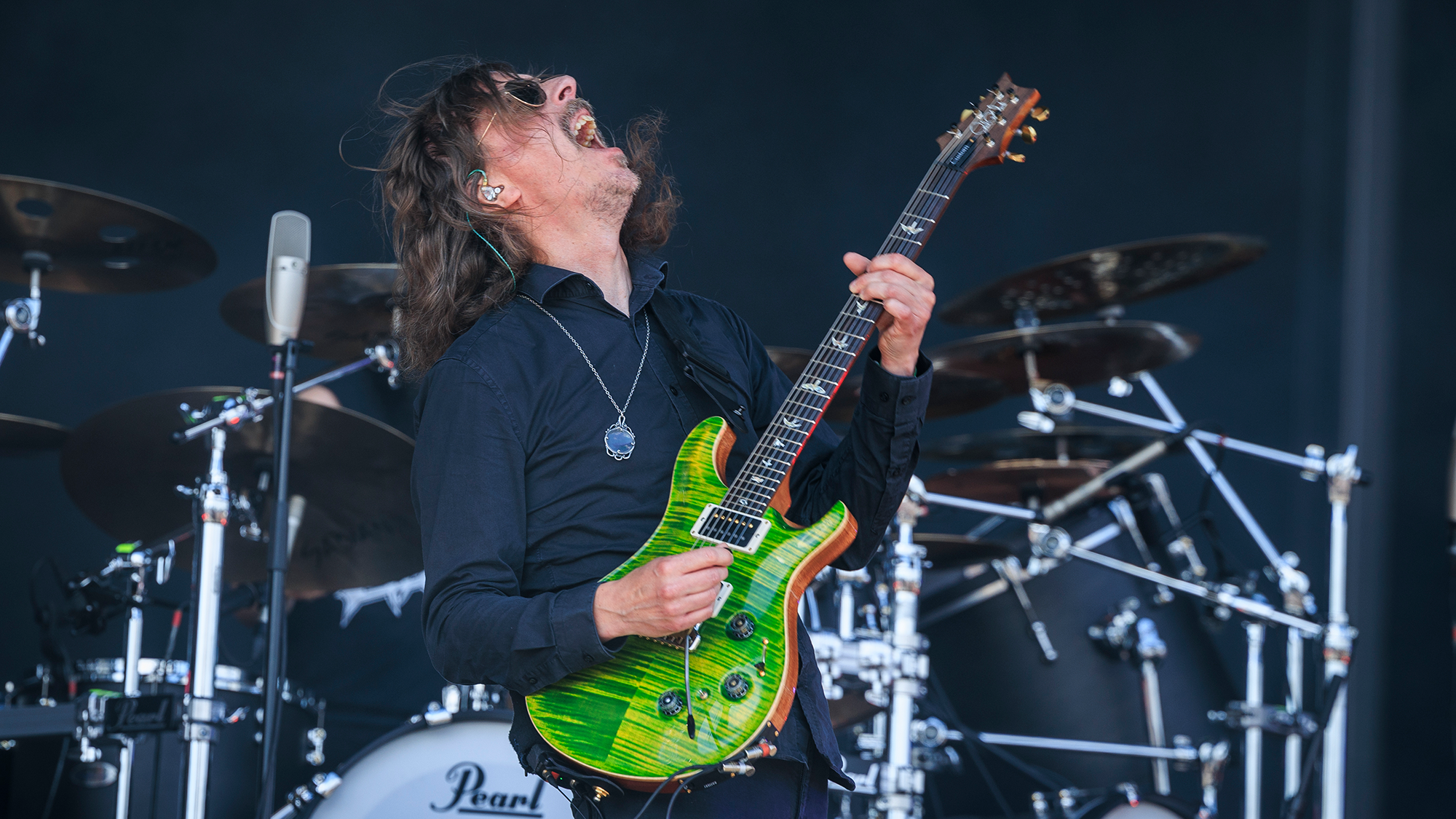

You played some pretty legendary guitars at the Martin museum, including the haunted Grandpa 1953 Martin D-18 that belonged to Kurt Cobain.
There were guitars in glass cabinets, and any time I’d ask, “What’s that?” they’d ask me if I wanted to try it, and then hand over one of these priceless guitars. I’d be sat there saying, ‘Oh my God, take it away from me!’
Some of them belonged to important musicians like Kurt Cobain, Johnny Cash or Joan Baez. It was amazing to see all these artifacts. There was a ’40s D-18 that belonged to Hank Williams – It was so light, it felt like a helium balloon. It sounded so good. On the other hand, Kurt Cobain’s guitar didn’t sound good, feel good or look good!
Nirvana aren’t really a band people tend to associate you with.
I love Nirvana! I remember listening to the song Polly a lot because “I think I should get off her first” is a misheard lyric here in Sweden. You get these hardcore fans who say Nevermind was too polished. People can become a bit elitist when bands get big later on, saying stuff like “Bleach is so much better.” Maybe it’s human nature.
But I would say Nevermind is a great record. It’s the same with Metallica and the Black Album. Some older fans said it was shit because of the success that came with it, but I still love that record. The ’90s had some great music.
You covered Would? by Alice In Chains in 2008.
David Isberg, the guy who originally formed Opeth, came to my house in 1991 with three new albums: Nevermind, the Black Album and Facelift by Alice In Chains. We sat down drinking beer while listening to those pivotal records, and I fell in love with what I heard.
Nirvana became huge and influenced a new generation of guitar players. Yes, they were popular – but that doesn’t mean they weren’t great. And to this day, Alice In Chains are one of the groups I cherish the most out of all the bands in the fucking world. That’s why we covered that song.
Have you ever met them?
They had a dressing room next to us at a festival once, so I got talking to Jerry Cantrell and Mike Inez. I’m such a huge fan of their sound. I would say the world still isn’t ready for how good they actually are. Their music is so out there and weird; it’s almost futuristic, in a way.
They are completely on their own. I haven’t heard any other band that can do it like Alice In Chains. When you break their songs down, it leaves you wondering how they came with those vocal lines over those riffs. They’re easily one of my biggest inspirations from the ’90s.
f you asked David Gilmour if he knew who Jan Akkerman was, he’d probably say, ‘Yeah, – he’s my idol!’
As for prog guitar heroes, we’ve spoken about David Gilmour, Robert Fripp and Andy Latimer in the past. Is there anyone who you feel doesn’t get enough credit?
Jan Akkerman [ex-Focus] is very underrated. If you asked David Gilmour if he knew who Jan was, he’d probably say, “Yeah, – he’s my idol!” A lot of these well-known players were glancing at what Jan was doing back in the ’70s. I know for a fact that Andy Latimer looked up to him, not only as a guitarist but also as a member of Focus.
Jan is quite widdly on his Black Beauty Les Paul. But he’s also a great acoustic player with this right hand technique that resembles a flamenco player. I tried to do that myself and could never get it right!
He also knows when to sit back and play melodic lines nice and slow. He didn’t fight the other players in the band and shared the spotlight with their keyboard player Thijs Van Leer, who is another genius. Focus deserve more credit in general, I would say.
- Opeth’s Blackwater Park 25th anniversary reissue is out now via Music For Nations.
” data-join-the-conversation-text=”Join the Conversation”>
You must confirm your public display name before commenting
Please logout and then login again, you will then be prompted to enter your display name.