






The “Farm, Food, and National Security Act of 2026” that is coming up for a House vote this spring is yet another GOP-led assault on the country’s food safety, warn public health organizations, environmental groups, and animal rights advocates, who are sounding the alarm over the five-year bill.
The House Committee on Agriculture passed the “Farm, Food, and National Security Act of 2026” on March 5 by a 34-17 vote. All 27 Republicans on the committee backed the bill, and seven Democrats crossed the aisle to join them. The legislation will now head to Congress.
The 800-page document is being praised by Big Agriculture and industry groups across the nation, and Rep. Glenn “GT” Thompson (R-Pennsylvania), chairman of the committee, has described it as “ a collaboration between Republicans, Democrats, and stakeholders.”
But public health advocates warn that the bill is set to further erode well-being and health in the U.S., further deepening the hypocrisy of Secretary of Health and Human Services (HHS) Robert F. Kennedy Jr.’s repeated promise to “Make America Healthy Again.”
“Rather than address the economic crises facing America’s family farmers, this Farm Bill is a thinly veiled gift bag for Big Ag and pesticide manufacturers. It’s a massive slap in the face to people across the political spectrum demanding a healthier food system,” said Jason Davidson, a senior food and agriculture campaigner with Friends of the Earth U.S.
Pesticides
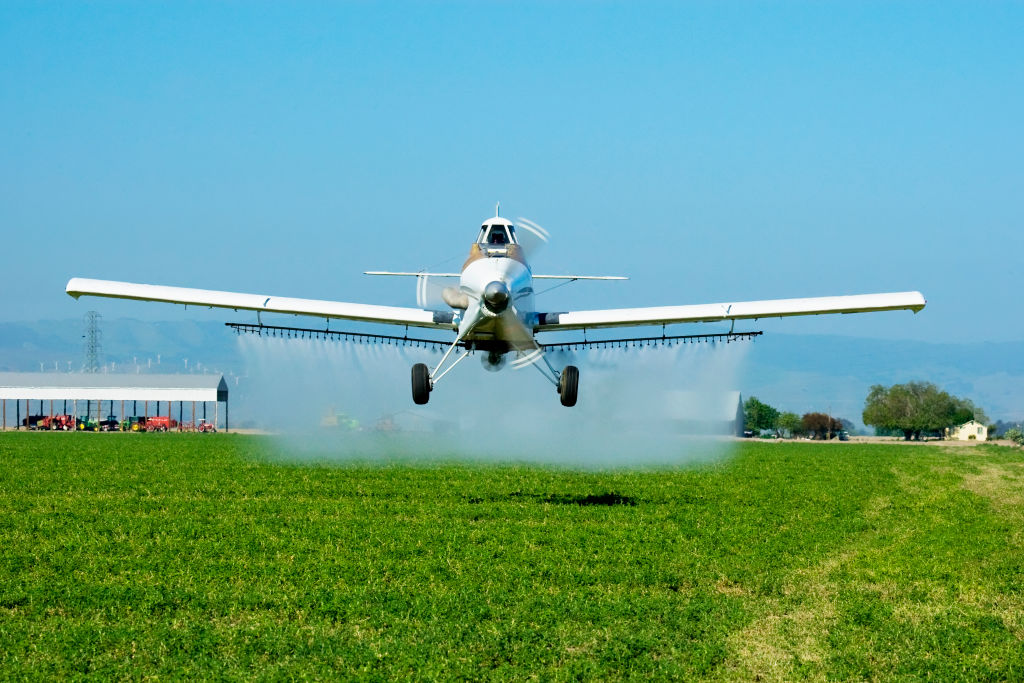
Some of the most contentious sections of the bill concern pesticides.
Section 10205 blocks consumers and farmers harmed by pesticides from suing companies over inadequate safety labeling. Section 10206 would overturn all state and local laws that protect food safety. Section 10207 would repeal federal statutes created to protect people and animals from pesticides.
Rep. Chellie Pingree (D-Maine) introduced an amendment that would have stripped these sections from the bill, but the effort was rejected by the committee.
“Once again, the Trump Administration and Republicans in Congress are siding with chemical companies and choosing corporate profits over Americans’ health — while paying lip service to the ‘Make America Healthy Again’ movement. This Farm Bill is a gift to Big Chemical, plain and simple. It delivers exactly what giants like Bayer have spent years lobbying for: blanket immunity from lawsuits and the power to gut the state warning label laws that protect families, farmers, and children,” said the congresswoman in a statement.
Beyond Pesticides executive director Jay Feldman said the committee’s GOP majority have “passed a measure that has garnered across-the-board disapproval, except from those representing the vested interests of chemical companies and agribusiness.”
The push to shield chemical companies from liability is not occurring in a vacuum.
Shortly before the bill passed in committee, Bayer announced a proposed class settlement for the thousands of people who claim they developed non-Hodgkin lymphoma from exposure to the weedkiller Roundup. Those impacted had formerly sued Monsanto, but Bayer inherited the lawsuits when it acquired the company in 2018. The company is not admitting to any liability, but the proposed settlement totals $7.25 billion.
The herbicide at the center of those lawsuits is glyphosate, which the World Health Organization’s International Agency for Research on Cancer has classified as a “probable human carcinogen.” A day after the Bayer announcement, President Donald Trump invoked a wartime emergency authority to increase the domestic production of glyphosate. It’s a move that some insiders believe is directly connected to the lawsuits.
“The scope of this [litigation against Bayer] is way beyond anything we’ve ever seen in the pesticide context,” Nathan Donley, an environmental health science director at the Center for Biological Diversity, told Chemical & Engineering News. “We’re in a full-court press, basically, of Bayer trying to get out of its liabilities.”
When he ran for president in 2024, HHS Secretary Robert Kennedy Jr. called glyphosate “one of the likely culprits in America’s chronic disease epidemic.” However, he dutifully backed Trump’s order.
“Donald Trump’s executive order puts America first where it matters most — our defense readiness and our food supply,” said Kennedy in a statement. “We must safeguard America’s national security first, because all of our priorities depend on it. When hostile actors control critical inputs, they weaken our security. By expanding domestic production, we close that gap and protect American families.”
Kennedy’s shift has angered many in the “MAHA” community who have supported the Trump administration. “MAHA Moms Turn Against Trump” declares a recent New York Times headline.
“Women feel like they were lied to, that MAHA movement is a sham,” Turning Point USA podcaster Alex Clark told the paper. “How am I supposed to rally these women to vote red in the midterms? How can we win their trust back? I am unsure if we can.”
Animal Rights
Section 12006 of the farm bill looks to overturn animal welfare laws by effectively adopting the “Save Our Bacon” Act, a Republican congressional effort that’s failed to gather support from more than 10 percent of the House.
That legislation takes aim at California’s Prop 12 and Massachusetts’ Question 3, which place limits on the sale of meat and eggs from farms where animals are not granted enough room to turn around, stand up, lie down, and fully extend their limbs. Both measures were overwhelmingly approved by state voters, but Big Agriculture lobbyists have consistently pushed for both laws to be overturned.
A coalition of pork producers, meat companies, and farmers recently gathered in Washington to call for the “Save Our Bacon” Act to be removed from the farm bill.
“Voters made their voices heard, and we agree with them that animals deserve space to move,” said Missouri hog farmer Russ Kremer. “Prop 12 gives small farms like ours the opportunity to survive during a time when agriculture is heavily consolidated and independent farmers are being pushed out. If Congress rolls back Prop 12, that’s a move against family farmers.”
The fight to topple these state laws comes amid a Department of Agriculture push to speed up the kill lines across U.S. slaughterhouses. The new draft rules propose increasing kill line speeds for chickens from 140 a minute to 175, turkeys from 55 to 60, and pig slaughterhouses would have no limit. The department has also proposed eliminating annual workplace safety reports at the plants.
Let Them Eat Contaminated Meat
The proposed farm bill also doubles down on the Trump administration’s Dietary Guidelines, which recommend that Americans eat significantly more meat. Instead of basing these recommendations on scientific research, the Trump team relied on nine experts, seven of whom had direct connections to the meat industry.
In addition to improving public health and reducing pollution, a decrease in meat consumption would reduce the greenhouse gas emissions responsible for climate change. A 2025 report from the scientific journal Nature Climate Change found that 11 million tons of meat is consumed in U.S. cities annually, resulting in roughly 329 million tons of carbon emissions.
Democratic committee members proposed amendments to the farm bill aimed at addressing the devastating Supplemental Nutrition Assistance Program (SNAP) cuts from Trump’s “One Big Beautiful Bill Act,” but these were rejected.
“Every member of the House Agriculture Committee represents families with low incomes who need SNAP to afford groceries, and it is deeply disappointing to see all Republicans and some Democratic members of the House Agriculture Committee vote to advance a bill that fails to deliver for these constituents,” said the Center on Budget and Policy Priorities in a statement.
Instead, Trump’s reinforced dietary guidelines designate animal protein as a SNAP “incentive food” allowing retailers to bolster meat consumption by offering it to SNAP recipients at a discount. What quality of meat would these consumers be eating? As previously mentioned, the bill would prohibit states from taking action to protect their constituents from drugs and pathogens in their food supply.
“If passed by the House, this Farm Bill will move to the Senate, but this proposal should be dead on arrival,” wrote Food & Water Watch’s Lauren Borsheim. “A Farm Bill that ignores devastating SNAP cuts, weakens vital conservation programs, subsidizes factory farms, and shields pesticide corporations from accountability betrays the Farm Bill’s purpose — serving farmers, consumers, and rural communities.”
An urgent appeal for your support: 10 Days to raise $50,000
Truthout relies on individual donations to publish independent journalism, free from political and corporate influence. In fact, we’re almost entirely funded by readers like you.
Unfortunately, donations are down. At a moment when independent journalism is urgently needed, we are struggling to meet our operational costs due to increasing political censorship.
Truthout may end this month in the red without additional help, so we’ve launched a fundraiser. We have 10 days to hit our $50,000 goal. Please make a tax-deductible one-time or monthly donation if you can.


