





Les Paul was a man of many fine qualities, but understatement probably wasn’t one of them. Rather than ease loyal Gibson customers into the concept of a solidbody electric guitar, Les came out swinging when he specified a metallic gold finish for his official signature model. Back in 1952, it would have shone like a supernova in an era of muted sunbursts.
With the metaphorical dial already turned to 10, Gibson had its work cut out when devising an even more upmarket version of Les Paul’s signature guitar, but it still had a few more cards to play. It’s almost as if someone on the design team pondered about the world’s classiest musical instrument and decided it was probably a concert grand piano.
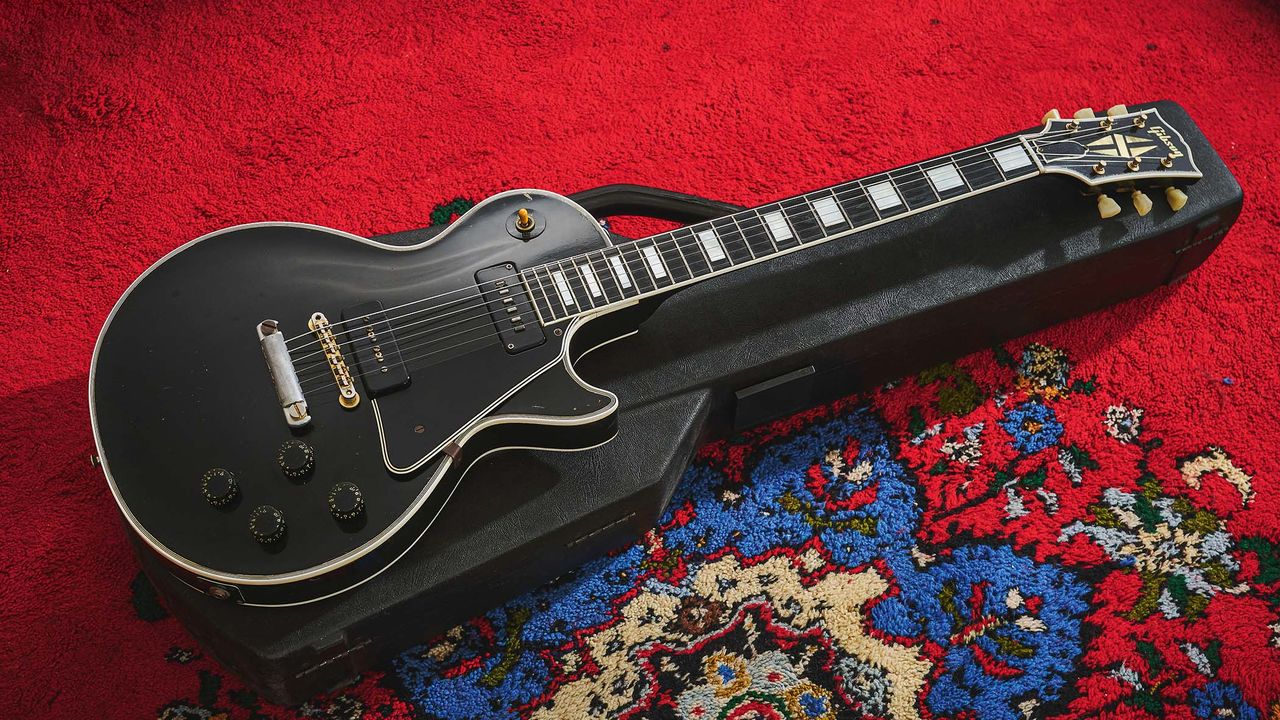
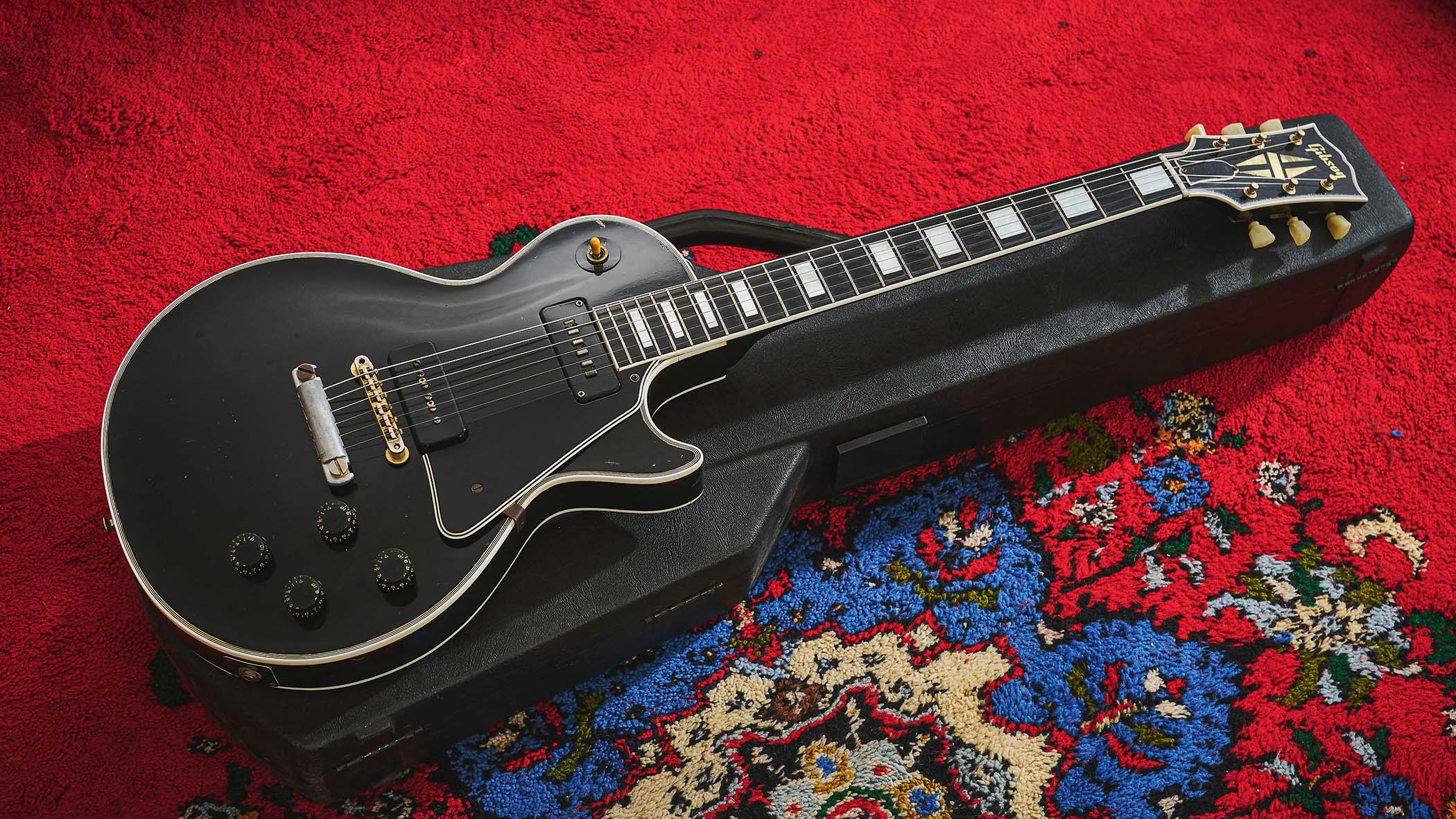
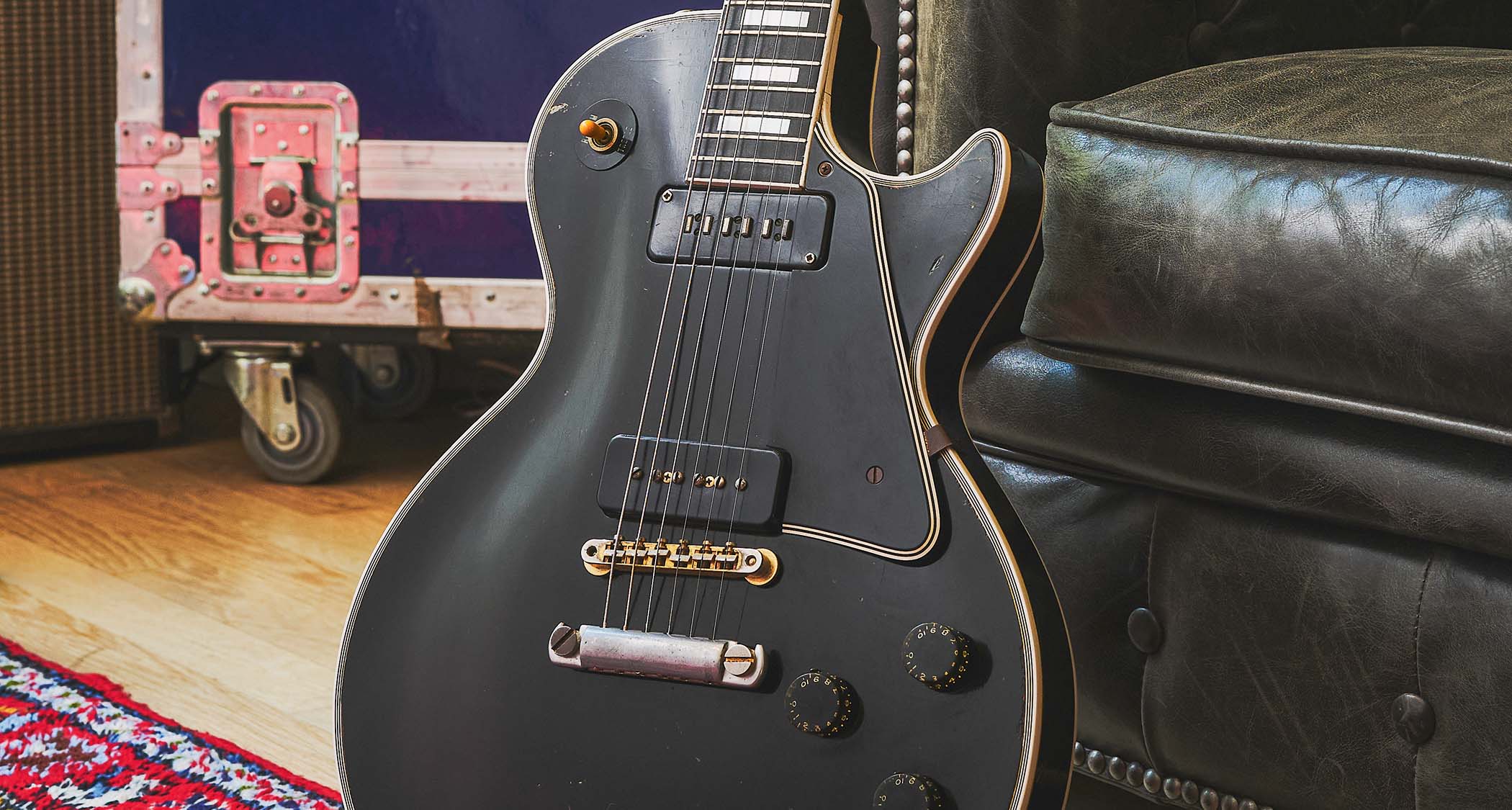
With its lustrous gloss black lacquer finish, gold-plated hardware and multi-ply body binding, the Les Paul Custom must have seemed like a lap Steinway when Gibson introduced it at the 1954 NAMM Show. But it wasn’t simply a glitzed up version of the Goldtop, because there were several differences.
Peculiar Customs
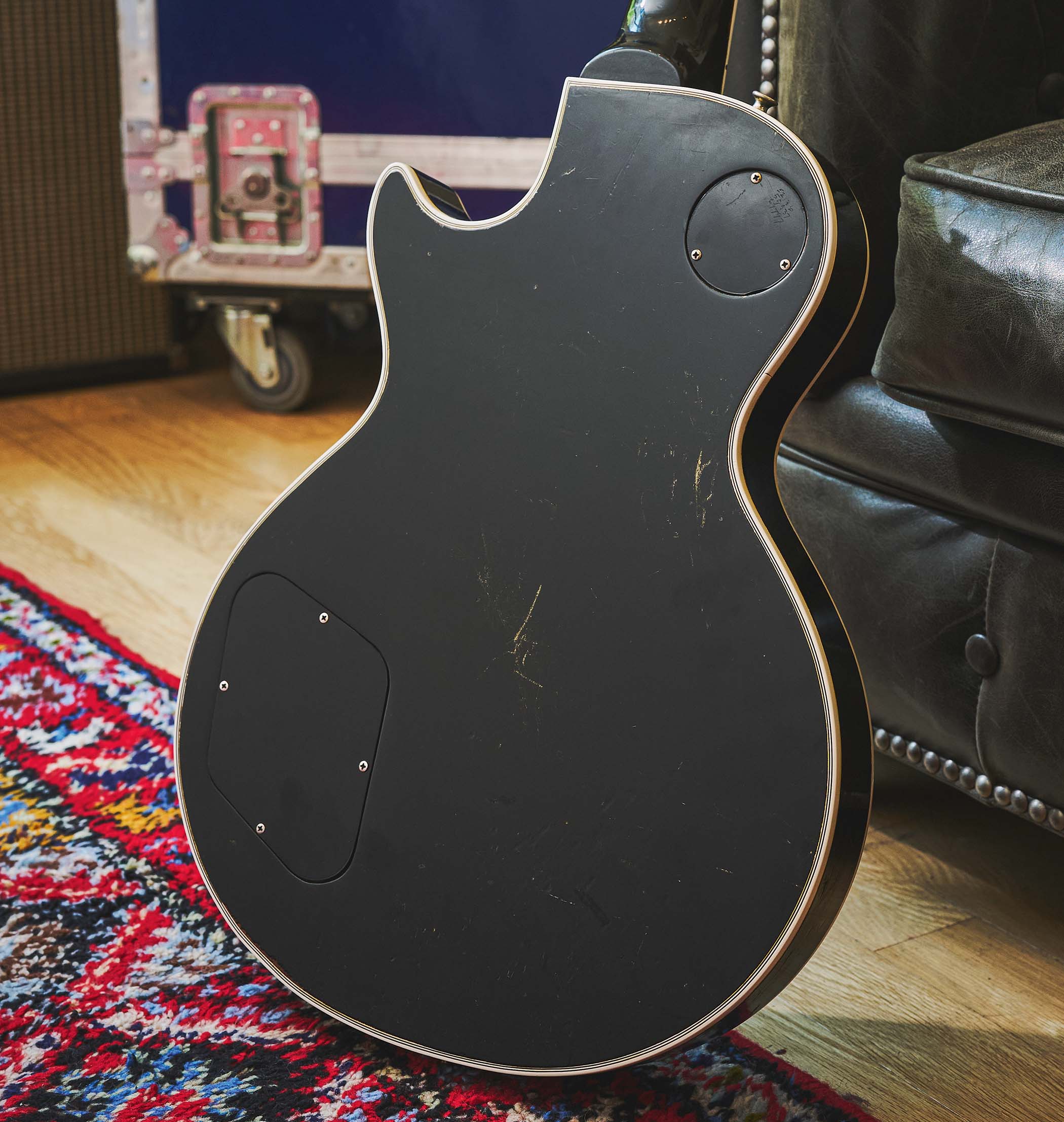
Of greatest significance was a change in the way the body was made. The Goldtops that preceded the Custom, and the sunburst Standards that followed it, are all known for their maple tops. In contrast, Custom bodies were carved from a single slab of mahogany, so they didn’t have the dampening effect of a maple cap.
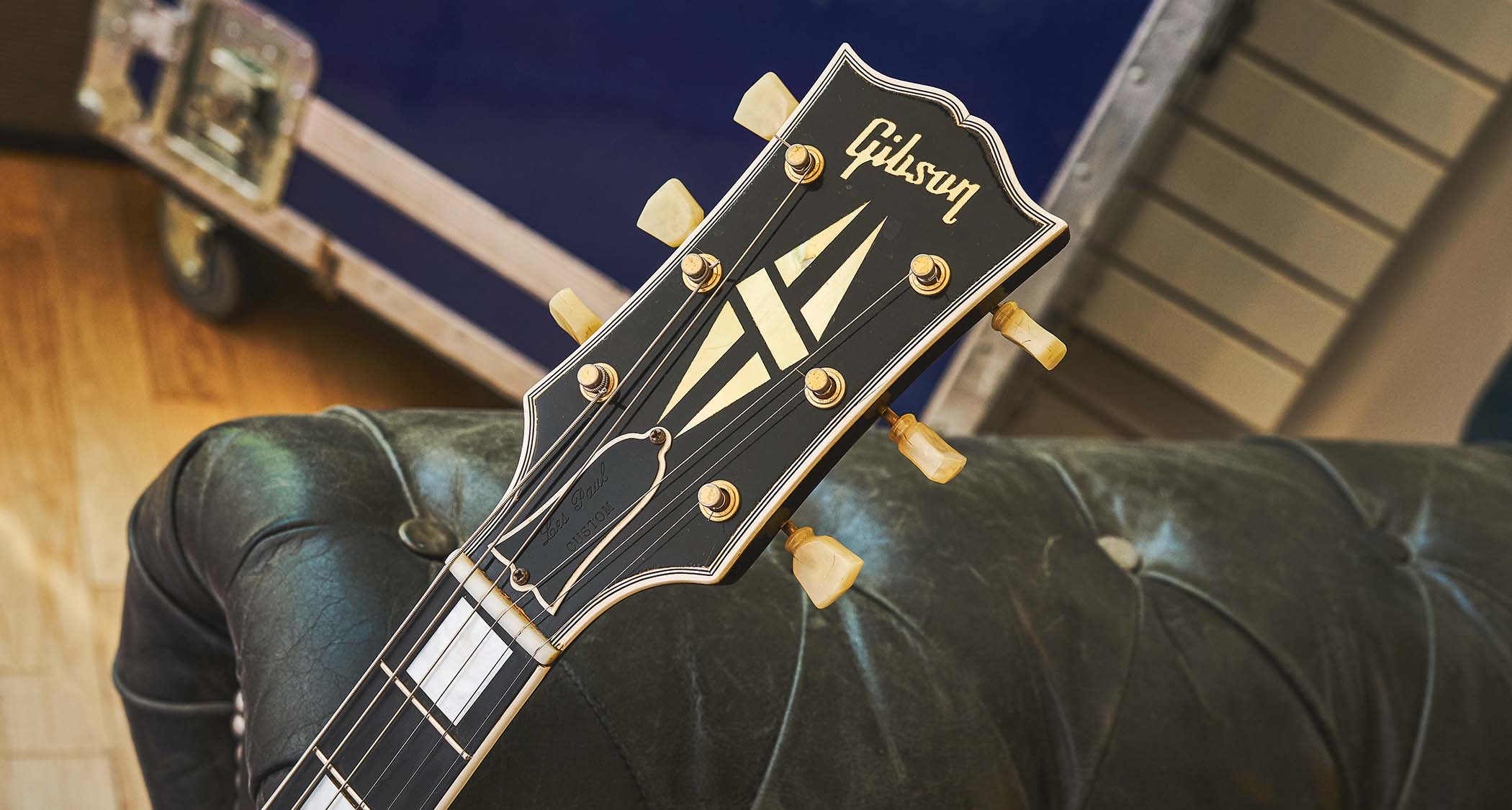
There were significant changes to the neck, too. While most (but not all) 1952 and 1953 Goldtops had fairly substantial neck profiles, the Custom necks often feel a bit slimmer and faster. Upmarket ebony was favoured over Brazilian rosewood for the fretboard and, rather than use celluloid nitrate inlays, Gibson ‘upgraded’ to mother-of-pearl blocks with wider fretboard binding.
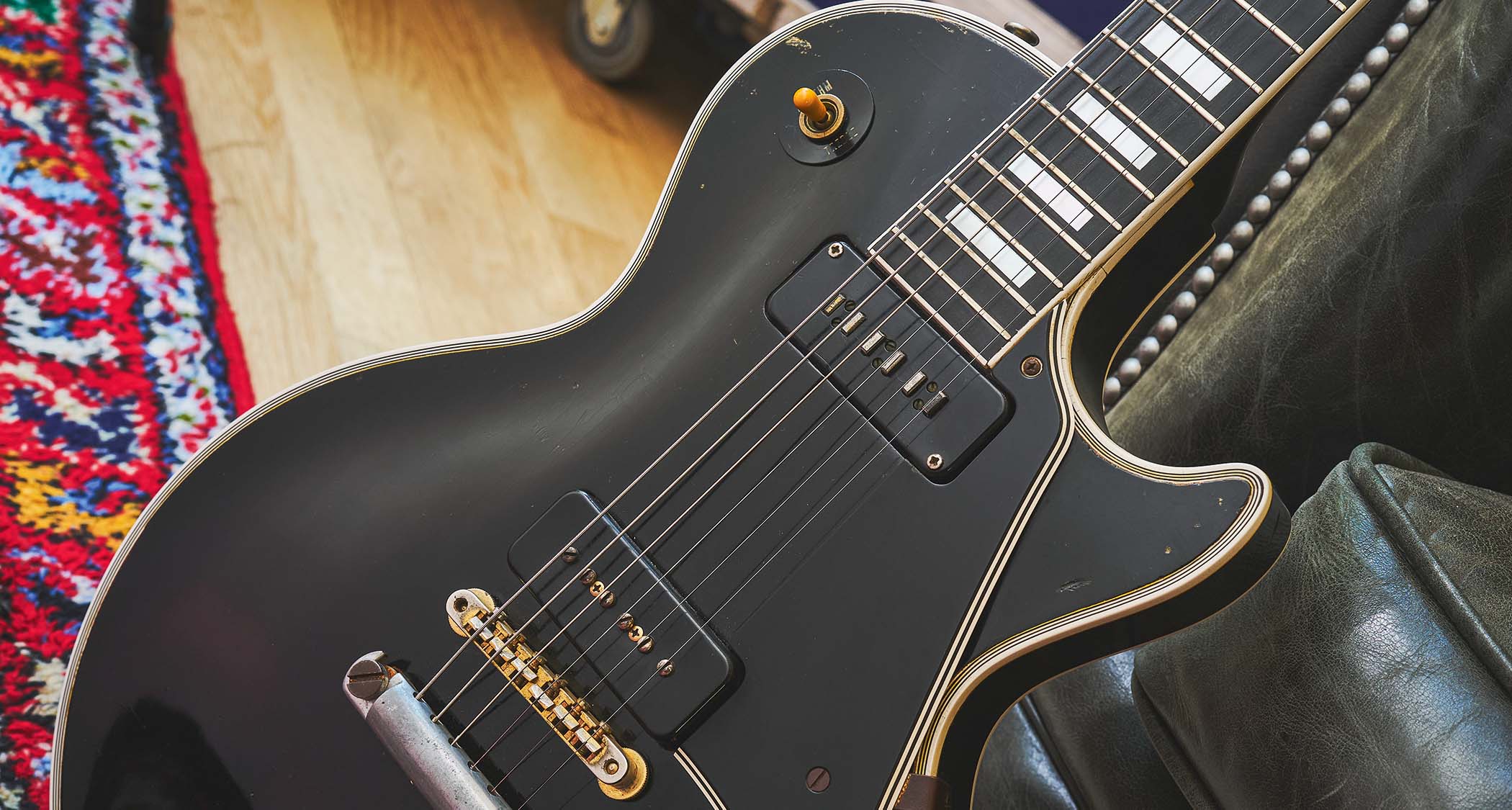

Perhaps the most contentious change, from a contemporary player’s perspective, was made to the fretwire. Les Paul would whizz around the fretboard interspersing lightning-fast runs with jazz chord voicings. To facilitate his style, Les specified fretwire that was wider and even lower than the relatively small wire used on the earlier Goldtops.
In its promotional literature, Gibson said: “Players [who] rave about its extremely low smooth frets and playing action call it the ‘Fretless Wonder’.” Les wanted the frets to be as close to imperceptible as possible, but for players who like to bend strings more than a semitone, Customs can feel like hard work.
This may be one reason why most big-name players of the ’60s and ’70s chose other models and Customs have always been less popular, collectible and valuable than Goldtops and ’Bursts.
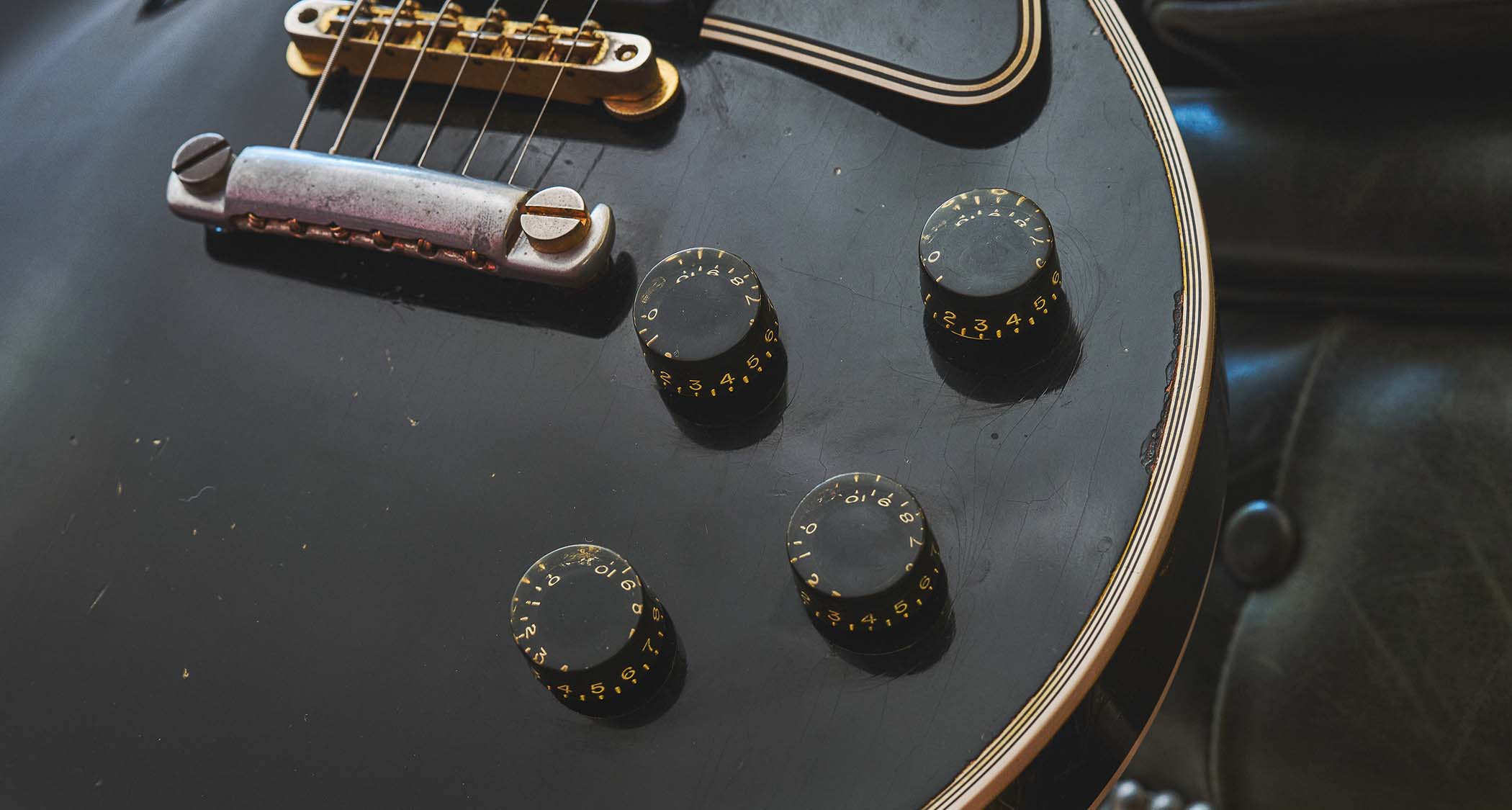
Few liked the wrap-under iteration of the trapeze tailpiece that Les Paul designed. It worked well and sounded fantastic in wrap-over form on the ES-225 and ES-295, but most players would have welcomed the stability of the fixed wraptail bridge that superseded it on Goldtops in 1953.
Here’s where things get contentious because some consider the wraptail to be the best-sounding bridge that Gibson ever fitted to Les Pauls, but the counter argument is that intonation can never be perfect.
Leaving aside the fact that Gibson somewhat undermined its own efforts by positioning it sub-optimally, the Tune-o-matic bridge and stoptail combo allowed strings to be individually adjusted for intonation.
Although the first Gibson with a Tune-o-matic was the 1953 Super 400, the Les Paul Custom was the first solidbody to have one. The two models also shared the same inlay on the front of the headstock.
Staple Diet
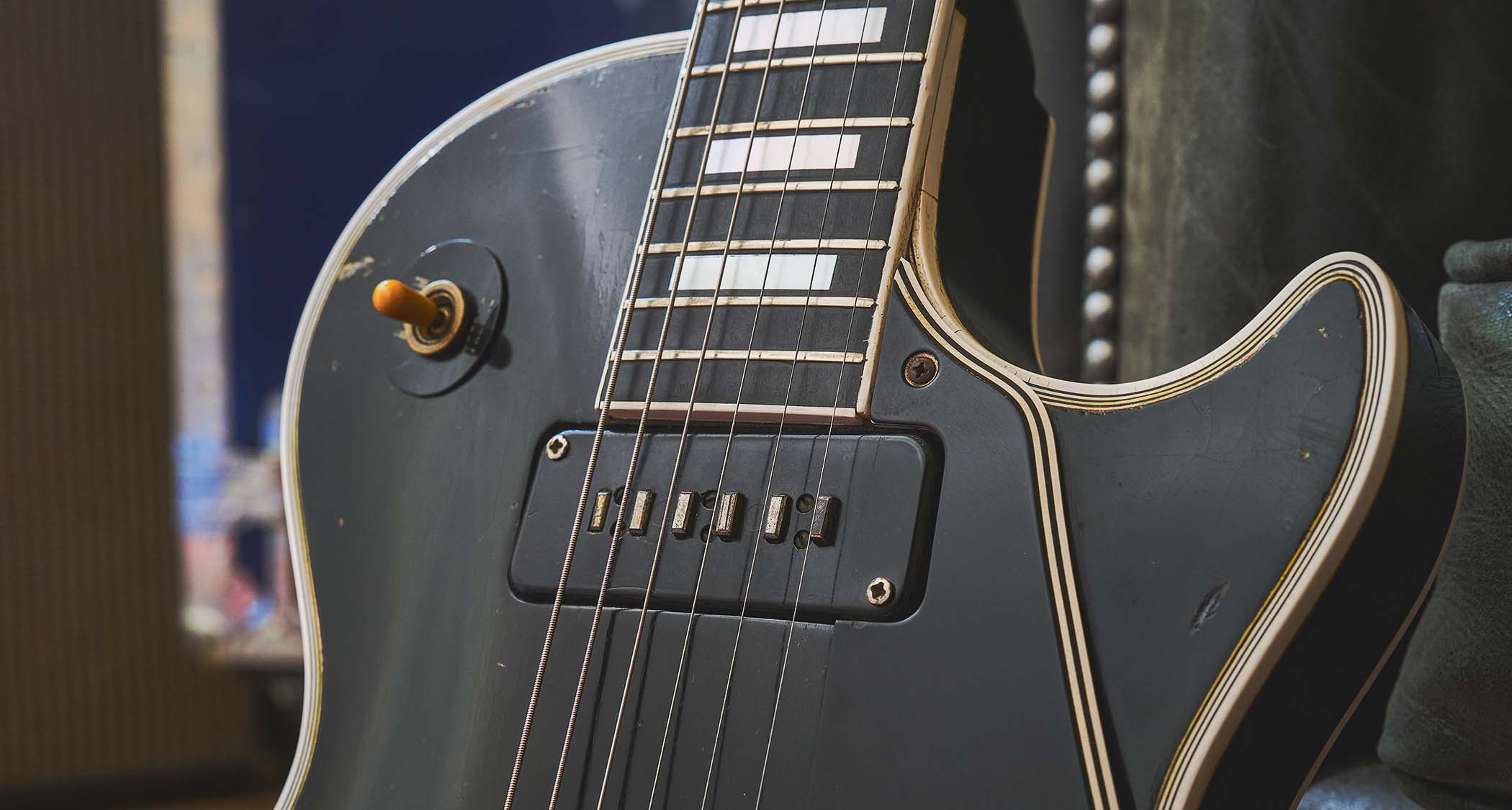
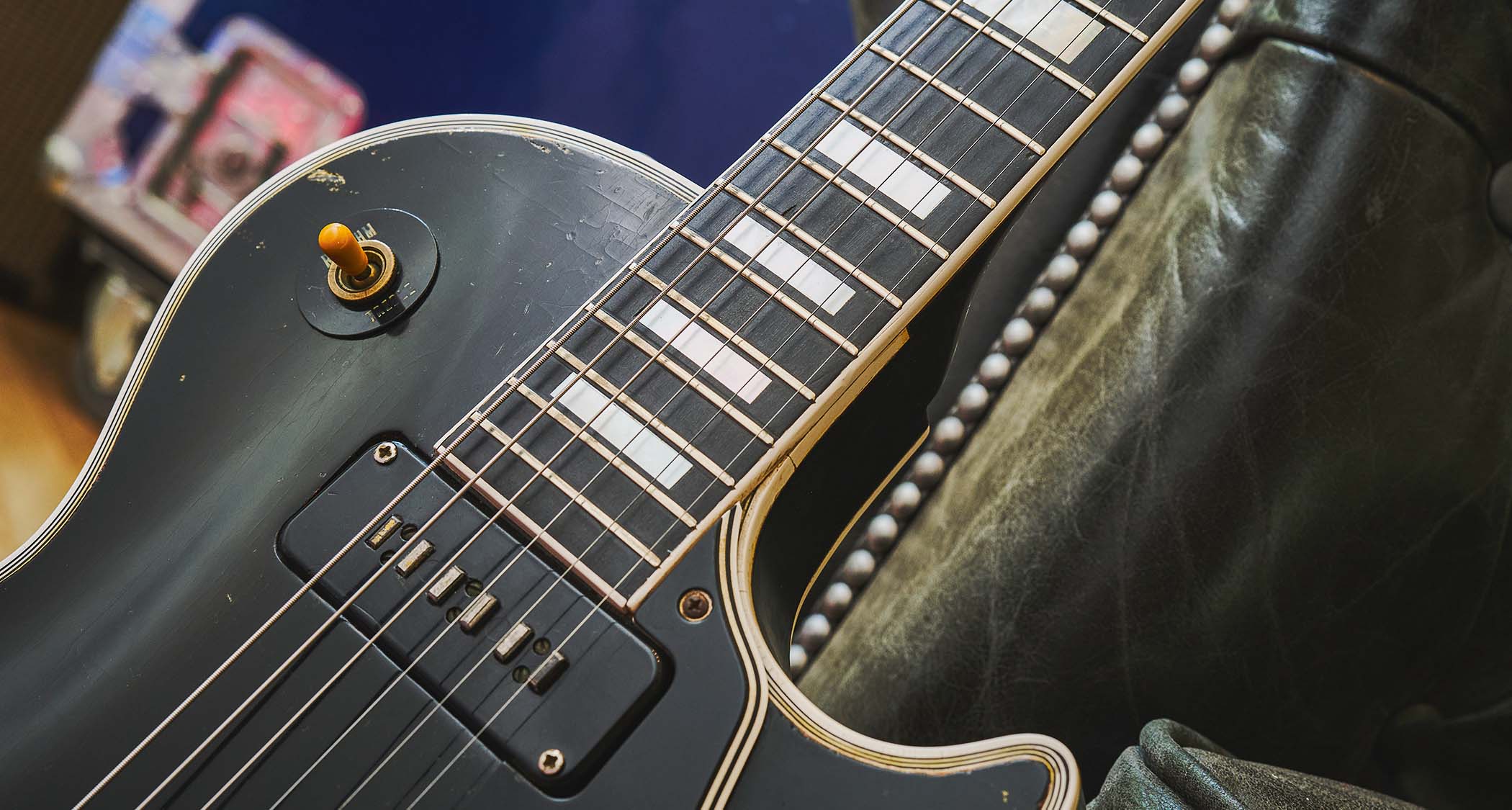
Another feature unique to Les Paul Customs made before 1957 was mismatched pickups, and this was almost certainly done at the behest of Les Paul himself. If you closely examine footage of Les playing very early Goldtops, you will notice that whatever pickup he had in the neck position wasn’t a P-90.
The giveaway is wide and off-centre round polepieces with a series of smaller holes that seem to indicate he was using a DeArmond Dynasonic under a cream plastic cover.
Rather than ape Gretsch and simply buy Dynasonics from DeArmond, Gibson tasked Seth Lover with creating a Gibson version of the Dynasonic
Whether he was actually using stock DeArmonds in disguise or, as suggested by his tech Tom Doyle, pickups that Les wound himself using DeArmond parts is open to debate. But one thing we can say for sure is that Les wasn’t using P-90 neck pickups. Given that he was Gibson’s number one endorser and something of a superstar at the time, this must have been seen as problematic.
Rather than ape Gretsch and simply buy Dynasonics from DeArmond, Gibson tasked Seth Lover with creating a Gibson version of the Dynasonic. The resulting pickup is often called the ‘Staple P-90’, but besides the shape and size it’s a very different pickup from a regular P-90 and has a clearer and a more ‘hi-fi’ sonic characteristic that is oddly reminiscent of – you guessed it – the DeArmond Dynasonic.
Early Customs provide the best of both worlds because you still get the snarlier joys of a regular P-90. The Staple’s power means the P-90 has to be set quite high to balance out, but with such differently voiced pickups it’s a mismatch made in heaven. In that sense it’s a bit like a Telecaster and yet far more versatile because the pickups have individual controls.
There was something about the way Gibson wired controls and wound pickups in that era that allowed volume adjustments without losing clarity and tone finessing without losing definition. Watch any footage of Paul Kossoff and you’ll see him continuously switching pickups and using the controls. It’s entirely possible that he learned to do so on this actual guitar.
Prior to the introduction of the humbucker in 1957, the Staple P-90 was Gibson’s most prestigious pickup and featured in various high-end jazz guitars as well as the Les Paul Custom. The ‘Staple’ nickname was probably inspired by the thin rectangular polepieces, all of which had height-adjustment screws.
It’s interesting to note that for the Staple P-90 Gibson reverted to the pickup mounting method used for a brief period on the bridge pickup of the earliest Goldtops, with screws going through diagonal corners.
Blues Boomers
Maybe it’s because of the frets, the non-robust gold plating or a long-standing preference for Patent Applied For pickups over P-90s, but very few big-name players are associated with pre-1957 Les Paul Customs.
The guitar we’re featuring here is an exception because it belonged to two British blues legends – Paul Kossoff and Eric Clapton. We caught up with its current owner, Matthieu Lucas of Matt’s Guitar Shop in Paris, to learn more about its history.

“My understanding is that the guitar was brought back to England in late 1965 or very early 1966 by Paul’s father, David Kossoff,” Matt recalls. “He was an actor who travelled back and forth to the US and he bought it from Manny’s in New York. Paul was playing an SG Junior at the time, so the Custom was basically the first serious two-pickup Les Paul he ever owned.”
Paul auditioned for a North London blues combo called Black Cat Bones in 1966. The band’s drummer Frank Perry joined the band in the summer of 1966, shortly after Paul, and he recalls Paul having a black Les Paul at the time, but [remembers Paul] quickly acquiring a sunburst Les Paul.
Since Paul was only on the cusp of turning 16, he probably wouldn’t have been acquainted with a rockstar like Eric Clapton. It’s most likely he traded the black Custom for the ’Burst at Selmer’s and, since Eric was a regular visitor, that’s probably where he bought Paul’s guitar.
“Clapton was certainly playing a 1950s Custom around that time,” Matt insists. “There are quite a few pictures of Clapton playing a Staple P-90 Custom with Cream at the Marquee Club, and we don’t know of any other pre-1957 Custom that was played by Clapton, except this one.”
It was very rare to see Clapton playing P-90 Gibsons during the Cream era, so it’s tempting to imagine him experimenting with different guitars before he moved onto the Firebird, ES-335 and SG that he’s most closely associated with during the mid-to-late 1960s. He did play another black Les Paul Custom, notably with Blind Faith and Delaney & Bonnie, but that was a three-pickup 1958 model that he later gifted to Abert Lee.
Matt offers another clue that Kossoff and Clapton owned the same Custom: “Paul didn’t like the way the binding was turning yellow, so he stripped the lacquer off the binding to make it white again. You can see in the Clapton pictures that the binding is very bright white and it remains that way today.”
Accounts suggest that Clapton left the guitar at the offices of Cream’s agent, the NEMS Organisation, in April 1967 because it was surplus to requirements for a forthcoming US tour. This is where the name Howard ‘H’ Parker enters the story because it’s thought the guitar was passed to him in lieu of payment.
Parker was a well-known face on the late-’60s music scene in London who worked as a roadie and road manager for Hendrix, Pink Floyd and Cream. He kept the Custom under his bed, and when he died in 1974 the guitar passed to his friend and fellow road manager John Wilson who kept it under his bed for the next 32 years.
Although aware of the Clapton connection, Wilson had no idea the guitar had belonged to Paul Kossoff. This was discovered when he took the Custom to auctioneers Cooper Owen in 2006.
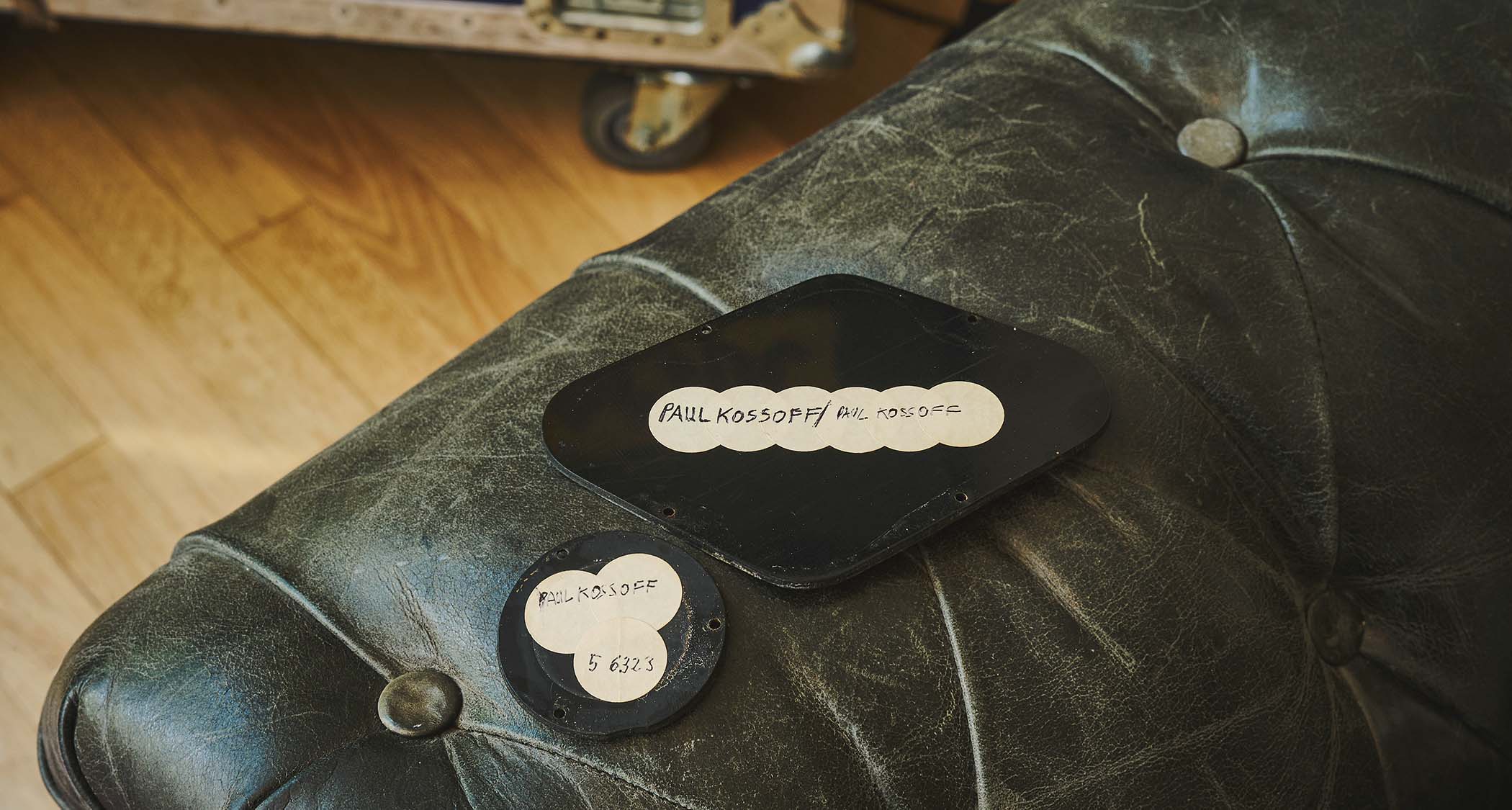
“They only found out about Paul’s ownership when they removed the switch and control covers,” Matt reports. “Paul used to put paper stickers under the covers and write his name on them. He sometimes wrote the serial numbers of guitars and his address on there, too.”
“At some point it supposedly belonged to Duff McKagan,” Matt adds, “but I actually have no proof of that and I haven’t asked Duff personally if he ever owned it. I just know that after Howard Parker it went through several hands and apparently went to Japan at some point. It definitely ended up in Florida when Melvyn Franks was building his guitar collection. I bought it from him about 10 years ago.”
We’re obviously curious to know how the guitar feels to play and whether the neck profile is thinner than the ones generally found on 1958 or 1959 ’Bursts?
What’s really nice is that the original frets are almost unplayable… but still very playable at the same time
“Actually no, I would say it feels quite a beefy neck to my hands,” Matt insists. “It’s actually quite fun with this guitar because it has a very unique profile. It’s fuller and really not comparable to any other mid-’50s Customs that I’ve played before now. If I had to define it, I’d say it’s the type of chunky C profile I would expect to find on a ’58 Standard.
“What’s really nice is that the original frets are almost unplayable… but still very playable at the same time. It’s very weird because when you get to the high notes, there are basically no frets left. It’s like the definition of a Fretless Wonder, but at the same time it’s very easy to play. It’s also super light for a Les Paul Custom and weighs just 3.84kg, which is just under 8.5lb.
“The hardware, frets, pickups, potentiometers and the caps are all original to the guitar, along with the finish. It remains exactly as Kossoff and Clapton left the guitar. Although I do have some photos of Clapton playing it with a white or cream pickguard. But, for sure, this guitar has either been stored under a bed or owned by collectors from that point onwards.
“That’s probably why it has survived the way it has,” Matt concludes. “It’s an exceptional-sounding guitar. Every artist that has played it goes crazy about it, and it has been owned by two legends for a reason. It’s really a special instrument.”
- With thanks to Matthieu Lucas of Matt’s Guitar Shop in Paris for allowing us to photograph this historic guitar.
- This article first appeared in Guitarist. Subscribe and save.