




By Alex Kimani – Mar 09, 2026, 7:00 PM CDT
- Brent briefly surged to $119 per barrel before falling below $90 as Trump hinted the U.S.-Iran conflict could be nearing an end; WTI followed similar swings.
- Middle Eastern producers like Saudi Aramco saw stocks jump amid production cuts and Strait of Hormuz disruptions.
- U.S. energy equities remained largely flat despite soaring crude prices.

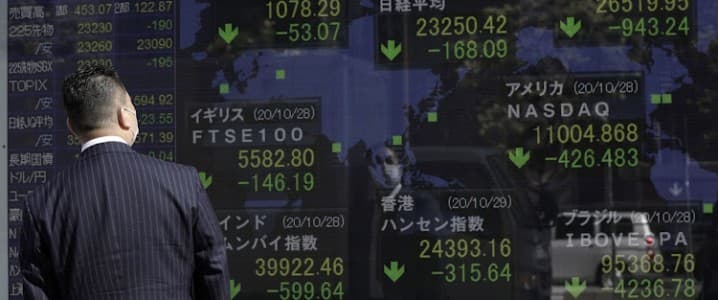
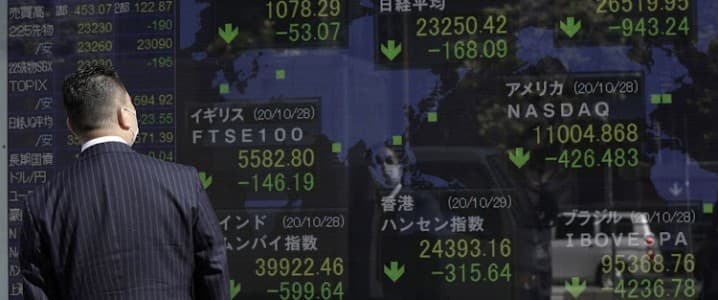
Oil prices briefly hit triple-digits in early Monday trading before pulling back sharply, with the volatility throwing global energy stocks into a tizzy. Brent crude oil rocketed to $119 during Asia Pacific trading, its highest level since 2022, before falling below $90 per barrel in the afternoon, still a big jump from ~$78 per barrel just a week ago. The price spike was triggered by the intensifying conflict between the U.S., Israel, and Iran, which has led to a near-total blockade of the Strait of Hormuz.
The pullback, however, came amid reports that Trump sees the war nearing an end, and that G7 nations were considering releasing as much as 400 million barrels of crude from their strategic reserves in a bid to tame soaring oil prices. However, it later emerged that G7 finance ministers agreed not to release emergency oil reserves yet, with the final decision on tapping reserves likely to fall to G7 heads of state later this week.
Natural gas markets were mixed, with European natural gas futures adding 5% to around €55.80/MWh on Monday, the highest level in three years, building on a 67% rally the previous week as supply concerns intensified. QatarEnergy declared force majeure on liquefied natural gas (LNG) exports on Wednesday, following disruptions at its Ras Laffan industrial city facilities caused by the Middle East conflict. Meanwhile, U.S. natural gas futures slipped 2.8% to trade at $3.10 MMBtu amid softer export demand coupled with rising domestic supply.
Global energy stocks were mixed in Monday’s session. Shares in state oil company Saudi Aramco soared to their highest in a year, with Middle East producers starting to curtail production, as the Strait of Hormuz was effectively shut. Aramco stock closed 4% higher on Monday at SAR 26.94 on the Saudi Exchange (Tadawul), pulling back slightly from SAR 27.14 during trading on Sunday. Whereas reported production shut-ins by Iraq and Kuwait due to filling storage are fairly small, the markets are alarmed by how soon this has come since the Middle East crisis broke out. Overall, Citi estimates that global oil markets could be losing 7M-11M bbl/day of crude oil and another 4M-5M bbl/day of oil products due to the Hormuz blockage.
On Europe’s FTSE 100, Shell PLC (LSE:SHEL, NYSE:SHEL) climbed 1.9% to 3,192p while BP PLC (LSE:BP.) was up 1.2% to 504.9p. Their smaller, mid-cap brethren enjoyed slightly bigger gains, with Ithaca Energy PLC (LSE:ITH) gaining 3.6%; Harbour Energy PLC (LSE:HBR) was up 2.7% while Energean PLC (LSE:ENOG) increased 1.2%.
Interestingly, U.S. oil and gas stocks have remained largely lackluster despite big oil price gains, with the sector’s favorite benchmark, State Street Energy Select Sector SPDR ETF (NYSEARCA:XLE), flat on the day, having only increased by 0.93% over the last five trading sessions. Similarly, Big Oil stocks have been equally lethargic, with Exxon Mobil (NYSE:XOM) up 1.3% over the past five trading sessions; Chevron Corp. (NYSE:CVX) has gained 2.0%, ConocoPhillips (NYSE:COP)+ 1.2%, Occidental Petroleum (NYSE:OXY) +3.9% while EOG Resources (NYSE:EOG) has tucked on 5.9% over the time frame. According to BTIG, the growing divergence between oil prices and energy stocks may signal that the rally is running out of steam. According to Jonathan Krinsky, BTIG’s chief market technician, energy equities frequently lead oil and gas prices during sustained rallies; however, the Wall Street punter notes that the current oil price rally is historically extreme, with WTI trading nearly 50% above its 200-day moving average at one time, a phenomenon rarely witnessed over the past four decades. Indeed, Krinsky notes that comparable overextensions occurred during the 2022 Russia-Ukraine conflict as well as the 1990 Gulf War, both of which were short-lived oil wars. In other words, oil and gas investors do not believe the high oil and gas prices will last.
However, the weak response by energy equities could also be due to the fact that higher energy prices are already baked into oil and gas stocks.
Inside North America’s First Fully Integrated Rare Earth Facility
The energy sector has easily outpaced the broader U.S. market, with the S&P 500 Energy Sector having returned 25.6% in the year-to-date, more than double the 10.3% return by second-placed S&P 500 Consumer Staples Sector and -1.5% loss by the S&P 500.
That said, Wall Street remains divided as to how high oil prices could go amid the ongoing geopolitical snafu. JPMorgan Chase estimates that Brent crude oil prices could spike to $120 per barrel if a full-scale conflict in the Middle East leads to a sustained disruption of oil flows through the Strait of Hormuz, estimating that Gulf producers can only sustain normal production for roughly 25 days if the Strait is completely blocked, after which saturated storage would force a total shutdown of regional production. StanChart, on the other hand, expects Brent crude to average $70/bbl in 2026, slightly higher than its previous forecast of $63.50/bbl.
By Alex Kimani for Oilprice.com
More Top Reads From Oilprice.com
- Europe’s Gas Price Set for Largest Weekly Gain in Three Years
- Why $100 Oil Isn’t Going to Spark a New Shale Boom
- Oil Price Shock Could Worsen If U.S. Seizes Iran’s Strategic Oil Island
Download The Free Oilprice App Today





Alex Kimani
Alex Kimani is a veteran finance writer, investor, engineer and researcher for Safehaven.com.