







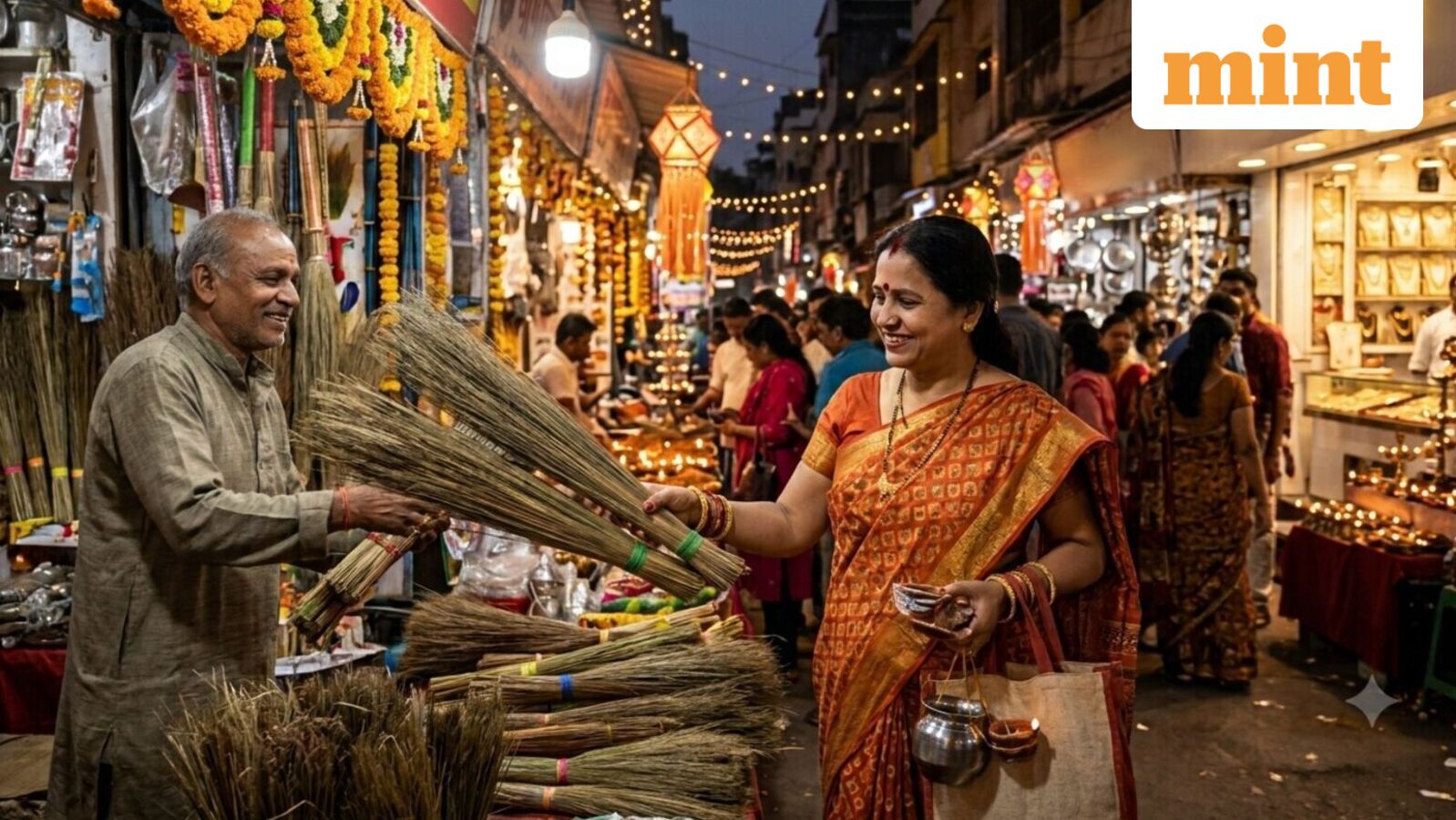
Dhanteras is synonymous with buying gold, silver and other valuables. However, a lesser-known tradition sees people purchasing a humble broom or jhaadu on the occasion. From household customs to religious beliefs, here’s why the practice has continued over generations.


Every year, as Indians celebrate Dhanteras, many throng to jewellery stores to buy gold, silver, and other valuables. However, others make their way to a local shop or a vendor near the jewellery store to purchase a broom (jhaadu). Have you ever wondered why?
This seemingly ordinary household item holds a special place in Dhanteras traditions. Many believe that bringing a new broom home on the occasion invites Goddess Lakshmi’s blessings, drives away negative energy, and paves the way for prosperity. But where does this belief come from, and what is the significance of buying a broom on Dhanteras?
Why is buying a broom on Dhanteras considered auspicious, and what is its connection to Goddess Lakshmi?
Many of us have often been warned against touching a broom with our feet or even stepping over it. Further, kicking it accidentally is considered inauspicious, with many people immediately touching it and then their forehead as a way of seeking forgiveness, similar to what they would do if they accidentally stepped on a book.
Quick answers to key questions
A new broom is seen as a symbol of sweeping away negativity and past misfortunes. The tradition is also believed to help make the home ready to welcome prosperity.
Traditional beliefs say Goddess Lakshmi stays in clean, well-maintained homes. Since a broom removes dust and dirt, it is symbolically linked to preparing the home for her blessings.
Yes. Buying a broom is a Dhanteras tradition and is an affordable way to take part in the occasion, regardless of how much you can spend.
Dhanteras 2026 falls on Friday, November 6. The article says devotees can buy a broom after Trayodashi begins, around 10:30 am, and traditionally bring it home before the evening puja.
Yes. The tradition described in the article is to offer prayers to the new broom before using it to sweep away negativity.
If the elders in families are to be believed, these customs are deeply rooted in the belief that Goddess Lakshmi stays where homes are clean, well-maintained, and lit. Since the broom or jhaadu is used to remove dust and dirt from our homes, it is symbolically associated with keeping the house ready to welcome Lakshmi, who is a symbol of abundance, good fortune, prosperity, and wealth.
The belief is also linked to Lakshmi’s elder sister, Alakshmi, who is associated with misfortune and poverty. Also known as Jyeshtha, she is believed to reside in places marked by filth, discord and negativity. Cleaning the house with a broom is therefore seen as a way of driving away Alakshmi and making room for Goddess Lakshmi and prosperity, The Times of India reported.
Since Dhanteras is the day when Lakshmi is formally welcomed into a home, purchasing a new broom on this occasion fits right in.
The tradition of purchasing a broom is considered a symbolic gesture of sweeping away past misfortunes and negativity while making room for wealth and prosperity. Another reason why this practice has never faded is its affordability. A broom may cost around ₹50 or ₹100, making it accessible to people across income groups. From a daily-wage worker to a factory owner, anyone can participate in the tradition, regardless of how much they can spend on Dhanteras.
Dhanteras 2026: Date and shubh muhurat timing
This year, Dhanteras, also known as Dhantrayodashi, is being celebrated on Friday, November 6. The festival marks the onset of the five-day Diwali celebrations. It is considered an auspicious occasion for offering prayers for health, prosperity, and wealth. Devotees can purchase a broom after Trayodashi begins, at around 10:30 am, and are traditionally advised to bring it home before the evening puja.
Further, one must remember that before using the new broom to sweep away negativity, one has to offer prayers to it.
About the Author
Swati Gandhi
Swati Gandhi is a digital journalist with over four years of experience, specialising in international and geopolitical issues. Her work focuses on foreign policy, global power shifts, and the political and economic forces shaping international relations, with a particular emphasis on how global developments affect India. She approaches journalism with a strong belief in context-driven reporting, aiming to break down complex global events into clear, accessible narratives for a wide readership.
Previously, Swati has worked at Business Standard, where she covered a range of beats including national affairs, politics, and business. This diverse newsroom experience helped her build a strong grounding in reporting, while also strengthening her ability to work across both breaking news and in-depth explanatory stories. Covering multiple beats early in her career has helped her be informed about her current work, allowing her to connect domestic developments with wider international trends.
At Live Mint, she focuses on international and geopolitical issues through a business and economic lens, examining how global political developments, foreign policy decisions, and power shifts impact markets, industries, and India’s strategic and economic interests.
She holds a Bachelor’s degree in English (Honours) from the University of Delhi and a Master’s degree in Journalism and Mass Communication from Guru Gobind Singh Indraprastha University. Her academic training has shaped her emphasis on precision, analytical rigour, and clarity in writing. Her interests include global political economy and the intersection of geopolitics with business.
Outside work, Swati focuses on exploring her passion and love for food. From fancy cafes to street spots, Swati explores food like a true foodie.


