

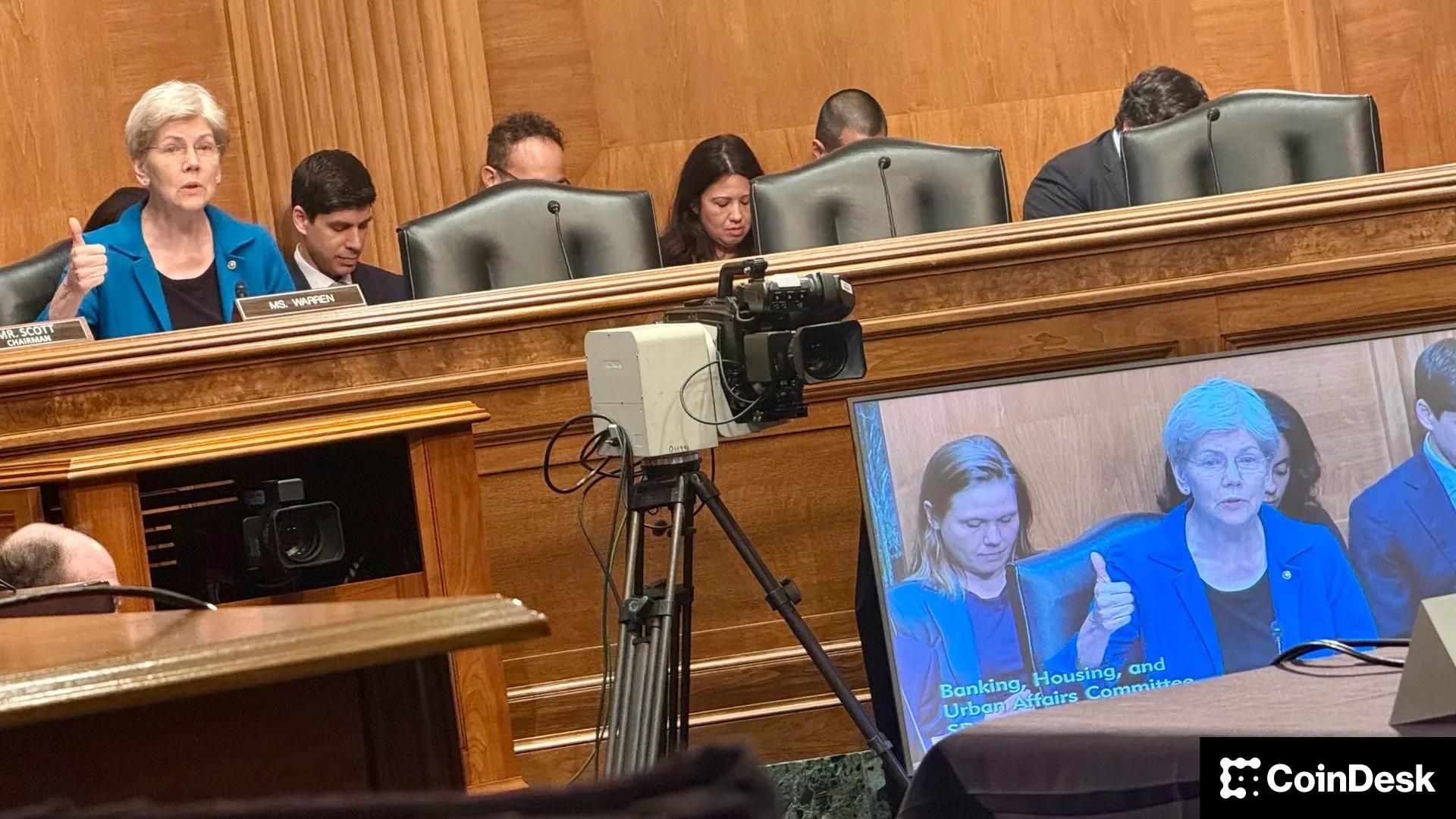
Members of the House and Senate asked the CFTC and federal ethics office to remind government employees it’s illegal to make insider derivatives trades.
Mar 30, 2026, 9:37 p.m.
More than 40 Democrats in the U.S. Senate and House of Representatives sent a letter to a federal regulator and to ethics officials to ask them to warn government officials that insider trading in derivatives is illegal and that bets they make on prediction markets firms like Polymarket and Kalshi qualify under that category.
The ranking Democrats on the Senate Banking Committee (Senator Elizabeth Warren) and Senate Agriculture Committee (Cory Booker) joined dozens of their colleagues in asking Chairman Mike Selig, chief of the Commodity Futures Trading Commission, and the leaders of the U.S. Office of Government Ethics to “circulate executive branch-wide guidance explaining that federal employees must refrain from insider trading in prediction markets.”
The request was spurred by the eruption of suspicious reports that recent event contracts on government or military action seemed to draw bets from people with special insight into the outcomes, leading many to believe that government officials — or people associated with them — may have made such bets. U.S. derivatives laws state the illegality of government officials making trades based on non-public information they got on the job. Since the CFTC has declared the contracts at such firms are regulated derivatives, the ban should hold true, the lawmakers contended.
“We ask that the CFTC and OGE issue guidance reminding federal employees of their existing legal obligation to refrain from using their insider governmental information to profit from prediction market trades,” said the letter, dated March 29
The instances of potential insider trading outlined in the letter included contracts on military actions in Venezuela and Iran, the length of a speech from President Donald Trump’s press secretary and the firing of former Department of Homeland Security Secretary Kristi Noem.
The letter was also signed by the top Democrats on the House Agriculture Committee, Representative Angie Craig, and the House Financial Services Committee, Representative Maxine Waters. The agriculture panels in both chambers are the ones that directly oversee the CFTC.
Selig’s CFTC has been working on a new set of policies to govern the prediction markets. Those businesses are closely related to the crypto industry, which is a current focus of many of the lawmakers on this letter, who are also working on the Digital Asset Market Clarity Act that’s been hung up in the Senate.
Also on Monday, news emerged that federal prosecutors reportedly spoke to prediction market firms about whether certain instances could trigger insider-trading cases.
More For You

As stablecoins evolve into core financial infrastructure, North America leads. This report maps the regulation, market shifts, and players driving adoption.
Why it matters:
Stablecoins are entering their third phase of evolution – the institutionalization era – becoming increasingly embedded into core financial infrastructure. As institutions prioritize transparency and compliance, regulated issuers like USDC, RLUSD, and PYUSD are steadily gaining share with RLUSD surpassing $1B in market cap within its first year. North America, leading in regulatory frameworks and institutional distribution, is at the center of it all.
More For You

The Labor Department on Monday proposed a rule following an executive order from President Donald Trump that directed regulators to expand access to digital assets in retirement portfolios.
What to know:
- The U.S. Department of Labor has proposed a rule, prompted by an August executive order from President Donald Trump, that would make it easier for 401(k) plans to include alternative assets such as cryptocurrencies, private equity and real estate.
- If adopted, the rule would mark a shift from traditional stock-and-bond-focused…
