





Haley Zaremba
Haley Zaremba is an energy journalist and researcher with more than a decade of professional experience covering global energy systems, land and natural resources, and…
Set us as your preferred Google source
Premium Content
By Haley Zaremba – Jun 26, 2026, 2:00 PM CDT
- CATL, the world’s largest battery maker, just debuted a sodium-ion storage system called TENER, with domestic delivery starting in September and global shipments slated for 2027.
- The company has shifted hard from EVs to energy storage, with storage sales jumping from 2 percent to 25 percent of revenue in five years, and a 50 percent target by 2030.
- China outpaced the US and EU combined on battery storage additions in 2025, fueling fresh concerns about US dependence on Chinese battery tech and CATL’s ties to the Chinese military.

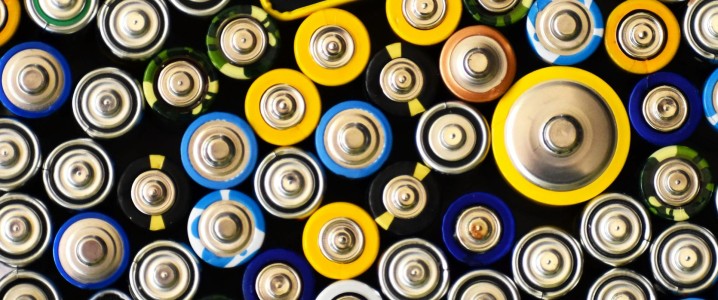
The world’s largest battery maker is taking a step back from the eclectic vehicles sector to refocus its efforts on energy storage. China’s Contemporary Amperex Technology Co. Ltd. (better known as CATL) has been building up its energy storage portfolio for years now, but the company’s transition away from EVs and toward energy systems has been supercharged by the artificial intelligence boom. Five years ago, just 2 percent of CATL’S sales came from battery storage. Today, storage accounts for a full quarter of the megacompany’s sales, and CATL aims to reach 50 percent storage sales by just 2030.
As hyperscalers drive up energy demand projections across the world, battery storage systems are becoming an increasingly vital part of energy security strategies for Big Tech and energy utilities. Global energy think tank Ember describes these systems as the “ultimate clean flexibility tool for making clean electricity available when it is needed most, while keeping power grids stable and secure.” As such, manufacturing and purchase of battery-powered storage systems are skyrocketing around the world.
“The market for grid-scale batteries and backup power isn’t just expanding, it’s becoming essential infrastructure,” Kurt Kelty, General Motors’ vice president of batteries, propulsion, and sustainability, stated in a 2025 press release. “Electricity demand is climbing, and it’s only going to accelerate. To meet that challenge, the U.S. needs energy storage solutions that can be deployed quickly, economically, and made right here at home. GM batteries can play an integral role. We’re not just making better cars — we’re shaping the future of energy resilience.”
Set OilPrice.com as a preferred source in Google here.
However, despite GM’s enthusiasm, China is leading the battery storage charge by a remarkably wide margin. In 2025, China added more battery storage capacity than the United States and the European Union combined. In addition, Chinese companies are leading the charge when it comes to battery manufacturing and innovation. While the vast majority of energy storage systems rely on lithium-ion batteries, Chinese firms are starting to roll out innovative new designs.
Just this month, CATL debuted a new sodium-ion battery storage system, which could be a major game changer for global battery tech and supply chains. At present, the vast majority of energy storage systems run on lithium-ion batteries. While lithium is an incredibly useful material thanks to its energy density and ability to perform well in a high range of temperatures, its supplies are finite and geopolitically complex, and spot prices for the critical mineral can be quite volatile. By comparison, sodium is far more abundant (and less prone to starting fires) and could therefore offer an important alternative to create more diverse battery markets and thereby a more safe and resilient energy sector.
“While energy storage becomes the critical infrastructure in our modern society, the stable and sufficient supply of raw materials plays an important role in this industry,” William Wu, director of CATL’s energy storage system technical centre, was recently quoted by the South China Morning Post. “CATL is committed to promoting energy independence for all countries and regions.”
The initial rollout of these new sodium-ion batteries, called the TENER system, will be delivered domestically in September of this year. Global shipments are slated for June of 2027. The United States will likely be a significant market for these models as Silicon Valley ramps up its installation of massive data center campuses across the country and trade ties between the United States and China regain strength. Last month, China’s green energy exports to the United States skyrocketed in the wake of Trump’s diplomatic visit to Beijing in May.
CATL already has a considerable presence in U.S. markets, which some experts find concerning. Many energy and economy experts are concerned that the United States is falling far behind in the clean energy tech race, and that the United States is becoming too dependent on Chinese technologies and supply chains. This is not merely an economic issue – there is also concern about national security and vulnerability. CATL is not just an energy giant, it is also an unofficial extension of the Chinese military, and its increased presence in the United States has been raising alarm bells for a while now. The company’s aggressive move into cornering the market on next-gen energy storage tech will likely give them another major leg up when it comes to global energy influence and geopolitical leverage.
By Haley Zaremba for Oilprice.com
More Top Reads From Oilprice.com
- Adani Targets 10 GW Nuclear Power Capacity in India by 2035
- VLCC Earnings Near $470,000 a Day as Hormuz Hopes Drive Tanker Frenzy
- Asia’s Crude Buying Spree Is Running Out of Steam
Download The Free Oilprice App Today



Haley Zaremba
Haley Zaremba is an energy journalist and researcher with more than a decade of professional experience covering global energy systems, land and natural resources, and…


