







By Tsvetana Paraskova – Feb 25, 2026, 5:00 PM CST
- The U.S. and China appear well-positioned to withstand a short-term Middle East oil disruption.
- Oil prices could spike on geopolitical escalation, but analysts say $100 oil would likely require a significant physical supply disruption.
- Both countries could release reserves to stabilize markets if conflict erupts, though the oil market remains on edge as U.S.–Iran tensions threaten potential military escalation.

China and the United States, the world’s largest and second-largest crude oil importers, respectively, appear to have enough strategic reserves to go through an oil supply disruption in the key producing region, the Middle East, in case the U.S.-Iran standoff escalates to U.S. strikes on the Islamic Republic.
Sure, any disruption to oil shipping in the Middle East would send oil prices higher from the current seven-month high of $71 per barrel Brent. The market panic in case Thursday’s U.S.-Iran talks fail could be even more disruptive to oil prices in the era of algorithmic trading.
Still, it would take a physical supply disruption to send oil to $100 per barrel, analysts say.
Iran could opt for igniting the region by attacking oil facilities in neighboring countries if Tehran’s leadership sees a U.S. campaign as an existential threat, many experts note.
If oil supply does become constrained, China and the U.S. have reserves to ease the pressure on prices, to some extent, Reuters columnist Ron Bousso argues.
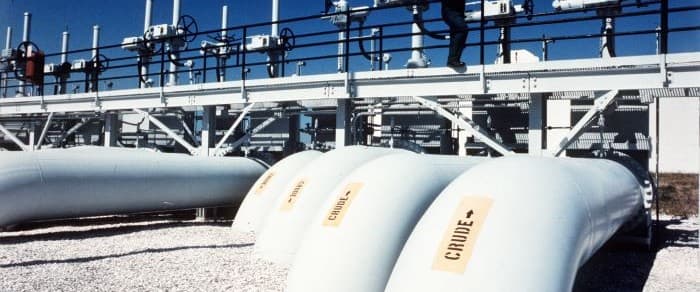
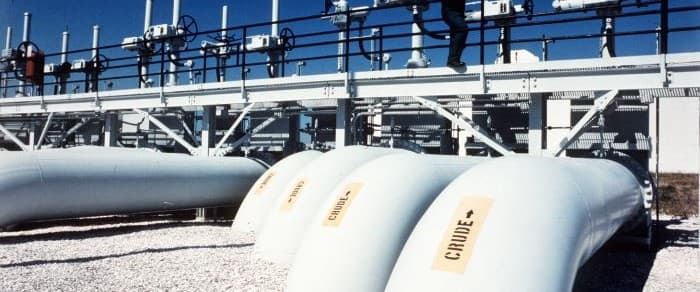
The U.S. Strategic Petroleum Reserve (SPR) currently holds about 415 million barrels of crude. Out of a capacity of 714 million barrels, it is less than 60% full at present as the U.S. has slowly rebuilt reserves following the major releases in 2022 at the start of the Russian invasion of Ukraine.
Even at just above half full, the world’s biggest strategic petroleum stockpile would cover about 200 days of net crude imports into the United States, per calculations by Reuters. That’s well above historical norms and the requirement of the International Energy Agency (IEA) that its members have at least 90 days of net imports of crude oil and refined products in strategic reserves.
Should the President order an emergency sale of Strategic Petroleum Reserve oil, DOE can conduct a competitive sale, select offers, award contracts, and be prepared to begin deliveries of oil into the marketplace within 13 days. Oil can be pumped from the Reserve at a maximum rate of 4.4 million barrels per day for up to 90 days, then the drawdown rate begins to decline as storage caverns are emptied. At 1 million barrels per day, the Reserve can release oil into the market continuously for nearly a year-and-a-half, the DOE says.
This could become an option for President Donald Trump if oil prices spike in the case of a longer military campaign in Iran and physical disruption to supply and shipping. With mid-term elections looming, no U.S. President would want spiking gasoline prices, especially when electricity prices have surged—contrary to pledges in President Trump’s presidential campaign.
China, for its part, is estimated to have been amassing crude into commercial and strategic inventories for nearly a year—taking advantage of lower international prices and even lower prices for sanctioned supply out of Iran, Venezuela, and Russia.
Venezuela is now back on the legit market with sales under the control of the U.S., but China has started buying record volumes of Russian crude as India has retreated.
No one really knows the extent of Chinese inventories, but with low prices and expanding storage capacity, Beijing – which doesn’t disclose stocks – is estimated to have sent at least 1 million barrels per day of crude to storage last year.
The two biggest crude importers in the world have the capacity to withstand a brief shock-and-awe development in Iran should diplomacy fail and President Trump follow up with a military solution.
Analysts are not ruling out any scenario—from brief strikes to a larger military campaign, to Iranian retaliation and strikes on Saudi, UAE, or Kuwaiti oil infrastructure, or an attempt to close the oil trade’s most critical chokepoint, the Strait of Hormuz.
On the eve of Thursday’s talks in Geneva, Iranian Foreign Minister Abbas Araghchi said, “We have a historic opportunity to strike an unprecedented agreement that addresses mutual concerns and achieves mutual interests. A deal is within reach, but only if diplomacy is given priority.”
Yet, the oil market is bracing for some kind of U.S.-Iran conflict, sooner rather than later.
By Tsvetana Paraskova for Oilprice.com
More Top Reads From Oilprice.com
- Woodside Warns LNG Glut Fears May Be Overstated
- Eni Set to Approve Two Gas Projects Offshore Indonesia
- Oil Prices Hit 7-Month High on U.S.-Iran Standoff
Download The Free Oilprice App Today




Tsvetana Paraskova
Tsvetana is a writer for Oilprice.com with over a decade of experience writing for news outlets such as iNVEZZ and SeeNews.


