

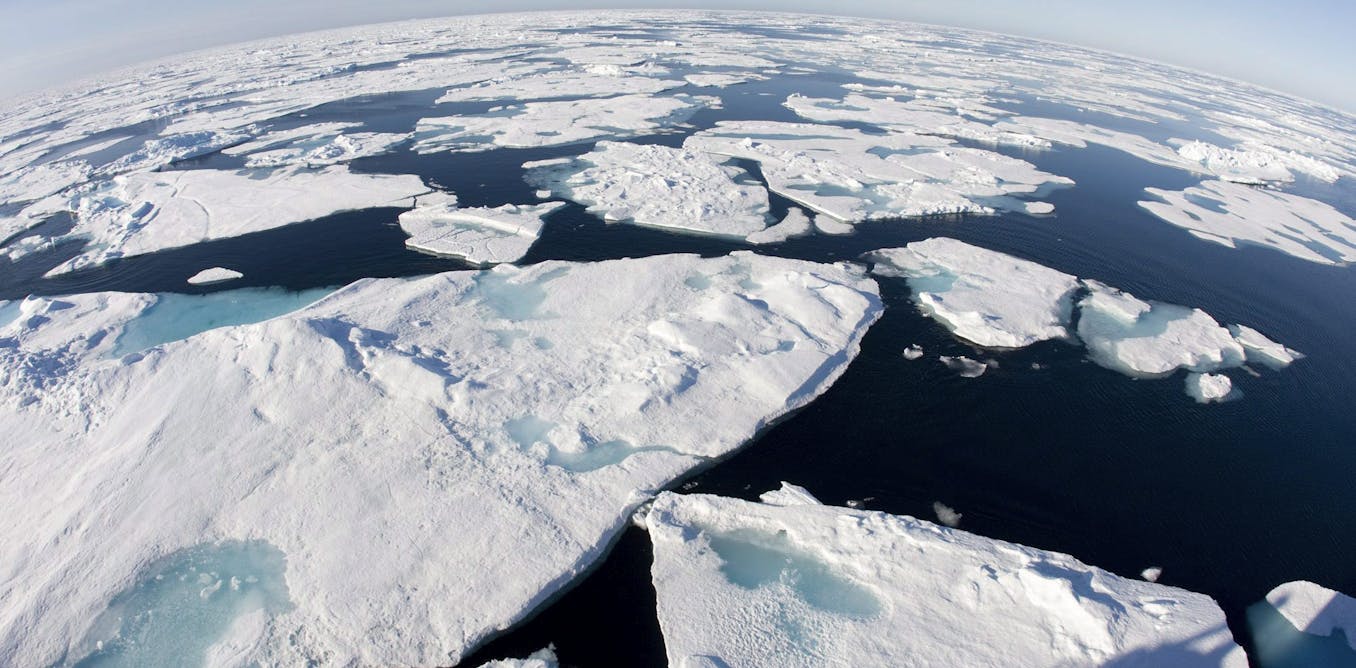
The Arctic has been in the news a lot lately. Between the increased geopolitical interest in Greenland, claims over sovereignty, resource exploitation and the devastating impacts of climate change, the region has become a sentinel for global change.
But away from these headlines, a quieter crisis is unfolding that threatens Canada’s role in global environmental science, law and policy: the dismantling of research teams at the department responsible for Canada’s environmental policies and programs. The federal government’s plan to reduce the public service by 15 per cent over three years means that more than 800 positions at Environment and Climate Change Canada (ECCC) will be cut.
As an environmental scientist who has been involved in the Arctic Monitoring and Assessment Program (AMAP) since 2016 and an interdisciplinary legal scholar focused on water governance in Canada, we have seen how science can shape policy. For decades, ECCC research scientists have been integral to the work of AMAP, a working group that provides advice and assessments to the Arctic Council.
This intergovernmental group comprised of Indigenous Peoples, Arctic states and non-Arctic states with observer status is the major platform for protecting the environment and co-ordinating sustainable development initiatives in the Arctic.
Scientists at ECCC have played a leading role in more than 20 international reports on persistent organic pollutants and mercury. In fact, ECCC researchers have acted as the largest group of chapter leads in these global assessments since the 1990s.
Budget cuts at ECCC raise concerns about how governments will develop effective polices and laws that rely upon scientific research.
The risks from budget cuts

THE CANADIAN PRESS/Nathan Denette
Many of the scientists who lead projects on the long-term trends of toxins in Arctic wildlife face cuts or might lose their jobs entirely. Scientists at ECCC are often the ones to identify and assess “chemicals of emerging Arctic concern” — newly discovered chemical threats to human and environmental health that scientists are only just beginning to understand.
Losing the scientists who lead and interpret contaminant data in Arctic wildlife will take much more from Canada than scientific expertise; we risk losing our ability to understand and effectively react to chemical threats and their potential environmental and health impacts.
Data collection for unique monitoring datasets spanning up to 50 years is at risk of being discontinued. Even more concerning is the potential loss of national tissue archives if monitoring and research projects are cut. Contaminant data in Canadian wildlife have been instrumental to the listing of toxins under the Stockholm Convention on Persistent Organic Pollutants, an international treaty to control the global production and use of particularly hazardous chemicals.
Similarly, monitoring for mercury in Arctic air and biota is an important part of the rationale for the Minamata Convention, a global treaty designed to protect human and environmental health from mercury contamination.
In many ways, these global agreements exist because Canadian data, produced by ECCC scientists, proved that chemicals used thousands of miles away end up in the bodies of Arctic wildlife and Indigenous Peoples who rely on healthy wildlife for food security, cultural identity and practices.
These international treaties set out the norms, legal principles and regulatory schemes that have been incorporated into Canadian law. They support the risk assessment and management of many toxic chemicals under the Canadian Environmental Protection Act.
Losing these samples and monitoring programs would set back Canadian and global contaminant research and reinforce criticisms that Canada is a laggard in environmental law and policy.
Risk for Indigenous communities

(AP Photo/THE CANADIAN PRESS, Kevin Frayer)
Budget cuts could also intimately impact the daily lives of those living in the Arctic and raise questions of environmental justice. Indigenous communities in the Arctic face higher exposure to many toxins than other Canadians due to their reliance on foods like fish, belugas and seals.
Despite global efforts, blood mercury levels in many Inuit communities remain higher than the general Canadian population. Furthermore, concentrations of per- and polyfluorinated alkyl substances, also known as “forever chemicals,” are consistently higher in these communities than in the south.
Without ongoing research, we risk creating a vacuum in environmental governance and law. Current legislation, like the Canadian Environmental Protection Act, aims to protect vulnerable populations and uphold the right to a healthy environment and environmental justice. But we cannot uphold these rights if we stop measuring how contaminants are impacting the health of the environment, food and water of the populations most affected by these chemicals.
Across Canada, the cuts undermine effective chemical management. Canada’s chemical management plan depends heavily on the expert assessment of government scientists. This expert-based risk assessment has enabled the discovery and monitoring of new chemical risks with comparatively few bureaucratic hurdles. However, it also means that the proposed cuts are particularly devastating to this program.
If we remove the scientists the regulatory system depends on, the system breaks. This means that these proposed cuts could not only cost jobs and reduce scientific excellence in Canada, but also leave the health of Canadians and our environment less protected.
