



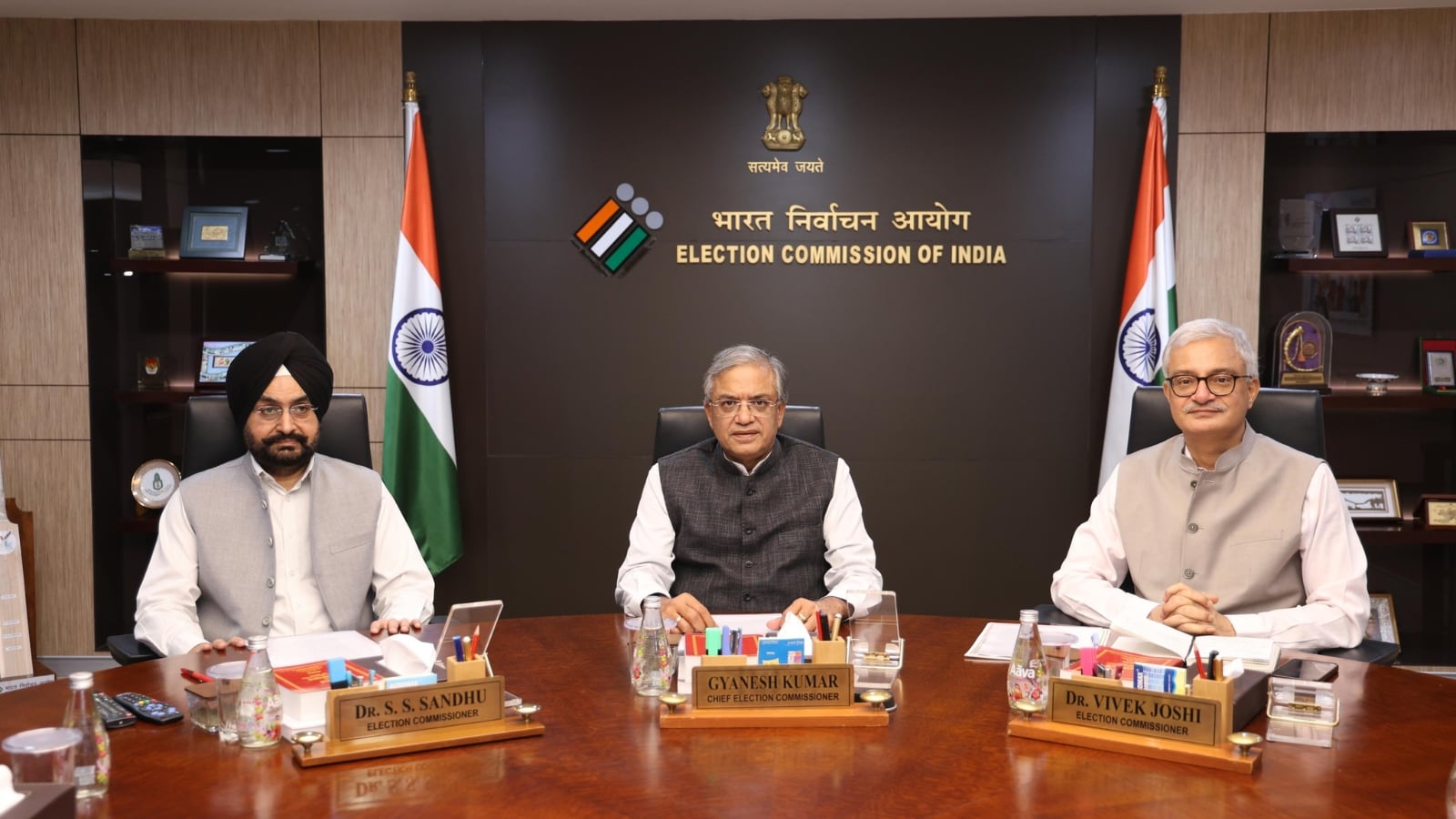
Coming out from hibernation, the Congress-led Indian National Democratic Inclusive Alliance (I.N.D.I.A) leaders assembled in New Delhi on September 30 and worked out a strategy for the removal of the Chief Election Commissioner Gyanesh Kumar and to launch a series of ‘Save Democracy’ protests.
The CEC has been in the eye of a political storm triggered by the report in the Indian Express of differences between Kumar and his two colleagues, Election Commissioners Sukhbir Singh Sandhu and Vivek Joshi, over some of the decisions arrived at.
Since then, the ECI put out a news release with a picture of a meeting of the full Commission and decisions to address some of the issues that figured in the said newspaper report. Subsequently, it announced that the scheduled Form 6 for enrolment of new voters will be as mandated by law and not the amended version created for the Special Intensive Revision (SIR) of electoral rolls.
Leaders of 19 parties, including the Congress, Nationalist Congress Party (Sharad Pawar), Left parties CPI (M) and CPI, Trinamool Congress, and Rashtriya Janata Dal, were among those who attended the meeting here while two others joined virtually to chart out a roadmap. Interestingly, while the Dravida Munnetra Kazhagam and the Biju Janata Dal are not part of the opposition alliance, these parties expressed solidarity on the ECI issue.
While the BJP mocked the collective’s call as one coming from parties rejected by the electorate, the ability of the opposition to garner public opinion on the issue cannot be underestimated. The people in several states encountered issues with SIR, and the opposition can deepen the fault lines, leading to a perception that casts doubt on the credibility of the system. Public pressure may not insulate the government from being drawn into the vortex.
The primary focus on Wednesday was to force the resignation of the CEC Kumar, and plans for public protests in Delhi and elsewhere starting October 2, the birth anniversary of Mahatma Gandhi. Besides these moves, the opposition plans to mount a legal challenge to the amended 2023 Act for appointment of Election Commissioners and press for an impeachment motion in Parliament, notices for which are already pending before the Chair.
During the meeting of the Congress Working Committee on Tuesday, party president Mallikarjun Kharge said the protest and demands are not directed against any individual or institution but to strengthen the ECI as a neutral poll body in which all political parties, irrespective of being in the government or the opposition, have complete faith.
Besides the inclusion of all eligible voters, the demands include a transparent process in place and a return to voting through paper ballots. The move to switch to Electronic Voting Machines (EVM) came during the late 1990s after the Election Commission of India discussed it at an all-party meeting. However, since then several parties, including the Bharatiya Janata Party in the past, have raised doubts over possible manipulation of results on EVMs through software programmes, a charge challenged and rejected by the poll body on more than one occasion.
Did the CJP move on CEC force I.N.D.I.A bloc
Interestingly, the I.N.D.I. Alliance, after its meeting in June this year, announced the next round to be held during August at Hyderabad. However, the proposed meeting did not happen, even as some allies raised the issue. However, when the CEC controversy blew up, the Congress and other partners on the platform issued statements demanding clarifications from the CEC and the poll body.
Around the same time, September 24 to be precise, the Cockroach Janata Party founder Abhijeet Dipke set a 48-hour ultimatum for the CEC to step down. After the expiry of the time limit, it announced it would stage a dharna on October 2. Ladakh climate activist Sonam Wangchuk also promised to join the CJP, just as he did during the July Jantar Mantar protests.
While there is no apparent link between the CJP announcement and the opposition alliance’s move, the common ground is removal of the CEC, an independent probe into alleged lapses in the SIR process, and a transparent process in the working of the ECI. Coincidentally, the choice of October 2 for the start of protests by the I.N.D.I. Alliance and CJP could be symbolic.
The trigger for the opposition came when a report of internal disagreements between the members of the Commission was published. In any case, most parties, including the Congress, had been raising issues on the process of preparing the electoral rolls or cleaning them up through SIR.
While the CJP demonstrated it could mobilise public support on the exam issue, it is yet to be seen how the move on the CEC would generate a similar response. Unless the public pressure forces the CEC to step aside, the only process available is through an impeachment motion in Parliament.
Since the publication of the report, protests have been held by political parties near the ECI office in Delhi demanding the resignation of the CEC. The strategy is a blend of street protests, legal challenge, and procedural process inside the Houses. The CJP’s protest could provide impetus to build the momentum the opposition seeks to create ahead of assembly elections in three states of Uttar Pradesh, Punjab and Uttarakhand, due early next year.
—The author, K V Prasad, is a Political Observer and Writer. The views are personal.


