



On Tuesday night, the Breuer Building played host to something that would have been unthinkable during the decades it spent housing The Whitney: its first auction.
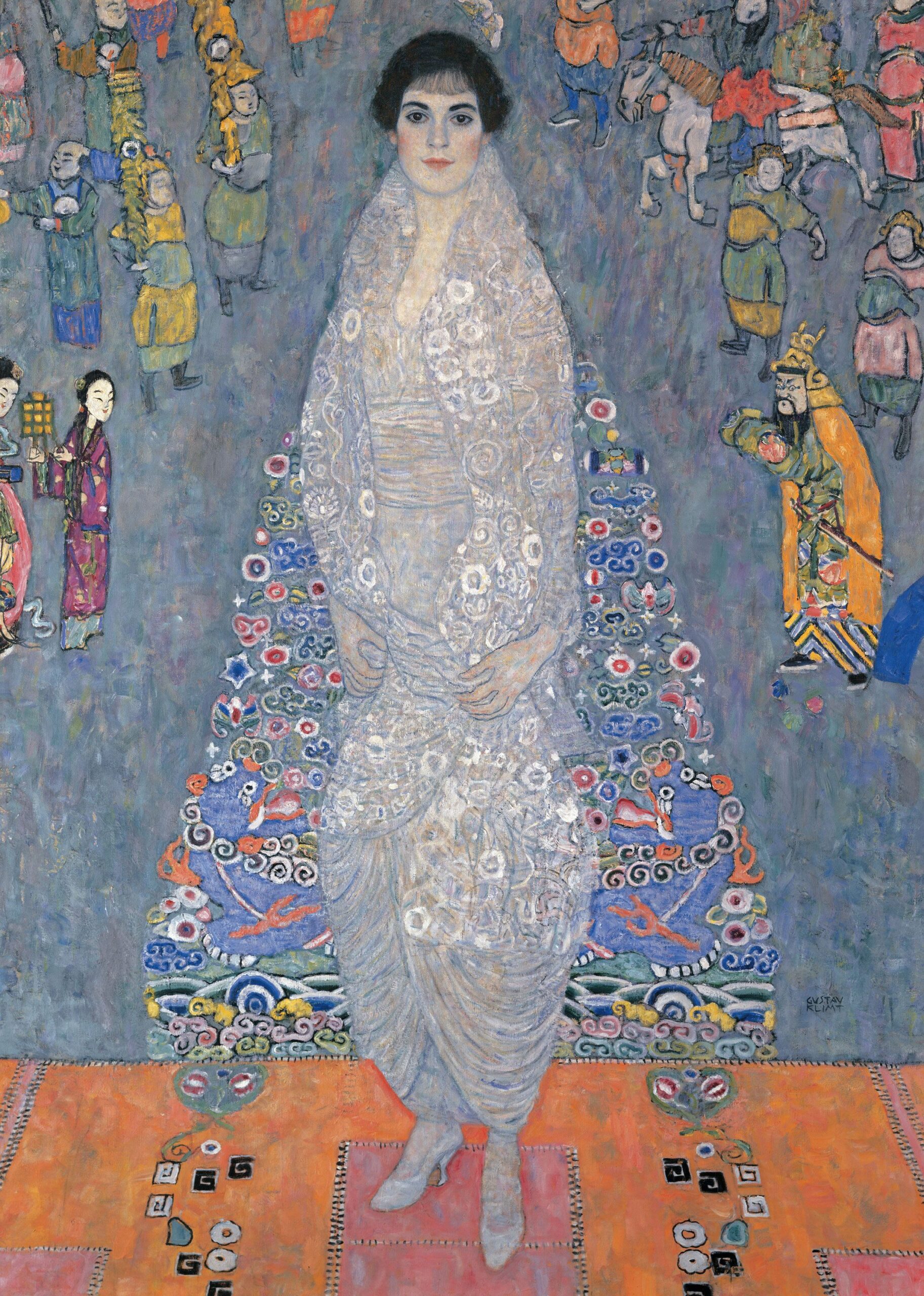
Sotheby’s, newly located inside the Brutalist landmark, has been open to the public since the start of the month, and New Yorkers have lined up around the block—literally down to Park, and then to 74th, back to Madison, and back up to 75th—just to poke their heads inside the building in the weeks before the work got auctioned. Yes, crowds formed to take a selfie with Maurizio Cattelan’s America, the solid-gold toilet. But the real draw was the collection of cosmetics heir and legendary arts patron Leonard Lauder, who in 2013 promised his astonishing 78-work collection of Cubist masterpieces to The Met. But he kept a few choice works for himself, all consigned to Sotheby’s after his death in June—including Gustav Klimt’s Portrait of Elisabeth Lederer, one of the Vienna master’s full-length portraits, few left in private hands, as iconically Klimt as you get on earth. It was expected to sell for $150 million.


Maurizio Cattelan, America, 2016.
Courtesy of Sotheby’s.
But when I was walking through the Breuer lobby, I thought, Who makes the cut? Sotheby’s on York Avenue had space for more than 500 people in the salesroom. In the new salesroom of the Breuer Building, simply due to the size of each floor, there were around 195 seats. It was a tight crew. Not everyone was getting in.


So who did? I spotted, on an aisle a few rows back, Larry Gagosian, who’s had a gallery a block up on Madison since 1989 and will soon unveil a new space on the ground floor, right next to his still-great sushi joint, Kappo Masa. The adviser Philippe Ségalot was toward the front. The Nahmad family sat in the very front row—Joe Nahmad has a gallery at 980 Madison, and Helly Nahmad has a space at 975 Madison. Dominique Lévy, Brett Gorvy, and Amalia Dayan—they have a gallery off Madison, in the 60s, and were seated toward the center of the action. Emmanuel Di Donna, another local gallerist, was there as well.
Ryan Murphy was there with his adviser Joe Sheftel, and Jeanne Greenberg Rohatyn, the collector who in 2002 founded the Salon 94 gallery a few blocks up, sat toward the back.
The Mugrabi family, dealers and collectors both, were right in the middle: David Mugrabi, Tico Mugrabi, and the patriarch, Jose Mugrabi. And there was the house diaspora, the alum who left the citadel to set up their own shops. Former Christie’s global chairman Jussi Pylkkänen, now a private dealer, arrived one lot late and hung out in the back until security whisked him to his seat. Former Sotheby’s rainmaker Amy Cappellazzo was in the front row, left flank; former Sotheby’s contemporary art chairman Gabriela Palmieri was seated in the center; and Patti Wong, the house’s former Asia chairman, was in a chair on the aisle. Noah Horowitz, who left Sotheby’s in 2023 to become CEO of Art Basel, was there as well.
But it was a tight squeeze.
“You know what I had to do to get a ticket?” said one collector standing by a man serving Champagne, free of course, by the back of the salesroom. “It was extraordinary.”
What he had to do, he told me, was “text Charlie.” That would be Sotheby’s CEO Charles Stewart, who gamely walked me through the building mid-install a few weeks back before the 25,000 members of the public passed through the Lauder collection. I nearly knocked into him as I made my way into the salesroom on the fourth floor. “Feeling good, feeling good,” Stewart told me with his usual pep.
The sale was moments from beginning. Despite the size, the room looked good—it managed to avoid any awkward columns that could block a line of sight. Auctioneer Oliver Barker was at the podium, natty in a tuxedo, flashing a smile. Looking a bit more severe was the man standing at the back of the left rostrum: Patrick Drahi, the telecom billionaire who bought Sotheby’s in 2019 in a deal valued at $3.7 billion. The skyboxes on Tuesday were fully operational and inhabited—the glass is heavily mirrored, though one could make out the silhouettes of the wealthiest clients shuffling through—but Drahi was down in the pit with his colleagues, standing for nearly the entire three-hour program. It was the first time I had ever seen him at an evening sale.
As Barker rapped the gavel to start the sale, Drahi was stone-faced, waiting for the proceedings to play out. He had a lot riding on the first auction at the Breuer Building. In a 2024 investment deal, Abu Dhabi’s sovereign wealth fund ADQ acquired a 25–30% stake in Sotheby’s. The deal, which included an additional undisclosed investment provided by Drahi, offered a $1 billion cash infusion during a yearlong art market slowdown. Roughly $800 million of the haul went to pay down debt, and in November 2024, Sotheby’s completed its purchase of the Breuer Building, having cut a $100 million check to The Whitney, the owner of the building. (The windfall will support acquisitions funds for the museum, which has been in the Meatpacking District since 2015.)
That $100 million bet was riding on this sale and the hope that there would be two people alive who really, really wanted an Austrian Expressionist masterwork. For those who do, this is the one: Portrait of Elisabeth Lederer was commissioned by the Lederer family and stolen by the Nazis. It survived a catastrophic fire and was given back to Erich Lederer, who sold it to legendary dealer Serge Sabarsky shortly before his death—and Sabarsky sold it to Lauder in 1985. (Just to clear up a source of confusion: Leonard Lauder’s brother, Ronald Lauder, is one of the world’s foremost collectors of Klimts, and in 2006 bought Portrait of Adele Bloch-Bauer I for $135 million—making it, at the time, the most expensive painting ever sold. He hung it at the Neue Galerie, the museum he cofounded blocks from Sotheby’s, where there is a very good restaurant called Café Sabarsky, maybe the world’s only one named for an art dealer.)
And now Portrait of Elisabeth Lederer was hanging behind Barker, ready to be shipped and perhaps hidden from public view for who knows how long.
“This is one of the finest and most intricately conceived of Klimt’s celebrated full-length portraits,” Barker said. “And I’m going to start the bidding at…$130 million.”
He chandelier-bid up to the reserve—the house had managed to place a third-party guarantee on the work. Helena Newman bid at $135 million, then Julian Dawes bid at $137 million, then Wong, seated in the room, offered $140 million. There was an offer of $144 million from Grégoire Billault, then $148 million from David Schrader. That’s a lot of bidding. At this extremely elevated price point there’s only a handful of people on earth who can spend this kind of money and not liquidate a chunk of their total assets.
Wong kept at it from her seat, battling with Dawes, until the bidding stalled at $170 million, which would have been a sizable upside against the $150 million estimate. And then something remarkable happened.
“171, sir,” said David Galperin.
The crowd let out audible gasps and screams. The person who was speaking to Galperin on his cell phone had decided to come into the bidding…at $171 million.
“You took your time, David. Where have you been?” Barker said. “Welcome to the party. New bidder.”
From there, the price kept climbing, sometimes jumping in $2 million or even $5 million increments, with Wong holding her own for a while against the two specialists installed at opposite sides of the room. As the bidding crept toward historic territory, I looked over at Drahi, the Sotheby’s owner—his blank expression now hinted at a bit of a smile. After more than 15 minutes of bidding, Dawes finally offered a price of $200 million, and the audience went wild. Drahi was now full-on grinning and embracing Stewart. Galperin made a few more offers before it was hammered at $205 million with Dawes’s bidder. With fees, it came to $236 million, the second most expensive artwork ever sold at auction. It was the most expensive modern artwork ever sold at auction, and the biggest lot in the history of the auction house.
The feeling in the room suggested that, after a few years of downturn, the spark had returned to the art market.


Courtesy of Sotheby’s.
“There were six bidders on a work that opened at $130 and then swung to over $200—how often do you see that?” Stewart told me when I ran into him during a lull between the two sales, on the second floor, where the house had set up an elaborate spread of charcuterie and crudités along with a full bar.
“It seems like there’s momentum,” he said.
That, of course, is the CEO of the auction house talking. Another source noted that, after the Klimt market got as solid of an endorsement it could get, the two much-ballyhooed Klimt landscapes both sold on single bids. And the record-breaking Lauder lot made up for the solid if not astounding sale that followed, the Now and Contemporary Evening Auction. Deep bidding on a Cecily Brown painting set a new record for the artist, but works by Kerry James Marshall and Barkley Hendricks failed to find buyers. On Wednesday night at Christie’s, the New York team was ready for battle on the rostrums, and fought their way to a $123.6 million haul, with fees included—a sharp uptick on the sale a year ago, which brought in $106.5 million. A fantastic Cindy Sherman—Untitled Film Still #13, from the collection of Stefan Edlis and Gael Neeson—attracted bidders in droves and hammered at $1.8 million, more than double the high estimate. A Firelei Báez painting prompted an extended round of bidding, landing it at a $875,000 hammer, or $1.1 million with fees—more than four times the high estimate. An adviser in the room was taking bids from a client via text as she battled with Alex Rotter over Christopher Wool’s Untitled (RIOT), pushing it to a $16.7 million hammer, or $19.8 million with fees—the most expensive Wool work at auction in over a decade.
Phillips’s Wednesday sale was also up on last year. Sotheby’s was up on last year, or any year: Tuesday night’s $706 million haul was the highest-grossing evening in the auction house’s 281-year history. So if everything is trending upward, is it fair to say that the art market downturn is over?
And yes, we must discuss Cattelan’s America, the golden toilet that launched a million selfies. Even if it couldn’t muster the old Cattelan conceptual-art auction fever, it sold for $10 million, or $12.1 million with fees, meaning it’s basically worth the same as its melt-down value. On Tuesday the house said the buyer was a “famous American brand” but did not elaborate.

Courtesy of Sotheby’s.
“Does that mean…Kohler?” a source joked.
Not quite, but also…not far off? On Wednesday, Ripley’s Believe It or Not! announced on Instagram that it was the buyer, indicating that it “plans to display the sculpture in all its glory, giving guests the chance to get up close to the world’s most extravagant restroom fixture.”
Really, everyone wanted to know who bought the Klimt. Several names emerged following the action, including Ken Griffin or Jeff Bezos. Sources later indicated that Griffin was the underbidder on the phone with Galperin. Sources confirmed to me that on Tuesday night Patti Wong was on the phone with Rosaline Wong, long thought to be the buyer bidding through Patti Wong when she purchased Klimt’s Lady With a Fan, the artist’s final portrait, at Sotheby’s London for $108.4 million with fees in 2023. Little is known about Rosaline Wong, except that she loves Klimt. The Van Gogh Museum thanked her in the catalogue for its Klimt show in 2022. More than that, it indicated that two works were on loan from HomeArt, the advisory firm run by Rosaline Wong. Those works were Portrait of Adele Bloch-Bauer II—which Oprah Winfrey sold in 2016 for $150 million to a “Chinese collector” as Artnet reported—and Water Serpents II, which Yves Bouvier allegedly jacked the price up on when he sold it to Dmitry Rybolovlev for $183.3 million in 2012. (Bouvier has denied wrongdoing and has never been convicted of a crime related to his dealings with Rybolovlev.) Rosaline Wong is said to be romantically involved with Henry Cheng, from one of the four richest families in Hong Kong. A report in Artnet in 2023 said that she was a partner in an art investment fund set up by a Chinese venture capital firm—and that the firm bragged that Rosaline Wong had been involved in art transactions worth $4 billion.
But she didn’t get the Klimt on Tuesday.
Several sources indicated that perhaps Ronald Lauder bought it, to bring another Klimt treasure to his museum. When asked for a comment from the Neue Galerie, a rep responded, “Neue Galerie New York does not have a comment on the matter.”
Sotheby’s won’t comment either. But after the sale, I did hear an executive ask another, in a near whisper: “Are you sure that it’s Abu Dhabi that bought it?” Ah yes, by far the most mentioned potential buyer is the same entity that happens to be a minority owner of the auction house…which is the same sovereign wealth fund building a world-class museum district that includes the Louvre Abu Dhabi. Several sources pointed to the Department of Culture and Tourism in Abu Dhabi—the wealth-fund-backed arm of the government that deals with art—as the new owner of the Klimt. A rep for the fund did not respond to a request for comment.
It’s worth noting that in October, Sotheby’s brought a series of works—Vincent van Gogh, Paul Gauguin, Frida Kahlo, René Magritte, Camille Pissarro, and Edvard Munch—to, guess where, Abu Dhabi, to show clients. Valued at $150 million, it was the most expensive show ever put on in the Middle East. And the public face of this show in Abu Dhabi? Julian Dawes.
“Presenting these masterpieces in the Middle East was an opportunity we just couldn’t miss,” Dawes said in September.
Have a tip? Drop me a line at nate_freeman@condenast.com. And make sure you subscribe to True Colors to receive Nate Freeman’s art-world dispatch in your inbox every week.
-
Olivia Nuzzi Returns With American Canto: Read the Exclusive Excerpt
-
An Oral History of LA Nightlife in the Early 2000s
-
Donald Trump’s History of Insulting a Woman’s Appearance
-
How Chloé Zhao Is Navigating Hollywood as a “Deeply Neurodivergent” Director