









Haley Zaremba
Haley Zaremba is a writer and journalist based in Mexico City. She has extensive experience writing and editing environmental features, travel pieces, local news in the…
Set us as your preferred Google source
Premium Content
By Haley Zaremba – Feb 25, 2026, 4:00 PM CST
- Global demand for batteries is surging due to the clean energy transition and the energy needs of data centers and artificial intelligence, making them a foundational component of modern economies.
- China controls an estimated 72 percent of the global lithium-ion market and manufactured over 80 percent of all battery cells in 2024, raising key concerns about geopolitical risk and market resilience.
- The high cost of manufacturing batteries outside of China—a US or European battery can cost 50 percent more—and China’s early dominance in alternatives like sodium-ion technology make next-generation innovation the primary hope for diversifying supply chains.

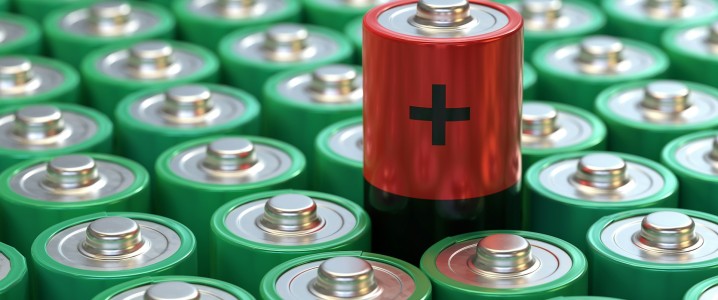
Global battery markets are going gangbusters as demand for new and better battery technologies explodes, driven by the clean energy transition and the proliferation of data centers and artificial intelligence. Batteries provide a critical backup energy source at a time when energy security is under strain at a global level, thanks to the runaway energy demands of the energy and tech sectors.
“As applications diversify and costs continue to fall, batteries are evolving into a foundational component of modern economies,” states the International Energy Agency. The global market for lithium-ion batteries ballooned to over $150 billion in 2025, representing a year-on-year increase of more than 20 percent, and shows no sign of slowing in 2026.
On the heels of this fresh demand boom, investment in the research and development of advanced and next-gen battery technologies has taken off. Battery and energy storage breakthroughs dominated energy tech innovation in 2025, “underscoring how energy security has overtaken affordability and decarbonization” as the main priority of energy developers. But, ironically, this race to shore up energy security could also lead to critical risks and insecurities in global battery supply chains.
Set OilPrice.com as a preferred source in Google here.
A new report from the International Energy Agency warns that as the global economy becomes increasingly reliant on lithium-ion batteries, it is also becoming increasingly reliant on a very small pool of lithium suppliers. China, in particular, dominates supply chains. Beijing controls an estimated 72 percent of the global lithium-ion market. Even more striking, in 2024, more than 8 out of every 10 battery cells on the planet were made in China. These figures raise key questions and concerns around geopolitical risk and market resilience.
China has been slowly but steadily building up and consolidating lithium supplies and value addition for years now. “After decades of quiet growth, firms such as CATL, BYD, Gotion High-Tech, and Envision are now primary suppliers for the world’s EVs and energy grids,” a recent Wired report stated about China’s leading battery manufacturers. For the most part, other nations’ attempts to compete with China are simply too little, too late. While many countries around the world are trying to build up their own battery production capabilities, they still rely on China for primary materials.
Meeting immediate-term energy security goals without also giving ever-increasing leverage to China is a massive and critical political challenge. The scale of energy demand projections driven by the AI boom is rewriting global priorities and placing world leaders squarely between a rock and a hard place, as long-term energy security strategy becomes overshadowed by immediate energy security threats.
“This structural imbalance is unlikely to change in the near term,” states the International Energy Agency, referring to China’s massive economic and industrial edge in batterymaking. “Addressing it would require a substantial increase in investment and stronger international co-operation across the battery value chain.”
The problem is that making batteries in China is just so cheap that producing these products anywhere else seems folly. Even with policy instruments to incentivise and subsidize domestic lithium-ion supply chains, a battery made in the United States or Europe still costs 50 percent more than one produced in China.
So if the world can’t out-compete China when it comes to lithium, can we simply go without the so-called ‘white gold’ in clean energy tech? A large part of the current battery tech innovation boom is focused on just this imperative. But it won’t be easy, as lithium is a very practical, affordable, and energy-dense material. But it has its downsides, too. In addition to its supply chain shortfalls, lithium mining and extraction also poses major risks to human and environmental health and wellbeing, and puts considerable strain on finite water resources.
Many alternative battery prototypes are currently in various stages of research and development, each with their own set of benefits and trade-offs. The range of designs is massive, with models as futuristic as quantum batteries and as humble as dirt batteries. One promising alternative is sodium-ion batteries, which could potentially diversify the market and create a more geographically balanced playing field. Sodium is cheap, abundant, and less water-intensive than lithium. It’s also available pretty much everywhere. There’s just one problem – China already has that market cornered as well.
By Haley Zaremba for Oilprice.com
More Top Reads From Oilprice.com
- Russia and Iran Slash Oil Prices to Secure China Market Share
- UK Energy Bills to Drop to Nearly Two-Year Low
- Black Sea Bottleneck Stalls Tengiz Oil Comeback
Download The Free Oilprice App Today



Haley Zaremba
Haley Zaremba is a writer and journalist based in Mexico City. She has extensive experience writing and editing environmental features, travel pieces, local news in the…


