







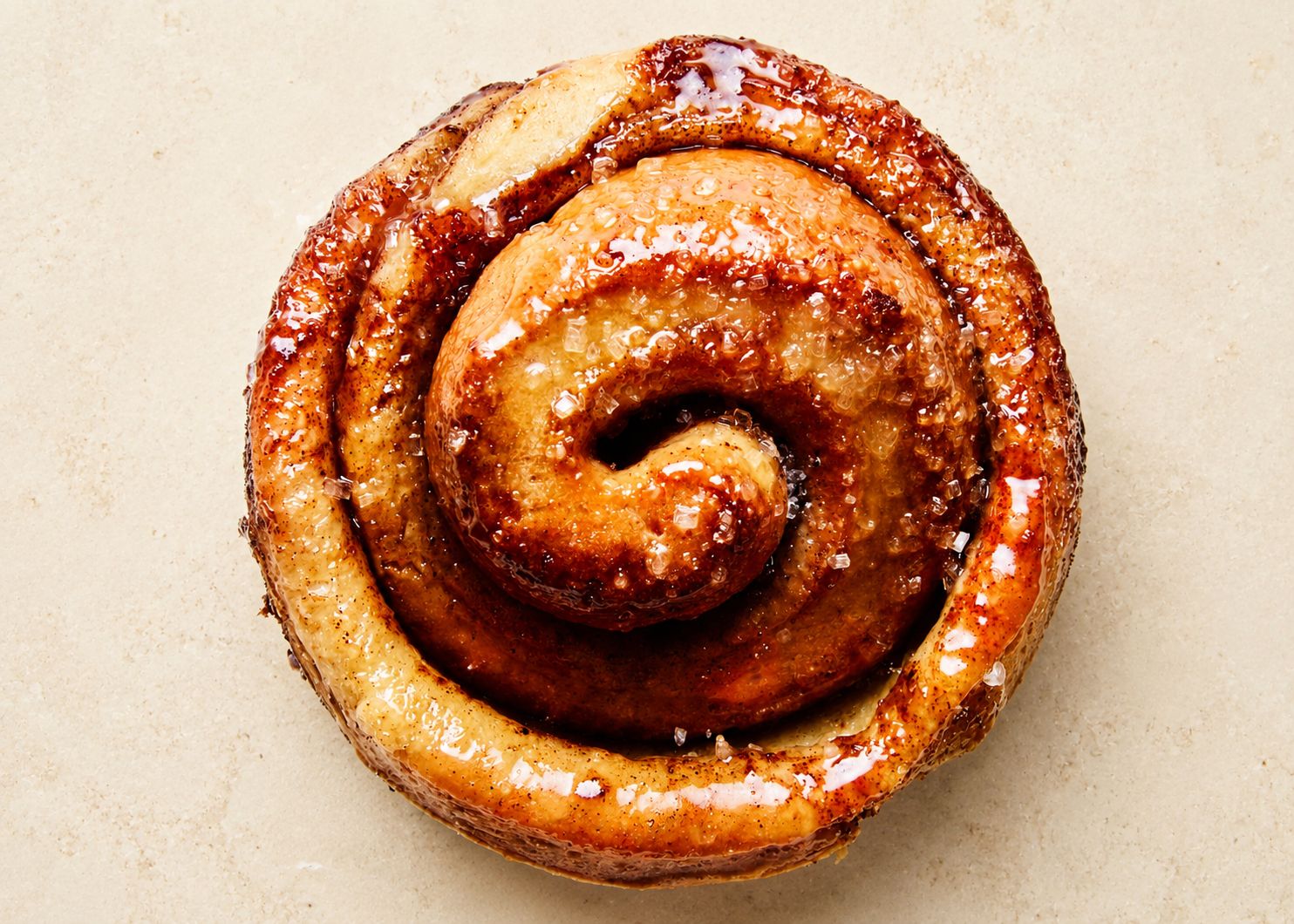
Cookbook author and former BA staffer Claire Saffitz describes these morning buns as “the more sophisticated cousin of the sticky bun.” Composed of tender, buttery swirls of dough with crisp caramelized edges, a honey-cinnamon filling, and a crackly sugar topping, her morning bun recipe makes an ideal breakfast pastry for weekends and holiday brunches.
Unlike many bakery-style morning buns, which are often made with laminated dough, Claire opted for an enriched yeast dough that’s surprisingly easy to pull together at home. It begins with a simple sponge (also called a preferment), giving the yeast time to develop deeper flavor before the remaining ingredients are added. Bread flour provides structure, while a little whole wheat flour adds a subtle nuttiness. For the filling, Claire combines both brown sugar and honey. The former brings rich, caramel notes, while the latter adds a lighter, floral sweetness that complements orange zest, cardamom, and cinnamon.
Most of the work happens in advance. “These are called morning buns,” says Claire. “You want to eat them in the morning—so, all of this work you do the night before.” After an overnight rest in the refrigerator, the dough is rolled, filled, sliced, and baked in muffin tins, whose individual cups catch any drips from the bubbling filling to create the signature crisp, sticky bottoms and dramatic spirals.
Morning buns FAQ
How are morning buns different from cinnamon rolls?
Many bakery-style morning buns are made with a laminated yeast dough—the same dough used to make croissants and danish. Cinnamon rolls tend to have a butter-rich bread dough, like the one in this recipe.
Additionally, the filling for morning buns is often citrus-forward (usually via orange zest), with warm spices like cinnamon, nutmeg, and cardamom adding background flavor. Meanwhile, the filling for cinnamon rolls is more streamlined.
Finally, while cinnamon rolls tend to be arranged and baked in a single dish, all snuggled up next to each other, morning buns are baked in individual molds, like a muffin tin, which contributes to their crisp texture and all-over browning. Morning buns also forgo the typical frosting of cinnamon rolls, favoring a lighter glaze or sugar topping.
Why are morning buns baked in muffin tins?
Baking morning buns in muffin tins helps them hold their signature spiral shape while catching the butter and honey that bubble out during baking. Those caramelized drippings create the crisp, sticky bottoms and deeply golden edges that make morning buns so distinctive.
How do I know when my morning buns are ready to bake?
After the shaped buns have proofed, gently poke the side of one. If the dough springs back but doesn’t fill in the indentation, they’re ready for the oven. Claire recommends working relatively quickly while the dough is still cold, which helps preserve the buns’ distinct spirals. If your dough is getting too warm to handle, return it to the refrigerator for 10–15 minutes (or the freezer for about 10 minutes).
Why brush the buns with honey butter?
A warm honey-butter glaze gives the buns their glossy finish while helping the sanding sugar adhere. It also adds another layer of buttery richness and enhances the crisp, caramelized exterior.
Can I substitute all-purpose flour?
For the best texture, stick with the combination of bread flour and whole wheat flour called for in the recipe. Bread flour develops the gluten needed for a lofty, stretchy crumb, while whole wheat flour contributes subtle nutty flavor. All-purpose flour has a lower protein content and will produce softer buns with less structure. Read more:

Watch Claire make this morning buns recipe


