


It can feel like every cultural moment now comes with a checkout button. A film launches and suddenly there’s a limited-edition sneaker, a capsule fashion line, a themed Airbnb, a beauty drop and a branded cocktail menu to match. We don’t just watch stories anymore, we shop them.
Collaborations have become one of the loudest tools in modern marketing. But as they multiply, it’s worth asking a more grounded question: are they building brands, or just creating noise?
Co-founder of strategic advisory firm All&, and Tracksuit agency partner, Suzanne Powers explains, “When two brands come together – and we think of brands loosely as everything from companies that make products to human brands like creators – there’s this moment where you think, ‘I’m not sure these two things go together?’ But when it works, the impact is exponential for both sides.”
The Barbie blueprint
Take 2023’s Barbie phenomenon. The film didn’t just dominate the box office. It dominated shelves, wardrobes and social feeds. From Barbiecore fashion to beauty partnerships and travel experiences, it became a masterclass in cultural saturation.
It worked. The scale was part of the spectacle. The commercial ecosystem amplified the film’s identity and helped turn it into a global event.
Now contrast that with Margot Robbie’s latest project, Wuthering Heights. A gothic literary classic about obsession, tragedy and restraint doesn’t scream “merch opportunity”. And yet here we are. Fashion tie-ins. Branded experiences. Scented candles designed to evoke the moors.
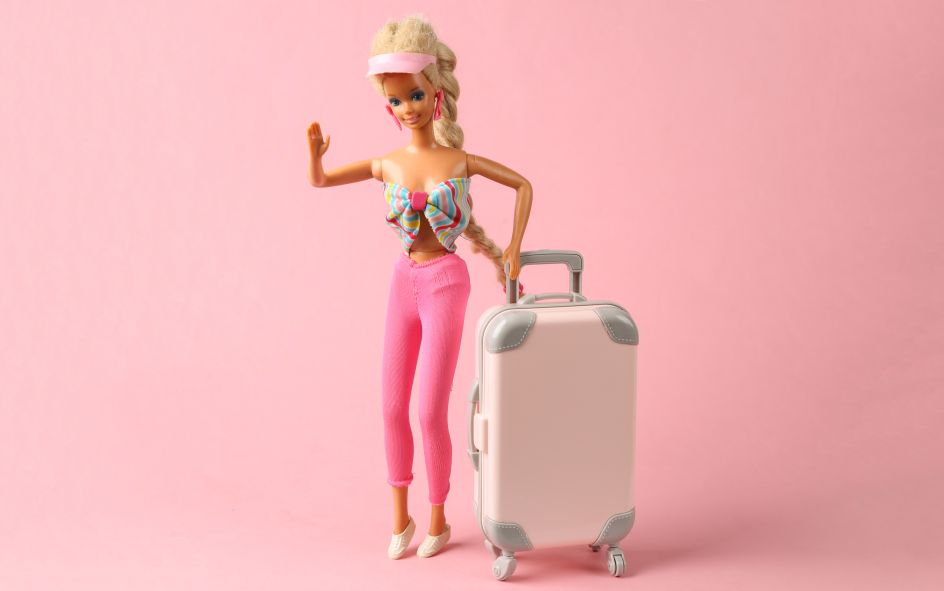
Barbie – splitov27 – stock.adobe.com
Even stories rooted in austerity are being drawn into the collaboration economy.
Some of these partnerships are clever. An Aspinal of London leather piece, for example, scoring a high 86 on Tracksuit’s Collab Index – a tool that measures which collaborations truly add to the story versus those that simply borrow hype – successfully reflects the themes of class, ambition, and desire. Similarly, a high-end indulgent food tie-in mirrors the excess of the Linton household. In these cases, collaborations act as signals. They shape meaning. They extend the world of the story.
But here’s the tension. Most collaborations aren’t designed to last. They’re designed to create a moment. Moments matter. They generate buzz. They drive conversation. They give brands cultural relevance in real time. Consumers might genuinely enjoy them while they’re live.
But they also move on quickly.
The risk isn’t necessarily consumer exhaustion. It’s confusion. Brands can start mistaking short-term spikes for long-term brand building.
Strategic partnerships vs marketing theatre
A simple test helps separate the two.
If this partnership had never happened, would your brand be meaningfully weaker five years from now?
For most collaborations, the honest answer is no. That doesn’t make them pointless. It just makes them tactical.
Strategic partnerships are built to do something structural. They unlock new audiences. They reinforce positioning. They drive innovation. They compound over time.
Marketing theatre, by contrast, is built for the moment. It optimises for headlines, social engagement and a burst of attention. It can be effective. But it rarely changes a brand’s long-term trajectory on its own.
At Tracksuit, we consistently see that sustained gains in awareness, consideration and preference come from clarity and consistency over time. Collaborations can amplify that strategy. They rarely replace it.
Resonance over reach
There’s another shift happening, too.
The brands that win at collaboration aren’t trying to partner with everyone. They’re not chasing scale for the sake of it. They’re choosing partnerships that feel inevitable rather than opportunistic.
In the research we conducted with Bimma Williams, one theme emerged clearly: the most effective collaborations deepen connection with small, passionate communities. They prioritise resonance over reach.
Because true influence isn’t about being everywhere, it’s about showing up in the right places with intent.
Collaboration isn’t losing its power. But its power is often overstated.
When every cultural moment becomes a commercial opportunity, collaboration ceases to be distinctive. It becomes the default. And default rarely builds long-term brand equity.
The brands that will win aren’t the ones that collaborate the most. They’ll be the ones that collaborate with clarity, restraint and a clear role within a bigger strategy.
Sometimes the smartest move isn’t asking, “Who can we partner with?”
It’s asking, “Does this make our brand stronger in the long run?”

Haworth, Yorkshire. Image licensed via Alamy
