




Advertisement


AI, Trust and Crisis Communication: A Critical Look at Shuaib’s Study
By Adamu Haruna
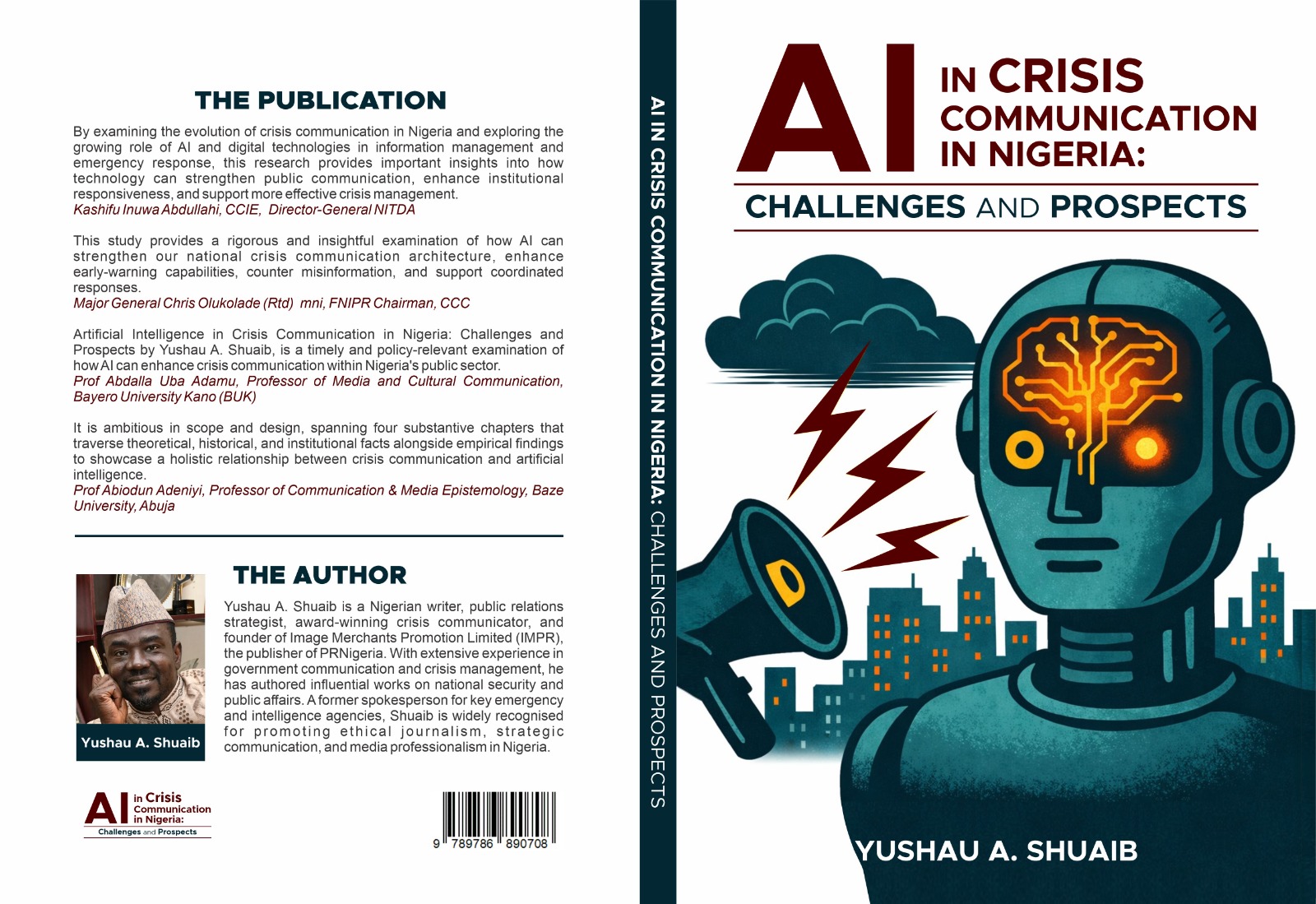
This opinion article reviews and refines key insights from a study on artificial intelligence (AI) in crisis communication within Nigeria’s public sector. The study examines how AI can help public institutions detect emerging crises, share timely information, respond to public concerns and strengthen public trust. It also highlights the barriers that limit effective adoption. Its central argument is clear: while AI can improve the speed and organisation of crisis communication, technology alone cannot guarantee accuracy or public confidence. Human expertise, ethical standards, reliable infrastructure and strong institutional systems remain indispensable.
Crisis communication is a critical component of public relations, journalism and public administration. During emergencies, citizens depend on accurate and timely information. Slow, unclear or inconsistent official communication allows rumours to spread, heightens public anxiety and weakens trust—especially during security incidents, health emergencies, natural disasters or political tension.
AI offers tools capable of analysing large volumes of information, monitoring public conversations, identifying emerging concerns and helping communication teams prepare responses. These tools can detect patterns, flag misinformation and support faster decision‑making. However, they also raise concerns about accuracy, privacy, transparency, accountability and the possibility of amplifying false information. The study is therefore relevant because it examines both the opportunities and limitations of AI in Nigeria’s public sector.
AI can support crisis communication by processing information quickly, recognising trends and helping organisations understand public reactions. Monitoring digital platforms can reveal common concerns or misleading claims early. Automated systems can also assist with routine enquiries and organise updates, saving time when crises escalate rapidly.
But Nigeria’s realities—uneven internet access, limited funding, varying technical capacity and fluctuating public trust—mean that AI adoption is not simply a matter of acquiring software. Staff must know how to use the tools, and citizens must be able to access and understand the information being shared.
The study draws lessons from Japan and Kenya, where technology supports preparedness, information sharing and coordination. However, these approaches must be adapted to Nigeria’s languages, infrastructure, institutions and communication habits.
The study applies Situational Crisis Communication Theory, Networked Crisis Communication Theory and Diffusion of Innovations Theory to explain crisis responses, information flow and public acceptance of new technologies. Using a mixed‑methods approach, it reports 182 valid questionnaire responses—more than the initial target of 168. Respondents recognise AI’s potential benefits, including faster communication, improved efficiency, better monitoring and enhanced coordination. Yet adoption remains limited due to weak infrastructure, inadequate funding, limited technical skills, trust concerns and the absence of clear policies.
A major strength of the study is its relevance. By focusing on Nigeria’s public sector, it connects AI with the practical communication responsibilities of government institutions and the citizens they serve. Its blend of Nigerian realities and international examples helps readers consider what may work locally. The theoretical foundation and mixed‑methods approach provide structure, while the recommendations emphasise training, infrastructure, ethics and coordination.
However, some areas could be strengthened. The quantitative findings would benefit from deeper statistical analysis and clearer explanations of participant selection. Since the questionnaire reached more people than planned, the study should clarify how the final sample was determined and how representative it is of public‑sector communication professionals.
Interviews with communication officers who have used AI during real crises would add practical depth. Ethical risks—privacy, data protection, bias, accountability and misinformation—also deserve more detailed exploration. Another important point is distinguishing general digital tools from AI systems. Websites, social media and messaging platforms support crisis communication, but they are not all AI. Clear definitions and specific examples would make the analysis more precise.
These limitations do not reduce the study’s value; they simply highlight areas for future research.
The study offers several important lessons. First, speed must never replace accuracy. During crises, people act immediately on the information they receive. A fast but incorrect message can worsen confusion and cause harm. Journalists and public‑relations practitioners must verify facts, rely on credible sources and correct mistakes promptly—whether or not AI is involved.
Second, AI should support professional judgment, not replace it. AI‑generated content may contain errors, reflect bias or misunderstand local culture. Human professionals must review important messages before publication and remain responsible for all information issued in their organisation’s name.
Third, public trust is essential. Institutions should explain what is known, what remains uncertain and what actions citizens should take. They must protect personal information and avoid using technology in ways that misrepresent communities. Communication professionals need continuous learning in AI tools, fact‑checking, misinformation monitoring and digital safety.
The study recommends clear policies for responsible AI use, practical training for communication teams, investment in reliable infrastructure and inclusive communication strategies. Updates should be shared through channels citizens can access—radio, community networks, websites and social media. Messages should use clear language and consider local languages and limited internet access. Institutions should coordinate with journalists, community leaders, emergency agencies and technology experts to provide consistent information.
Finally, institutions should measure whether AI improves communication using indicators such as response time, accuracy, audience reach, public understanding, correction rates and public trust.
As a PRNigeria Fellowship participant, I see this study as a reminder that communication is not merely about sharing information; it is about helping people understand events and make informed decisions. It strengthens my awareness of how technology is transforming journalism, public relations and public‑information management. It also reinforces that responsible communication requires verification, transparency, accountability and respect for the audience.
I have learned that AI can identify concerns and organise information, but it must be used carefully. Practitioners should embrace new technologies without abandoning truth, fairness and public service. Effective communication helps communities respond with better information and less confusion.
Overall, the study provides a timely examination of AI in crisis communication in Nigeria’s public sector. It identifies opportunities to improve monitoring, speed, coordination and responsiveness, while highlighting barriers involving infrastructure, funding, skills, trust and policy. Its central message is that successful adoption depends not only on technology but also on the people, systems and ethical standards surrounding it. Although deeper analysis and additional practical evidence would strengthen some conclusions, the study offers a useful foundation for discussion and further research. Public institutions should adopt AI carefully, train staff, protect citizens’ information and maintain human oversight. For journalism and public relations, the goal remains to provide information that is accurate, timely, responsible and useful to the public.


