

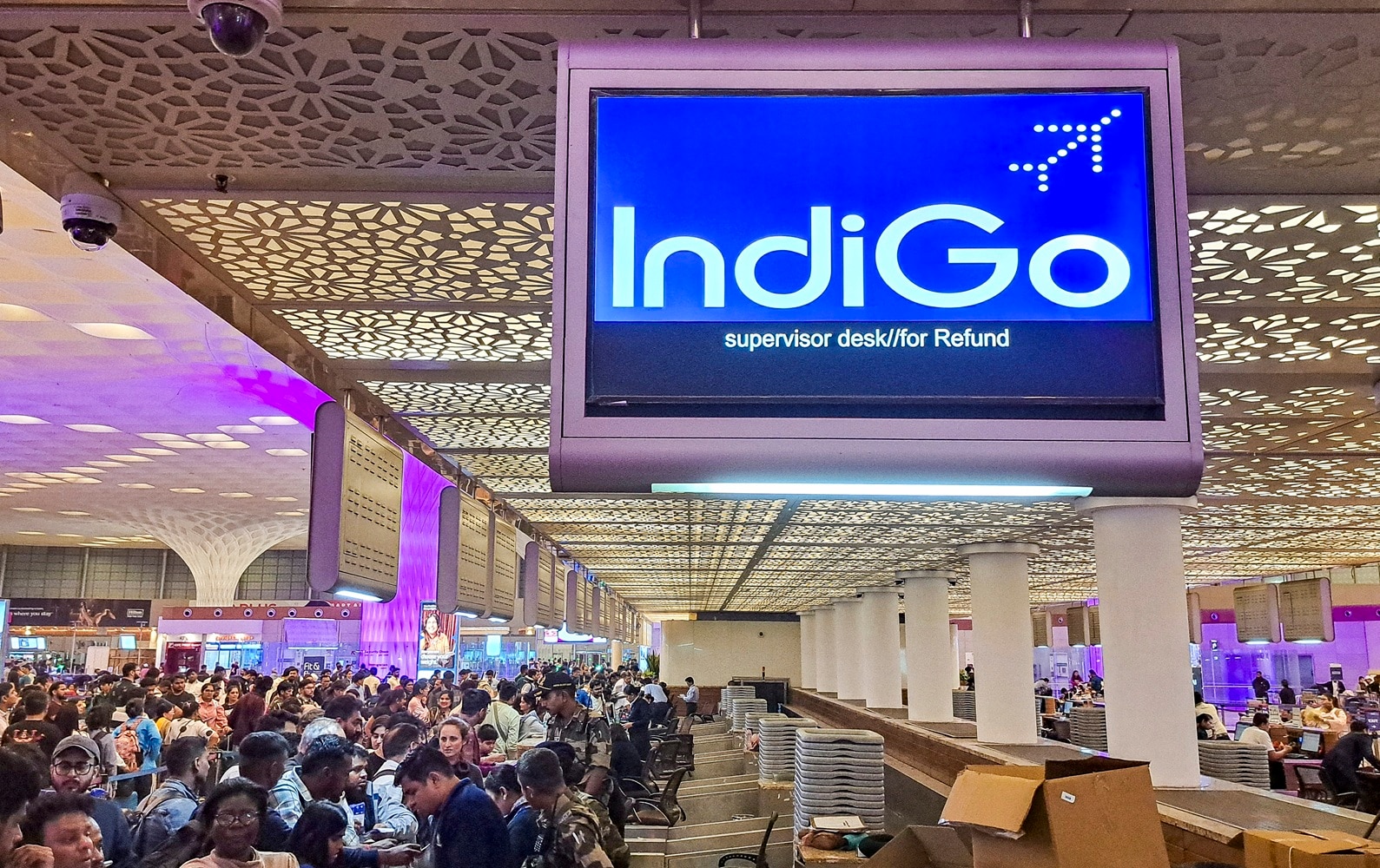
Although IndiGo’s data for November showed a healthy pilot roster and normal flight operations, internal lapses in preparing for the new FDTL Phase 2 norms created a hidden vulnerability. Once tighter rest rules, rising fatigue reports and crew-accommodation bottlenecks converged, routine delays quickly snowballed into large-scale cancellations across the network.

IndiGo’s recent operational meltdown did not come from a single failure or a major shortage of pilots. On paper, the airline had more than enough manpower — 4,455 pilots, 344 aircraft in operation, and nearly 2,000 flights a day. Even the airline’s submission to the DGCA showed a shortage of only 65 commanders and a surplus of first officers. Nothing in the numbers suggested an airline heading towards its worst disruption in years.
But behind those clean figures was a chain of decisions and constraints that collided at the same time. What unfolded was a classic cascading breakdown. Here are the five factors that triggered the crisis.
1. A miscalculation in manpower planning
Insiders say the root cause lies in how IndiGo prepared for the second phase of the new Flight Duty Time Limitation (FDTL) norms. These rules require stricter rest periods and reduce night duties. The operations team believed the airline could manage with existing pilot strength and did not add new crew for the transition.
This decision created a silent imbalance — enough pilots on paper, but not enough pilots for the schedule the airline was actually flying.
2. FDTL Phase 2 hit pilot availability overnight
When phase 2 kicked in, pilots began reaching their duty limits far sooner than before. More pilots started filing fatigue reports, which legally require the airline to give them extended rest.
This sharply reduced daily availability. IndiGo still had thousands of pilots, but far fewer of them were legally cleared to fly on any given day.
3. Fatigue reporting surged and rest rules tightened the squeeze
Pilot fatigue is taken extremely seriously by regulators. With longer rest periods now mandatory, IndiGo could not rotate pilots quickly enough to match its tight flight schedule.
Every fatigue report took another pilot out of rotation for hours — sometimes for the entire day — deepening the shortfall.
4. Hotel shortages during wedding season stranded crew
A factor no one anticipated became a major blow: across many cities, hotel occupancy was unusually high due to the peak wedding season. IndiGo struggled to find rest accommodations for crew at several outstations.
Without a designated room, pilots cannot legally be rostered for the next flight. This left some crew stranded and aircraft out of position. An aircraft stuck at the wrong airport breaks the next rotation, affecting multiple flights.
5. Morning delays cascaded into a network-wide collapse
Once early-morning flights were delayed due to missing crew or aircraft, the domino effect set in.
In a hub-and-spoke network like IndiGo’s, a delay in the first wave can spill into the second, third and fourth waves. Rotations began collapsing, and cancellations surged because pilots could no longer legally operate the flights assigned to them.
A small commander shortage on paper turned into a large operational vacuum.
The big picture
IndiGo’s crisis was not caused by a lack of pilots, but by a mismatch between manpower on paper and pilots actually available to fly. Stricter FDTL norms, fatigue limits, poor planning, hotel shortages and collapsed rotations all converged to overwhelm the system.
The airline has told the DGCA that it misjudged the manpower required for phase 2. The data suggests that even one wrong assumption in a tightly run network can knock the entire system off balance.
Also Read: IndiGo Fiasco Aftermath | Moody’s warns of revenue loss, downgrades score on human capital
First Published:
Dec 9, 2025 11:29 PM
IST
